Running a virtual information session sounds straightforward until you realize that half your registrants don’t show up, the other half sit silently with cameras off, and your carefully prepared presentation feels like talking into a void.
The good news is that effective virtual sessions follow a predictable pattern. When you understand what “effective” actually means and build your session around proven practices, you can consistently fill your pipeline with engaged prospective students, qualified leads, or interested candidates.
This article walks you through every step of the process, from defining your audience and selecting a platform to measuring success and improving future events. You’ll find specific examples from both higher-education admissions and corporate contexts, along with concrete tools, including Kumospace, to help you stand out.
Key Takeaways
- Define and design for effectiveness by setting clear success metrics, tailoring content to audience segments, choosing the right platform, and building 30–60 minute agendas with interaction, stories, and live walkthroughs.
- Execute with structure by promoting through multiple channels, using simple registration and reminders, hosting with a presenter and moderator, and enabling interaction and networking where it matters.
- Follow through and improve by recording every session, sharing within 48 hours, then measuring results, debriefing, and refining future events.
Answering the Big Question: What Makes a Virtual Information Session Effective?
Before diving into tactics, let’s define what “effective” actually means for a virtual information session. Too many organizers focus on vanity metrics like registration counts while ignoring whether attendees take action afterward.
An effective virtual session delivers three measurable outcomes:
- High attendance: At least 50–60% of registrants join the live session
- Strong engagement during the event: Live questions from at least 25% of attendees, plus active participation in polls and chat
- Measurable follow-up actions: 30–45% of attendees complete a follow-up form, start an application, or book a one-on-one meeting within 48 hours
These benchmarks apply whether you’re running a freshman admission overview, a transfer credit evaluation session, or a product demo for enterprise buyers. The rest of this article provides a step-by-step playbook for reaching these outcomes consistently.
You’ll learn how to select the right platform, including when Kumospace offers a clear advantage, design an agenda that holds attention, create content that resonates, drive registrations while reducing no-shows, and measure what matters.
Define Your Audience and Goals Before You Schedule Anything
The most common mistake in planning information sessions is jumping straight to slides and calendar invites. Clarity on your audience and purpose should come before choosing a platform or crafting a single bullet point.

Know Your Segments
Different audiences have different questions. Students interested in their first year of college care about campus life, housing, and introductory courses. Transfer students want to know how their existing credits will apply. International applicants need clarity on visa timelines and documentation requirements.
Here are the most common segments for higher-education sessions:
- First-year prospects: Focus on the undergraduate admission process, campus tour alternatives, student life, and what to expect during the first year
- Transfer candidates: Clarify credit transfer rules, prerequisite requirements, and the next available start date for each semester
- International applicants: Explain F-1 visa timelines, required documents, and English proficiency expectations
- Graduate prospects: Cover program structure, faculty research areas, and career outcomes
- Working professionals: Emphasize flexibility, online course options, and how programs fit around work schedules
Define One Primary Call-to-Action
Every session needs one clear next step. Don’t confuse attendees with multiple options. Choose one:
- Submit an application by a specific date
- Schedule a one-on-one meeting with admissions counselors
- Download a program guide and complete a short registration form
- Request a quote or proposal for corporate sessions
- Register for an upcoming campus visit or tour
Overview Sessions vs. Deep-Dive Sessions
Distinguish between two types of events when scheduling them. An overview session runs 30–45 minutes and provides a broad introduction, suited for prospective students who are just starting to explore their options. A deep-dive session runs 45–60 minutes and focuses on one specific program, major, or feature, for attendees who have already shown interest and want detailed information before applying.
Choosing the Right Virtual Platform (and Why Kumospace Helps You Stand Out)
Platform choice affects engagement, accessibility, and how professional your session feels. The wrong platform creates friction, while the right one amplifies your message.
Standard Webinar Tools vs. Spatial Platforms
Traditional tools like Zoom, Microsoft Teams, and Google Meet work fine for one-way presentations. Attendees join, watch, and leave. Chat and Q&A functions exist but often feel disconnected from the main event.
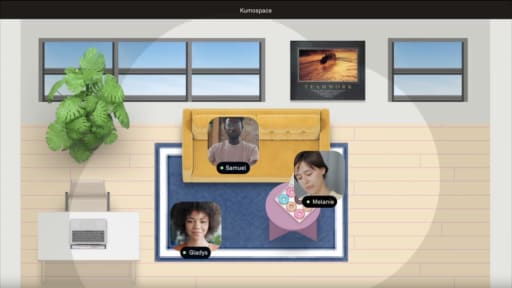
Spatial platforms like Kumospace take a different approach. Instead of a flat video grid, attendees move through a virtual space with distinct rooms and areas. This creates opportunities for organic networking and small-group conversations similar to what happens during an in-person campus tour or office visit.
Concrete Use Cases for Kumospace
Kumospace shines when you need more than a one-way broadcast:
- Running multiple info “rooms” simultaneously: Set up an Admissions Lobby, Financial Aid Lounge, and Program Q&A Corner. Attendees move between areas based on their interests, and your staff members stay in their zones to answer questions
- Post-session networking by department: After the main presentation, open breakout spaces where attendees can talk with current students, faculty, or product specialists
- Virtual Help Desk: Dedicate one corner of the space to tech support so attendees with audio or video issues can get help without disrupting the main event
- Smaller cohort sessions: For intimate sessions with 15-30 attendees, the spatial format creates a warmer atmosphere than a silent Zoom grid
Platform Comparison Considerations
When evaluating platforms, compare these factors in your decision:
Capacity limits vary. Standard Zoom webinars support 500+ attendees, while Kumospace works best for sessions under 100 where interaction matters more than broadcast reach.
Breakout capabilities affect how easily you can split attendees into smaller groups. Kumospace handles this organically through spatial movement, while Zoom requires manual breakout room assignment.
Chat and Q&A tools should support moderation, including filtering questions, marking answers as resolved, and sharing links during the session.
Recording options allow you to offer the session on demand later. Confirm whether the platform records audio, video, and chat together.
Accessibility features include closed captions, screen reader compatibility, and dial-in phone numbers for attendees without reliable internet.
Run a 15-minute internal test in your chosen platform one week before the event. Practice screen sharing, test the recording function, and confirm that moderators can manage chat and Q&A effectively.
Key Technical Settings to Configure Before Going Live
Walk through this checklist 24 hours before your session:
- Recording: Enable by default and confirm storage location
- Waiting room: Enable if you want to control when attendees enter, or disable for a smoother arrival experience
- Screen-share permissions: Restrict to hosts only unless you plan to have attendees share
- Moderator roles: Assign at least one person to monitor Q&A while another presents
- Chat visibility: Decide whether attendees can chat publicly, only to hosts, or both
- Automatic confirmation and reminder emails: Configure these with calendar invitations (.ics files) including your Kumospace or webinar link
- Automatic captions: Enable where available and note in your registration materials how attendees can request additional accommodations like ASL interpreters or large-print slides
Designing a Focused Agenda: 30–60 Minutes That Actually Work

Most effective information sessions last 30-60 minutes. Longer than that and you lose attention. Here are some sample agendas for your sessions.
Sample Agendas
45-Minute First-Year Admission Overview
|
Time |
Segment |
|
0:00–0:03 |
Welcome and housekeeping (recording notice, how to ask questions) |
|
0:03–0:05 |
Quick poll: “What’s your biggest question about applying?” |
|
0:05–0:25 |
Main presentation: application process, key dates, what we’re looking for |
|
0:25–0:30 |
Live walkthrough: how to start your application |
|
0:30–0:43 |
Moderated Q&A |
|
0:43–0:45 |
Clear next steps and closing |
60-Minute Transfer and Credit Evaluation Session
|
Time |
Segment |
|
0:00–0:05 |
Welcome, introductions, and agenda overview |
|
0:05–0:08 |
Icebreaker poll in chat |
|
0:08–0:28 |
Main presentation: transfer admission process, credit evaluation, important deadlines |
|
0:28–0:35 |
Student story: a transfer student shares their journey |
|
0:35–0:45 |
Live demo: how to submit transcripts and check credit evaluation status |
|
0:45–0:57 |
Q&A (in Kumospace, attendees move to topic-specific rooms) |
|
0:57–1:00 |
Next steps and resources |
Build in Interaction Moments
Passive viewing kills engagement. Build two to three interaction moments into every session:
- Opening poll: “Where are you joining from today?” or “What stage of your search are you in?”
- Mid-session chat prompt: “Drop your biggest question in chat, we’ll answer the top ones live”
- Movement break (Kumospace): Ask attendees to move to a different room based on their interest area
Set Expectations Early
Within the first two minutes, tell attendees:
- What topics you’ll cover and what you won’t
- Whether the session is being recorded
- When and how they’ll receive slides, links, and the recording
- How to ask questions during the session
This simple framing before your main content reduces confusion and helps attendees focus.
Allocating Time for Q&A Without Losing Control
Dedicate at least 25-30% of your session to questions. You can cluster Q&A at the end or spread it throughout after each major topic.
Moderation tactics that work:
- One host presents while another scans questions and groups similar ones together
- Call out questioners by name when possible, for example, “Great question from Maria, she’s asking about…”
- Have a prepared FAQ slide ready for the top five questions you always receive
- Link to a resources page where attendees can find answers to common questions
In Kumospace, close with optional room-based Q&A. Label spaces clearly, such as “Scholarships,” “Housing,” or “International Documents,” and let attendees move to the area that matches their interest for smaller, focused conversations with your team.
Content That Resonates: Slides, Stories, and Live Demonstrations

Effective content balances facts (dates, requirements, pricing) with stories that make those facts memorable. Most attendees won’t remember your bullet points, but they’ll remember how a transfer student felt when their credits transferred smoothly.
Slide Design Principles
- No more than one slide per minute of presentation
- Three to five bullet points per slide maximum
- Clear headings that tell attendees what they’re learning
- Large fonts (24pt minimum for body text)
- Branded colors and clean design
- Simple charts or icons instead of dense data tables
Must-Have Content Elements
Every information session should cover:
- Application timelines with specific dates, for example, “Fall 2026 priority deadline: November 1, 2025. Regular decision deadline: January 15, 2026.”
- Process steps as a visual, such as a simple 1-2-3 graphic showing Submit Application → Complete Interview → Receive Decision
- Support resources including email, phone number, chat hours, and how to contact your office for questions
- One clear call-to-action, the single next step you want every attendee to take
Feature Real Stories
Include 1-2 short case studies or testimonials:
- A transfer student who navigated credit evaluation successfully and is now thriving
- A working parent who completed an online degree while managing family responsibilities
- A first-generation college student who felt uncertain but found support through your programs
These stories work better as 90-second video clips or live appearances than as text on slides.
Include a Live Walkthrough
Show, don’t just tell. Walk attendees through:
- How to submit an application form step by step
- How to book a one-on-one consultation on your website
- How to register for an upcoming event or join a Kumospace session
- Where to find minors, majors, and program requirements on your page
Driving Registrations and Reducing No-Shows
Even the best session fails if people don’t register or don’t attend. No-shows waste your team’s time and represent missed opportunities to connect with prospective students or leads.
Registration Channels
Use at least three channels to drive registrations:
- Website forms: A simple registration page linked from your main site, individual program pages, and any relevant landing pages
- Personalized invitation emails: Targeted outreach to students who have already expressed interest, submitted an inquiry, or started an application
- Social media posts: Direct links to registration with clear event details and a compelling reason to attend
Keep Your Registration Form Simple
Only ask for what you need:
- Name
- Email address
- Segment (first-year, transfer, international, graduate, etc.)
- Target term or product of interest
- Optional: How did you hear about this event?
Every additional field reduces completion rates. You can gather more information during the session or through follow-up.
Reminder Tactics That Work
- Automated email 24 hours before: Include the date, time with time zone, platform link, and brief agenda
- Automated email 1 hour before: A quick nudge with just the link and session title
- Optional SMS reminder the morning of the event for attendees who provided phone numbers
- Calendar invites (.ics files) attached to the confirmation email
Write Strong Confirmation Emails
Your confirmation email should include:
- Session title and clear description
- Date and time with time zone, for example, “April 10, 2026, 4:00–4:45 PM Eastern Time”
- Kumospace or webinar link, prominently displayed
- Tech tips, such as “Use Chrome or Firefox for the best experience. Test your audio before joining.”
- Brief agenda so attendees know what to expect
- Contact information for questions
Track which registration source, such as website, email, or social, produces the highest show rate. This data helps you allocate future promotion efforts.
Accessibility and Inclusive Registration Practices
Include an accessibility statement near your registration form:
“For disability-related accommodations, please contact [email/phone] at least 5 business days before the session.”
Additional inclusive practices:
- Offer English closed captions by default
- Provide information on how to request ASL interpreters or translated materials
- Remind registrants to use the same email address if they need to update their registration rather than creating duplicates
- Ensure your registration form works with screen readers
Hosting the Session: Moderation, Engagement, and Troubleshooting

Every information session should have at least two roles: a presenter who delivers content and a moderator who manages Q&A, chat, and technical issues. Flying solo makes it difficult to answer questions while presenting, and small technical problems can derail the entire event.
Your Opening Script
The first 2-3 minutes set the tone. Cover these points:
- “Welcome to [session title]. We’re glad you could join us today.”
- “You may notice that this session is being recorded. We’ll send the recording to everyone who registered within 48 hours.”
- “Feel free to ask questions in the chat or Q&A panel at any time. [Moderator name] is watching for questions and will help me answer them.”
- “Here’s what we’ll cover today…” (quick agenda overview)
Engagement Tactics During the Session
Don’t wait until the end for interaction:
- Quick polls: “How many schools are you currently considering?” or “What brought you to today’s session?”
- Chat icebreakers: “Drop your name and where you’re joining from in the chat”
- Reactions and emojis: Encourage use when appropriate (“Give us a thumbs up if you can hear me clearly”)
- Early questions: “Feel free to drop questions in the chat as we go, we’ll answer as many as we can”
In Kumospace, move participants between areas for different parts of the session. Start everyone in the main presentation area, then open breakout spaces for topic specific Q&A and informal networking.
Troubleshooting Checklist
Keep this list handy for common tech problems:
- Attendee can’t hear audio: Ask them to check speakers or headphones, refresh the page, or try a different browser
- Video lagging or freezing: Suggest turning off their own camera to reduce bandwidth, or switching to phone dial-in if offered
- Attendee can’t find the link: Have your moderator send it directly via chat or email
- Presenter’s audio fails: Have a backup presenter ready to take over while you fix the issue
- Platform outage: Prepare a backup link to an alternative platform and communicate it via email
Stay calm and communicate clearly. Brief technical issues rarely ruin a session, but panicking does.
Recording and On-Demand Follow-Up
Record all sessions when allowed and notify attendees at the beginning and in registration materials.
After the session:
- Trim the recording to remove pre-event chatter and any dead time at the end
- Add a simple title slide at the beginning with the session name and date
- Include timestamps in the description for major sections
- Host recordings on a branded landing page, private playlist, or gated content page that requires a short follow-up form
Send the recording within 24-48 hours. This re-engages no-shows and reinforces information for live attendees. Include a note about upcoming sessions they might want to attend.
Measuring Success and Iterating on Future Sessions
Repeatable success comes from measurement and small improvements over time. Don’t just run sessions, study them.
Key Metrics to Track
|
Metric |
What It Tells You |
Benchmark |
|
Registration count |
Reach of your promotion efforts |
Depends on audience size |
|
Show rate |
Registrations that convert to attendance |
50-60% or higher |
|
Engagement rate |
Questions, poll responses, chat activity |
20-30% of attendees participating |
|
Average time in session |
Whether content holds attention |
80%+ staying until Q&A |
|
Follow-up actions |
Applications started, meetings booked, forms submitted |
20-30% within one week |
Post-Event Surveys
Send a short survey (5 questions or fewer) within 24 hours:
- How satisfied were you with today’s session? (1-5 scale)
- How clear was the information presented? (1-5 scale)
- How useful was the Q&A portion? (1-5 scale)
- If we used Kumospace, how would you rate the platform experience? (1-5 scale)
- What could we improve for future sessions? (open-ended)
Keep a Debrief Document
After each session, spend 10 minutes documenting:
- What worked well, including timing, topics, tech, and engagement tactics
- What needs adjustment, such as length, level of detail, or interaction moments
- Specific attendee feedback worth acting on
- Ideas to test in the next session
The Iteration Mindset
View each session as one step in a learning process. Your December session should be measurably better than your September session because you’ve studied what works for your audience.
Small changes compound. Tightening your opening by 90 seconds, adding a second poll, or switching from Zoom to Kumospace for better networking can each lift your metrics incrementally.
Conclusion
Running effective virtual information sessions isn’t about mastering technology or creating perfect slides. It’s about understanding what your audience needs, creating space for genuine interaction, and improving systematically based on what you learn.
Start with your next scheduled session. Apply three or four tactics from this guide, measure your results, and build from there. The future of connecting with prospective students, candidates, or customers is one well-run session at a time.
Frequently Asked Questions
An information session is a structured presentation designed to educate a specific audience about a program, company, or product and should include a clear value proposition, a high-level overview, specific requirements or next steps, and a dedicated Q&A segment.
Plan by identifying your audience’s core pain points and structuring the session with a hook, concise content, and a clear call to action, using a 60-30-10 split of presentation, discussion, and closing steps.
Boost attendance with multi-channel promotion and exclusive takeaways, and increase engagement with live polls, breakout rooms, and chat participation prompts.
Keep sessions brief, around 30 to 45 minutes, include interaction prompts every 10 minutes, and perform a tech rehearsal to test audio, video, and lighting.
Kumospace and Microsoft Teams offer stability and registration tracking, while Livestorm or Hopin provide interactive features, analytics, and customizable landing pages.