Here’s a concrete example of a weekday plan you can adapt right now. Think of this as your game plan for Tuesday, March 3, 2026, or whatever tomorrow looks like for you.
6:30–7:00 a.m. — Wake and Morning Routine
Wake at 6:30, hydrate, and move your body briefly (stretching, a short walk, or quick exercise). Avoid checking email or Slack during this window. This protects your mental energy before the workday begins.
7:00–7:30 a.m. — Morning Planning Session
Review your daily schedule and confirm your “Big 3” priorities for the day. Spend 10–15 minutes adjusting time blocks based on overnight messages or calendar changes. Write your priorities somewhere visible: a paper planner, notes app, or your calendar.
7:30–8:00 a.m. — Breakfast and Transition
Eat breakfast away from your desk. For remote workers, this is your “virtual commute”: a walk around the block, a podcast, or simply sitting with coffee without screens. This ritual signals to your brain that the workday is about to begin.
8:00–8:30 a.m. — Admin and Email Triage
Do a quick pass through email and messages. Don’t respond to everything. Just identify what’s urgent and schedule time for the rest. Flag items that require deep focus for later blocks.
8:30–9:00 a.m. — Stand-up or Team Check-in
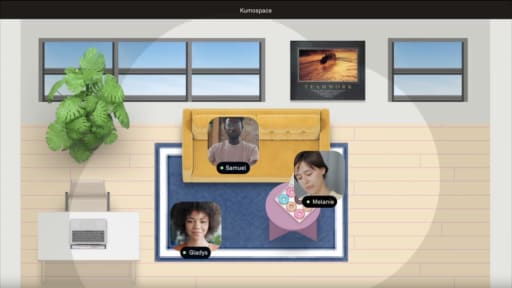
If you’re on a distributed team, this is when you might join a quick stand-up in Kumospace to sync on priorities. Keep it under 15 minutes to protect focus time.
9:00–11:00 a.m. — Deep Work Block #1
This is your prime productivity window. Work on your single most important task, the one that makes meaningful progress on a project or goal. No meetings, no Slack, no email. Consider joining a “Focus Room” in Kumospace where everyone is visibly in concentration mode.
11:00–11:15 a.m. — Break
Step away from your screen. Walk, stretch, or grab water. Avoid scrolling social media or news, as it creates attention residue that bleeds into your next block.
11:15 a.m.–12:30 p.m. — Deep Work Block #2
Continue with demanding cognitive work or tackle your second priority. Batch similar tasks together to minimize context switching.
12:30–1:00 p.m. — Lunch Prep and Eat Lunch
Eat lunch away from your desk. This isn't a productivity theater. Plan to eat dinner at a reasonable hour by protecting this midday refuel.
1:00–3:00 p.m. — Collaboration and Meetings
Cluster your meetings and collaborative work here. Join your team in Kumospace for working sessions, project discussions, or creative brainstorming. This protects your morning deep work and leaves late afternoon for other tasks.
3:00–3:15 p.m. — Midday Reset
Take a brief break to assess the remaining hours. Check your plan and decide what’s realistic for the rest of the day. This checkpoint prevents all-or-nothing thinking if your morning went sideways.
3:15–4:00 p.m. — Shallow Work / Admin
Handle emails that need responses, fill out forms, process expense reports, and schedule meetings for the week. This is low-energy work that fits naturally in the early afternoon dip.
4:00–5:00 p.m. — Flexible Focus or Catch-up
Use this block for tasks that slipped earlier or for one more focused work session if energy permits. Some days this becomes overflow time. Other days it’s a third priority task.
5:00–5:30 p.m. — Shutdown Routine
Close out the workday deliberately. Review what you accomplished, update your to-do list with remaining items, and draft tomorrow’s plan. If you work remotely, this ritual is essential to avoid work bleeding into evening hours.
5:30–9:30 p.m. — Personal Time
Exercise, family, hobbies, and rest. A good rule is to avoid work communications during this window whenever possible.
9:45–10:00 p.m. — Preview Next Day
Take a brief look at tomorrow’s calendar. Confirm your Big 3 for the next day. Don’t plan in detail. That’s for the morning session. Just reduce overnight anxiety by knowing what’s coming.
10:30 p.m. — Wind Down and Sleep
This sample plan limits each day to 1–3 “must-do” priorities and fills the rest with supporting tasks that fit your energy levels. Copy it, tweak the times, and you’ve got your best daily plan ready for tomorrow.

A daily plan is a time-bound roadmap for your day, not just a collection of tasks. It ties directly into your weekly and monthly goals, ensuring that today’s actions create meaningful progress toward what actually matters.
Here’s the critical difference between three things people often confuse:
- A raw to-do list is a brain dump of everything you might need to do. It has no structure, no timing, and no sense of what’s realistic for one day.
- A calendar with events shows meetings and appointments but doesn’t account for the actual work you need to accomplish between them.
- A true daily plan combines priorities, time blocks, and energy management. It answers not just “what” but “when” and “for how long.”
Consider this example. A vague to do list might say:
- Work on quarterly report
- Respond to Slack messages
- Exercise
- Prepare for client call
A daily plan transforms this into:
- 9:00–10:30 a.m.: Write executive summary section of quarterly report (deep work, no interruptions)
- 10:30–11:00 a.m.: Respond to priority Slack messages only
- 12:00–12:45 p.m.: 30-minute run or gym session
- 2:00–2:30 p.m.: Prepare talking points for client call
- 3:00–3:30 p.m.: Client call
See the difference? The daily plan specifies enough time for each task, sequences them by energy requirements, and makes sense of how the entire day flows.
A structured plan reduces decision fatigue. Instead of constantly asking “what should I work on now?” you simply follow the plan. This saves mental energy for the actual work.
In a remote team using Kumospace, a shared understanding of each person’s daily plan, including when they’re in focus blocks versus available for collaboration, makes scheduling smoother and reduces the constant “are you free?” pings that fracture concentration.
Understanding why daily planning works helps you design plans that stick. Three cognitive patterns undermine most people’s attempts at productivity, and a well-designed daily plan counters all of them.
The Planning Fallacy
Humans consistently underestimate how long tasks take. You assume the slide deck will take one hour because that feels reasonable. But history shows it always takes about 1.5 hours, you just forget each time.
The fix: Track your time estimates versus actual time for a few weeks. Add approximately 20% buffer time to every task estimate. When you plan your day, this prevents the domino effect of one delayed task crushing your entire schedule.
Decision Fatigue
Every decision depletes a limited cognitive resource. If you spend your morning deciding what to work on, you’ve already burned energy before doing any real work.
The fix: Make decisions the night before. Your evening planning session removes decision making from your mornings, preserving mental energy for deep work.
Attention Residue
When you switch from one task to another, part of your attention stays stuck on the previous task. This residue reduces performance on whatever you’re trying to focus on next.
The fix: Use time blocking with clear start and end times. When a block ends, you have permission to mentally close that task. Brief breaks between blocks allow residue to clear.
Specifying when and where work happens dramatically increases follow-through. “I’ll work on the proposal sometime today” often fails. “10:00–11:30 a.m., write a proposal at my desk with camera off” succeeds. The specificity creates a mental commitment that vague intentions cannot match.
Visual progress reinforces the system. Whether you cross off blocks on a paper daily planner, mark tasks complete in a digital tool, or update a shared team board, seeing progress builds momentum and motivation.
Remote teams using Kumospace rooms for “Focus Time” or “Deep Work” can leverage social accountability. When teammates see you in a focus room, they interrupt less, and you’re more likely to stay focused knowing others can see you working.
WHEN to Do Tasks: Matching Schedule to Energy

Timing tasks properly matters more than squeezing more hours into the day. Working 12 hours in a daze accomplishes less than six hours of well-timed focus.
Your energy levels follow predictable patterns throughout the day. Most people peak in late morning, dip after lunch, and experience a smaller recovery in late afternoon. Individual patterns vary significantly.
How to discover your personal energy pattern:
Track your energy for 5-7 days. Each hour, rate your mental sharpness on a 1-5 scale. Note patterns: When do you consistently feel sharp? When do you feel foggy?
Once you identify your patterns:
- Schedule demanding cognitive work (writing, coding, strategic analysis) during your highest-energy 60–120 minute windows
- Place shallow work (email, forms, scheduling, expense reports) in low-energy periods
- Protect your peak hours carefully. Don’t let meetings consume them.
Example schedule for an early bird:
- 7:30–9:30 a.m.: Deep work (peak energy)
- 9:30–10:00 a.m.: Email and messages
- 10:00–12:00 p.m.: Meetings and collaboration
- 1:00–2:00 p.m.: Shallow work (post-lunch dip)
- 2:30–4:00 p.m.: Second focus block (afternoon recovery)
Example schedule for a night owl:
- 9:00–10:30 a.m.: Ease into day with email and admin (still waking up)
- 11:00 a.m.–1:00 p.m.: Meetings and collaboration
- 2:00–3:00 p.m.: Shallow work
- 3:00–5:00 p.m.: Deep work (afternoon peak)
- 7:00–9:00 p.m.: Optional second deep work block
Match your daily tasks to your energy, and you’ll accomplish more with less effort.
Prioritization Frameworks for Your Daily Plan
A daily plan fails without clear priorities because time is always limited. You cannot do everything, so you must choose what matters most.
The Big 3 Method
Each morning, or the night before, select exactly three non-negotiable outcomes for the day. Each should connect to a weekly or monthly goal. These are your priorities. Everything else is secondary.
Your Big 3 might look like:
- Complete first draft of project proposal (supports Q2 launch goal)
- Conduct two customer interviews (supports research sprint)
- Review and approve team budget (deadline tomorrow)
Everything else on your list is “nice to have” but not essential. If you complete your Big 3 and nothing else, it was a successful day.
The Eisenhower Matrix
For more granular priority levels, the Eisenhower matrix organizes tasks into four quadrants based on urgency and importance:
|
Urgent |
Not Urgent |
|
|
Important |
Do Today |
Schedule for Later |
|
Not Important |
Delegate |
Delete |
- Do Today: Crises, deadlines, critical requests
- Schedule: Strategic work, planning, relationship building
- Delegate: Interruptions others can handle, some meetings
- Delete: Time wasters, unnecessary commitments
Most of your Big 3 should come from important tasks, ideally the “Schedule” quadrant. This represents work that creates progress toward long-term goals but is not yet demanding immediate attention.
Making Priorities Visible
Mark priorities clearly in your planner or digital tool:
- Star symbols for top priority
- P1/P2/P3 labels
- Color coding in your calendar (red for Big 3, blue for meetings, gray for admin)
In collaborative tools or shared Kumospace daily agendas, publicly noting your Big 3 helps teammates respect your deep work blocks. When everyone knows what you’re protecting time for, interruptions happen less often.

Time blocking means assigning every hour (or half hour) a specific job. This includes focus work, meetings, breaks, and personal life. Nothing is left unassigned.
Why time blocking works:
- Eliminates “what should I do now?” decisions
- Make your capacity visible. You can see when you’re overcommitted.
- Creates accountability. If 9:00–11:00 a.m. says “write a report,” you know what you should be doing.
- Helps others see your availability
Deep work blocks should be 60–120 minutes, scheduled during your peak energy windows. Deep work is cognitively demanding work that produces your most valuable output, including strategic thinking, creative work, and complex analysis.
During deep work:
- Close email and messaging apps
- Put your phone in another room
- Use website blockers if needed
- Consider joining a “Focus Room” in Kumospace where cameras or mics stay off and everyone is visibly in concentration-only mode
Batch similar tasks to reduce context switching. Group all your administrative work into one block. Stack all your calls together. This creates momentum and prevents the mental whiplash of jumping between different types of work.
Break rhythm options:
- 25/5 (Pomodoro): 25 minutes work, 5 minutes break
- 50/10: Better for complex work requiring deeper focus
- 90/20: Matches natural ultradian rhythms for extended creative sessions
Step away from screens during at least some breaks. Walk, stretch, look out a window. Your brain needs genuine rest to consolidate learning and restore attention.
Using the Pomodoro Technique (and When to Ignore It)
The Pomodoro Technique is simple: work for 25 minutes with complete focus, then take a 5-minute break. After four rounds, take a longer 15–30 minute break.
When Pomodoro helps:
- You struggle to start tasks (committing to “just 25 minutes” lowers resistance)
- You tend to hyperfocus and forget to take breaks
- You’re working on tedious tasks that benefit from frequent rewards
- You want a rhythm for writing sprints or administrative catch-up
When to modify or ignore Pomodoro:
For complex deep work such as strategy documents, design work, or coding, 25 minutes often is not enough to reach a flow state. By the time you are fully engaged, the timer rings.
Alternatives for demanding work:
- 50/10: 50 minutes focus, 10 minute break
- 90/15: Matches natural concentration cycles
- “One task until complete”: No timer, just work until the task is done, then take a break
Adapting Pomodoro for teams:
In Kumospace, teams can run co-working sessions with visible timers. Everyone works silently for 50 minutes, then joins a quick shared break for five minutes of social chat before the next round. This combines the productivity method of timeboxing with the social accountability of working alongside others.
Experiment with one or two timing patterns for at least one week before deciding which cadence works for you. There is no universally correct interval, only what works for your brain and your tasks.

Create clear “on” and “off” hours. Work-from-home setups blur boundaries. You might find yourself checking email at 10 p.m. or taking calls during dinner. Define your workday explicitly, perhaps 8:30 a.m. to 5:30 p.m., and protect those boundaries.
Define your physical workspace. Even in a small apartment, designate one area for work. This could be a dedicated office, a corner of the dining table, or a specific chair. When you are in that space, you are working. When you leave it, you are done.
This physical separation helps your brain switch modes. The location becomes a trigger for focus, similar to how a coffee shop or library can signal work mode.
Cluster meetings and collaboration. Remote workers often let meetings scatter throughout the day, fragmenting focus time. Instead, cluster collaborative work into one or two blocks, perhaps 1:00–3:00 p.m. This protects morning deep work and leaves late afternoon for admin and catch-up.
Use a virtual office structure. Teams can use Kumospace as a virtual office with designated rooms mapped into daily plans:
- Focus Room: Deep work, no interruptions, cameras off
- Stand-up Room: Quick morning sync, 15 minutes max
- Collaboration Room: Working sessions and project discussions
- Social/Coffee Room: Informal breaks and relationship building
When team members can see each other’s presence in rooms, it creates gentle accountability and makes “are you free?” questions unnecessary. You simply see whether someone is in Focus or Collaboration mode.
Productivity Strategies Tailored to Working from Home
Working from home means you control your environment, so use that to your advantage.
Plan around your circadian rhythm. Without commute times or office norms dictating your schedule, you can align work with your natural energy patterns. Early birds can tackle reports before 10:00 a.m. while the house is quiet. Night owls can place analytical tasks in the late afternoon when they finally hit their stride.
Protect “no-meeting” slots. Block explicit focus time in your calendar and label it clearly. When colleagues see “Focus Time: Do Not Book” on your calendar, most will respect it. This is especially important for remote work, where the temptation to fill every hour with video calls is strong.
Create bookend rituals. Start the day with a 10-15 minute planning session. End with a shutdown checklist:
- Review what you accomplished
- Move incomplete tasks to tomorrow or the week’s to dos
- Write tomorrow’s Big 3
- Close all work applications
- Take a brief “virtual commute” walk
These rituals signal transitions that physical offices provide naturally.
Batch communication touchpoints. Instead of constant, interruptive Slack messages throughout the day, schedule specific windows for checking messages, perhaps 8:30 a.m., 12:00 p.m., and 4:00 p.m. Use Kumospace for quick, scheduled touchpoints such as daily stand-ups or weekly planning sessions. This reduces interruption frequency while maintaining team connection.
The best tool is the one you’ll actually use consistently. Whether that’s a paper notebook or a sophisticated app ecosystem, consistency beats features every time.
Major categories of planning tools:
|
Category |
Examples |
Best For |
|
Paper Planners |
Passion Planner, Hobonichi, Moleskine |
Tactile thinkers, minimal screen time |
|
Digital Calendars |
Google Calendar, Outlook |
Time blocking, sharing availability |
|
Task Managers |
Todoist, Asana, Notion |
Capturing and organizing all your tasks |
|
AI Planning Tools |
Motion, Sunsama |
Automated scheduling, reflective planning |
Choose a single source of truth. If tasks live in five different apps, you will never trust any of them. Pick one place where your daily plan lives. All the details go there.
Integrate your calendar and task list. Your scheduled time and task load should be visible together. Many people use a digital calendar for time blocks while keeping a task manager for the master list of to-dos. Each evening, they drag tasks from the list into specific calendar blocks for the next day.
For distributed teams, tools like Kumospace function as the real-time layer on top of individual daily plans. Your personal plan says “deep work 9–11 a.m.,” and your presence in a Kumospace Focus Room makes that commitment visible and protected.
Task and Scheduling Tools for Digital Daily Planning

Digital calendars like Google Calendar or Outlook serve as the foundation of time blocking. They make your deep work visible to others. If it is on the calendar, colleagues can see you are unavailable.
Best practices for calendar-based planning:
- Block focus time in advance (recurring blocks work well)
- Use different colors for work types: deep work, meetings, personal, Kumospace sessions
- Include travel time or transition buffers between commitments
- Set your working hours so colleagues know when you’re available
Task managers store and prioritize all the work you need to do. Todoist, Asana, Notion, or even a simple notes app can serve this function. The task manager is your holding tank; the calendar is your commitment.
Each evening, spend 10–15 minutes reviewing your task list and dragging items into tomorrow’s calendar blocks. This ensures your plan is realistic. You can see whether you are trying to fit 12 hours of work into 8 hours of available time.
Simple labeling conventions make days scannable:
- Red blocks: Big 3 priorities
- Blue blocks: Meetings and collaboration
- Green blocks: Breaks and personal
- Purple blocks: Kumospace sessions
When you glance at your day, the color pattern immediately tells you whether you’ve protected enough time for what matters.
AI-Powered Planning and Smart Automation
AI tools can suggest time blocks, reorder priorities, and remind you of due dates based on behavior patterns. Tools like Motion use artificial intelligence to automatically schedule tasks on your calendar, adjusting when deadlines shift or new priorities emerge.
How to use AI planning effectively:
- Let AI generate an initial draft of tomorrow’s schedule based on your task list and past patterns.
- Review and edit for realism. AI does not know you have a headache or that your energy dips after certain types of meetings.
- Keep the final say on what makes sense for your day.
Example AI suggestion: You have a meeting at 2:00 p.m. and typically experience an energy dip after lunch. AI suggests moving your deep work block from 1:00–3:00 p.m. to 9:00–11:00 a.m. and placing shallow admin work in the post-lunch slot.
This kind of intelligent rescheduling saves you from the tedious work of constantly optimizing your calendar.
A caution about over-automation: Some people find AI-driven automatic scheduling overwhelming. They prefer dedicated planning sessions where they exercise control over their daily structure. If you are in this camp, use AI as a suggestion engine rather than an autopilot.

If you’ve tried daily planning before and felt it “never sticks,” you’ve probably hit one of these common patterns.
Recurring issues:
- Overestimating capacity: Cramming too many tasks into too little time
- Ignoring energy: Scheduling demanding work during your lowest-energy periods
- All-or-nothing thinking: Abandoning the entire plan after one disruption
- Planning without linking to goals: Filling days with busywork that doesn’t create progress
General remedies:
Start with small experiments rather than complete system overhauls. Change one thing at a time and measure whether it helps.
Simple metrics to track weekly:
- Completion rate: What percentage of planned tasks did you actually complete?
- Time estimate accuracy: How close were your estimates to reality?
- Energy alignment: Did you do demanding work during peak hours?
- Goal connection: How many tasks tied to weekly or monthly objectives?
Checking in with a colleague or accountability partner helps you spot patterns faster than working alone.
Overestimating Capacity and Underestimating Time
The most common planning failure is stuffing 12 hours of tasks into an 8-hour day. This leads to chronic failure and the demoralizing feeling that you “never finish” what you set out to do.
Remedies:
- Limit your plan to one major task per 2-3 hours of available work time, plus supporting minor tasks
- Track estimated versus actual time for 3-5 recurring tasks to calibrate future planning
- Add 15-20% buffer time to each task for interruptions, especially in roles with frequent reactive work
Example calibration:
|
Task |
Estimated |
Actual |
Calibrated |
|
Weekly report |
1 hour |
1.5 hours |
1.5 hours |
|
Email processing |
30 min |
45 min |
45 min |
|
Client call prep |
20 min |
35 min |
40 min |
Once you’ve calibrated a few times, your plans become realistic and achievable.
For roles with frequent interruptions, clearly marked “office hours” in Kumospace for drop-in questions can contain disruptions to specific windows, protecting your focus blocks.
Neglecting Energy Management and Breaks
Ignoring natural energy cycles leads to mid-afternoon crashes and low-quality output. You might complete the task, but it takes twice as long and the work suffers.
Remedies:
- Schedule proactive breaks every 60–90 minutes, including movement, hydration, or a short walk.
- Experiment with different lunch times. Some people do better with an early 11:30 lunch to avoid the 2:00 p.m. crash.
- Avoid stacking cognitively demanding tasks back to back for more than three hours without a longer break.
- Include at least one break that is genuinely refreshing, not scrolling social media.
Remote workers can use brief, social Kumospace breaks such as coffee room chats or watercooler conversations to reset mentally between deep work blocks. These social touchpoints provide the cognitive palate cleanser that isolation often lacks.
All-or-Nothing Thinking and Rigid Plans
An unexpected meeting, a family issue, or a project emergency can throw your carefully crafted plan into chaos. If your response is “well, the day is ruined,” you’ve fallen into all-or-nothing thinking.
Remedies:
- Build a midday “reset” checkpoint around lunch to quickly re-prioritize remaining hours
- Have a simple fallback micro-plan (e.g., a 60-minute mini deep work block) for chaotic days
- Focus on salvaging 1-2 key tasks rather than trying to “catch up” on everything
- Remember that partial completion beats zero completion
Flexible daily planning still benefits from fixed anchors: a start-of-day planning session and an end-of-day review. Even if the middle shifts dramatically, these bookends maintain the habit.

Consistency matters more than perfection. You don’t need an elaborate system. You need a simple routine you will actually follow.
Evening Ritual (10-15 minutes):
- Review what you accomplished today
- Move unfinished tasks to tomorrow or later in the week
- Check tomorrow’s calendar for fixed commitments
- Draft tomorrow’s Big 3 priorities
- Rough-sketch time blocks for the most important work
Morning Refinement (5-10 minutes):
- Review overnight messages or calendar changes
- Adjust time blocks if needed
- Confirm your Big 3. Are they still the right priorities?
- Set up your workspace for the first block
Weekly Review (20 minutes, perhaps Friday afternoon):
- Calculate completion rate: planned tasks ÷ completed tasks
- Review time estimates: where were you off?
- Assess energy alignment: did you protect peak hours for deep work?
- Check goal connection: how many tasks tied to monthly/quarterly objectives?
- Identify one small improvement for next week
These metrics help you track progress over time. You might notice you always schedule deep work too late in the day and adjust.
Building a Sustainable “Best Daily Plan” Habit
Start with a light version of the system. If fully time-blocked days feel overwhelming, begin with just 3-4 key blocks:
- Morning planning (15 min)
- Deep work block #1 (90 min)
- Collaboration block (2 hours)
- Shutdown routine (15 min)
Fill the rest of your day loosely. As the habit strengthens over 3-4 weeks, add more structure.
Choose one primary framework and stick with it. The Big 3 method plus time blocking is enough for most people. Don’t layer Eisenhower Matrix plus Pomodoro plus Getting Things Done plus personal OKRs. Complexity kills consistency.
Avoid constantly switching tools. Each new app requires learning time and migration effort. Pick something reasonable. Google Calendar plus a notes app works fine. Iterate within that environment for at least a month before considering changes.
Schedule occasional reset days. Every few weeks, dedicate an hour to clearing the backlog, organizing your digital tools, and realigning daily tasks with monthly or quarterly goals. This prevents drift between what you do each day and what you actually want to accomplish.