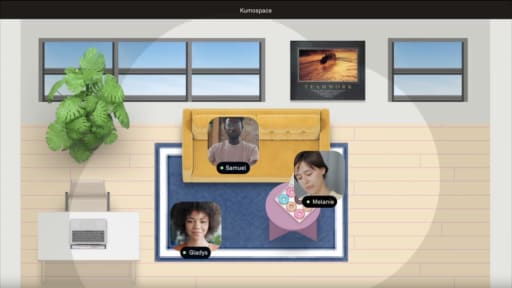
When evaluating how much office space will actually cost your startup, you need to understand each component that contributes to total occupancy expense. The base rent quoted by landlords is just the starting point.
Here are the core components you’ll encounter:
- Base rent
- Operating expenses
- Common Area Maintenance (CAM) fees
- Property taxes and insurance
- Build-outs and tenant improvements
- Furniture, equipment, and technology
- Permits and compliance costs
In many tech hubs, non-rent costs can add $8–$15 per square foot per year on top of base rent. Always request a full cost breakdown before signing anything.
Here’s a simple example: a 3,000 square foot office in Austin at $48 per square foot base rent plus $12 per square foot in extras (operating expenses, CAM, taxes) equals about $15,000 per month all-in. That’s $180,000 annually before you buy a single desk.
Flexible workspace solutions and virtual-first setups, like using Kumospace for daily collaboration combined with small physical hubs for in-person days, can bundle or eliminate many of these line items entirely.
Base Rent
Base rent is the quoted price per square foot per year, tied to your leased area. This is typically calculated using rentable square footage, which includes your usable square footage plus a pro-rata share of common areas like lobbies and hallways.
Example: $60 per square foot per year in SoMa, San Francisco for 2,500 square feet equals $150,000 per year, paid monthly at roughly $12,500.
You’ll encounter different lease structures:
- Gross lease: Landlord covers most operating expenses within the quoted rent
- Net lease: Tenant pays base rent plus a share of taxes, insurance, and/or operating expenses
- Triple net (NNN): Tenant pays base rent plus all three categories
Tech tenants often see full-service or modified gross quotes in coworking versus NNN in traditional buildings.
Watch for annual escalation clauses, typically 2–5% per year. For a startup projecting burn over 3–5 years, that $60 per square foot lease becomes $69–$73 by year five without any renegotiation.
Operating Expenses
Operating expenses cover the day-to-day costs of running a building: HVAC, janitorial services, security, building staff, and basic repairs. These are often passed through to tenants as variable charges in net lease structures.
Typical ranges run $4–$10 per square foot per year in US Class A buildings, depending on city and energy costs. A building in San Francisco with older HVAC systems will cost more than a LEED-certified tower in Austin.
The challenge is volatility. Utility spikes during extreme weather or unexpected maintenance projects can cause costs to jump mid-lease, making budgeting harder for startups trying to manage the runway.
Contrast this with flexible offices and managed spaces where operating expenses are bundled into a predictable monthly membership fee. No surprises, no reconciliation statements.
Common Area Maintenance (CAM) Fees
CAM fees cover shared space in your building: lobbies, corridors, bathrooms, landscaping, elevators, and building amenities like fitness centers or conference rooms.
Tenants pay a pro-rata share based on their rentable square footage. Landlords typically estimate monthly payments, then reconcile annually, sometimes resulting in unexpected bills if actual costs exceeded estimates.
Example: $3 per square foot per year in CAM for a 4,000 square foot office adds $12,000 per year to your occupancy cost.
Before signing any long lease, request historical CAM statements for at least 2–3 years. This reveals whether costs have been stable or trending upward, and helps you anticipate future hidden costs.
Property Taxes and Insurance
In a triple net lease structure, tenants pay base rent plus their share of property taxes, building insurance, and operational expenses. This shifts risk from landlord to tenant.
Property tax increases can catch tenants off guard. Example: a commercial property sale in 2023 triggers reassessment, causing office tenants’ tax pass-throughs to jump mid-lease. Suddenly your $55 per square foot total cost becomes $62.
In coastal markets with higher valuations, taxes and insurance alone can add $5–$12 per square foot per year. Before signing, ask for caps on controllable operating expenses and clarity on exactly how tax pass-throughs will be calculated.
Build-Outs and Tenant Improvements
Tenant improvements (TI) cover the work needed to make raw or previously occupied space functional for your team: walls, flooring, lighting, cabling, branded reception, meeting rooms, and specialized setups like AI lab infrastructure.
Typical TI allowances in 2026 range from $30–$100 per square foot depending on lease term length and market conditions. Landlords are often more generous with longer commitments in softer markets.
Example: A 5,000 square foot AI startup HQ in Denver needing $75 per square foot in upgrades equals $375,000 in build-out costs, even if partly covered by TI allowance.
Consider the opportunity cost. Those funds could otherwise be invested in product development rather than walls and carpet. Every dollar spent on build-out is a dollar not spent on people.
Furniture, Equipment, and Technology
Traditional office leases rarely include furnishings. You’re responsible for desks, ergonomic chairs, monitors, conference tables, phone booths, high speed internet infrastructure, and security access systems.
Rough cost ranges for modern tech stacks in AI-heavy teams:
- Basic workstation setup: $1,500–$2,500 per person
- Higher-end ergonomic setup with multiple monitors: $2,500–$4,000 per person
- Conference room AV equipment: $5,000–$25,000 per room
- Office furniture for common areas: $10,000–$50,000 depending on size
That’s before ongoing costs for IT support, software subscriptions, and equipment refresh cycles.
Teams leveraging virtual office platforms like Kumospace can shrink the number of fully equipped physical desks, cutting capex significantly. If half your team works remotely on any given day, you don’t need 50 fully equipped workstations.
Permits, Compliance, and Special Use Cases
Moving into new office space often requires occupancy permits, fire inspections, accessibility upgrades (ADA compliance), and zoning-related modifications. These aren’t optional. They’re legal requirements.
For specialized AI and ML labs with on-prem hardware, you may face additional electrical capacity requirements, enhanced cooling systems, and security certifications. These can add substantial costs beyond standard office buildout.
High-level cost examples:
- Standard permit and inspection fees: $2,000–$10,000
- ADA compliance upgrades: $5,000–$25,000
- Electrical/cooling upgrades for server rooms: $20,000–$100,000+
- Major zoning or use modifications: $10,000–$50,000+
Consult with local code experts or your landlord early to avoid mid-project surprises and delays that can push back your move-in date by months.

Office buildings are categorized into classes that reflect quality, location, and amenities. Understanding these classes helps you calibrate expectations around pricing, brand perception, and your ability to attract top talent.
The general breakdown:
- Class A: Premium buildings in prime locations with top-tier finishes and amenities
- Class B: Solid buildings in decent locations, slightly older or with fewer amenities
- Class C: Older stock in fringe areas with minimal amenities
Class A offices typically command 20–40% premiums over Class B in the same submarket. Class C can be 30–50% cheaper than Class B but comes with significant tradeoffs.
For seed, Series A, and growth-stage startups in cities like San Francisco, NYC, Seattle, and Austin, the choice often comes down to balancing prestige against burn rate.
Class A Office Space Pricing
Class A represents the top tier: new or recently renovated buildings in the best locations like SF Financial District, NYC Hudson Yards, and Austin CBD. These properties feature premium finishes, strong tech infrastructure, 24/7 security, and amenities like fitness centers and rooftop terraces.
Founders may choose Class A for investor perception, client-facing teams, and competitive hiring. A prestigious address can signal stability and success.
The downsides include long leases (often 5–10 years), higher upfront costs, and rigid footprints. These are often at odds with rapidly changing headcounts in early-stage startups. Signing a 7-year Class A lease at seed stage is a significant bet.
Class B Office Space Pricing
Class B office spaces represent the “good enough” tier: decent locations, functional buildings, but slightly older or with fewer amenities than Class A. Pricing typically runs 15–30% lower than Class A nearby.
Example comparison in Downtown Seattle:
- Class B: $35–$45 per square foot per year
- Class A: $50–$60 per square foot per year
That 25% discount on a 5,000 square foot office saves $37,500–$75,000 annually.
Class B is often a strong fit for Series A–B companies that want a professional space without over-optimizing for prestige. Look for upgraded Class B buildings that have modern fiber connectivity, decent natural light, and good transit access while avoiding the price premium of trophy properties.
Many Class B buildings have been renovated with modern amenities specifically to compete for tech tenants who are cost-effective minded but still want quality space.
Class C Office Space Pricing
Class C buildings are older stock, often in fringe or non-core areas, with minimal amenities and lower rent, sometimes under $20–$25 per square foot in certain markets like Kansas City or secondary Sun Belt cities.
Pros:
- Lowest absolute rental costs
- Potential flexibility if landlord struggles with vacancy
- May work for back-office, warehouse, or storage-heavy uses
Cons:
- Can hurt employer brand
- May require larger investments in IT, security, and cosmetic upgrades
- Often lack essential amenities like quality HVAC, reliable elevators, or on-site parking
For high-skill, remote-friendly teams, Class C space rarely makes sense. You’re often better served by virtual-first setups, coworking spaces, or platforms like Kumospace plus periodic offsites instead of committing to low-grade space that undermines your ability to attract talent.

Beyond building class and city averages, several practical variables have a major impact on what you’ll pay: location within a city, proximity to the central business district, size and layout, amenities, and current market demand.
Founders should model multiple scenarios rather than fixating on one “big lease.” Consider combinations like:
- 3 days in-person in a small hub
- 1–2 flexible office locations in different cities
- Virtual office for daily collaboration
Use the following factors as a checklist when reviewing any space or quote.
Location and Proximity to the Central Business District
City-to-city differences are obvious. NYC versus Phoenix, San Francisco versus Salt Lake City. But intra-city gaps matter just as much.
Examples of location premiums:
- Manhattan Midtown vs Brooklyn: 40–60% higher in Midtown
- SF SoMa vs Outer Sunset: 30–50% higher in SoMa
- Austin CBD vs East Austin: 20–35% higher in CBD
A 10–15 minute move away from the core can save 20–40% on rent while still being accessible for employees. Transit access, bike infrastructure, and proximity to client clusters remain important non-price factors affecting ROI.
Teams operating primarily in Kumospace or other virtual tools may only need central locations for occasional on-site events, not daily commutes. That flexibility expands your options for more affordable office space.
Size and Layout
Understanding how much office space you actually need prevents overpaying for extra space you won’t use.
Rule-of-thumb ranges for space utilization:
- Fully in-office teams: 100–130 sq ft per person
- Hybrid (3 days/week in-office): 75–100 sq ft per person
- Remote-first with hub access: 50–75 sq ft per person
Layouts matter too. Open plan offices cost less to build out than configurations with many private offices or specialized lab spaces. An AI team needing GPU workstations and enhanced cooling will have different requirements than a sales team.
Encourage right-sizing for the next 12–18 months rather than over-leasing for hypothetical future headcount. Use flexible or virtual extensions rather than locking in larger offices for growth that may or may not materialize.
Amenities and Building Services
Common amenities that drive price include:
- Shared conference rooms and meeting rooms
- Rooftop decks and outdoor space
- Secure bike storage and showers
- On-site gyms and fitness centers
- Cafeterias or food service
- EV charging stations
- Advanced AV-equipped presentation rooms
High-amenity buildings in tech hubs price at the top of their class, but may reduce separate perks spending. If your building has a gym, you don’t need to subsidize gym memberships.
For highly distributed teams, Kumospace can handle much of the office culture layer virtually. Daily standups, casual conversations, and collaboration spaces can happen online. That means you can prioritize a few high-quality physical amenities over an oversized HQ.
Distinguish between amenities employees actually use weekly versus nice-to-haves that mostly inflate rent.
Market Demand and Timing
Post-2020 shifts have reshaped the commercial real estate market. Elevated vacancy in some downtowns, a flight to quality toward newer Class A buildings, and landlords’ willingness to offer concessions in softer submarkets all create opportunities for well-informed tenants.
Market trends worth monitoring:
- San Francisco saw Class B/C vacancy spike, creating sublease opportunities
- Miami and Austin experienced tighter markets with fewer amenities at lower price points
- NYC shows a percent difference of 30–40% between trophy buildings and older inventory
High vacancy translates to negotiating leverage: free months of rent (2–6 months is common in soft markets), increased TI allowances, or flexible leases with shorter terms and renewal options.
Work with brokers who understand quarterly vacancy and sublease availability before negotiating any major lease. Timing your move near quarter- or year-end, when landlords are motivated to hit occupancy targets, can yield better terms.

The choice between a 5–10 year traditional office lease and newer models like coworking, serviced offices, virtual offices, and virtual-first plus occasional physical approaches has become one of the most important decisions for growing startups.
|
Model |
Typical Commitment |
Upfront Costs |
Scalability |
|
Traditional Lease |
5–10 years |
High (deposit + TI + furniture) |
Low |
|
Coworking/Flex |
Month-to-month or 6–12 months |
Low (first month only) |
High |
|
Virtual Office |
Month-to-month |
Very low |
Very high |
|
Hybrid (physical hub + virtual) |
1–3 years for hub |
Moderate |
High |
Kumospace offers a concrete example of a virtual office that lets distributed teams collaborate as if co-located, reducing the necessity of a large dedicated exclusive office space.
Traditional Long-Term Leases
Standard commercial leases in major markets run 5–10 years, often requiring personal and corporate guarantees from early-stage ventures. Landlords want assurance you’ll pay monthly rent for the full term.
Pros:
- Predictability of base rent over multiple years
- Full control over design and branding
- Ability to build strong in-person culture if fully utilized
Cons:
- High security deposits (often 3–12 months rent)
- Large TI outlays or debt if allowance doesn’t cover needs
- Low flexibility when headcount changes or funding environments shift
Flexible Workspaces and Coworking
Coworking spaces and serviced offices offer shorter terms (month-to-month or 6–12 months), all-inclusive pricing, and access to shared amenities. The cost to rent is transparent and predictable.
Price examples for dedicated desks:
- NYC/SF/Boston: $500–$1,200 per month per desk
- Secondary markets: $150–$400 per month per desk
Benefits for startups:
- Minimal upfront setup (often just first month’s payment)
- Bundled utilities, internet, and janitorial services
- Rapid scaling of seat count up or down
- Complements remote strategies
Many teams use flex offices as collaboration hubs, 3 days per week for team meetings, whiteboarding, and culture-building, while daily deep work and standups happen in a virtual HQ like Kumospace.
Virtual Offices and Meeting Room-First Strategies
Virtual offices provide a business address, mail handling, and access to on-demand meeting rooms without renting office space full-time.
Typical costs:
- Virtual office address in major markets: $75–$200 per month
- Hourly meeting room fees: $30–$100 per hour depending on size and location
- Day office access: $50–$150 per day
This remote-first plus book space when needed model works well for small founding teams and engineering-heavy organizations that rarely need everyone on-site simultaneously.
Kumospace takes this further. Companies create a persistent virtual HQ for daily work, standups, pair programming, interviews, and only rent physical meeting rooms or offsite venues for key milestones, client demos, and quarterly planning.
A 20-person engineering team might need physical office rentals only 4–6 days per month, spending the rest of their time in Kumospace. That is a fundamentally different cost structure than traditional office space needs.

The goal isn’t no office. It’s the right office, the right size, and the right mix of physical and virtual. This is especially true for tech and AI companies competing globally for talent who may not want to relocate.
A well-run remote or hybrid culture can be just as strong as fully in-person when supported by the right rituals and tools. The key factors are intentionality, communication, and the right technology stack.
Negotiate Lease Terms and Ask for Concessions
Even in a straightforward negotiation, you can often secure:
- 2–6 months of free rent (more in soft markets)
- Higher TI allowances to offset build-out costs
- Caps on annual operating expense increases
- Shorter initial terms with renewal options at defined rates
- Right-of-first-refusal on adjacent space for expansion
Vacancy in many CBDs gives tenants more leverage in 2024–2025 than pre-pandemic. Landlords with move-in-ready spaces are especially motivated.
Always involve an experienced tenant broker and real estate attorney. They will catch escalation clauses, pass-through language, and termination provisions that can cost you later. Time your negotiations near quarter- or year-end when landlords are pushing to hit occupancy targets.
Choose Smarter Locations and Smaller Footprints
Consider slightly less prestigious but transit-rich submarkets:
- Brooklyn vs Manhattan core: 25–40% savings
- Oakland vs SF CBD: 20–35% savings
- East Austin vs CBD: 15–25% savings
Design offices for collaboration and culture moments, not as default daily desk farms. A smaller, high-quality hub plus Kumospace can feel premium to employees while keeping fixed costs low.
Example: A 40-person engineering team using a 15–20 desk hub with hot-desking and booking rules instead of a desk for every employee. Team members who rarely come in do not occupy permanent space. Those who come frequently have priority booking.
Share, Sublease, or Go On-Demand
Alternative structures to cut costs:
- Co-tenancy: Share space with another startup, splitting rent and common areas
- Subleasing: Take excess space from a larger company at discounted rates
- On-demand passes: Coworking day passes or meeting room bookings only when needed
Sublease rates can run 20–40% below direct landlord rents, especially for partially built-out tech offices where the original tenant already invested in upgrades. Operational complexity exists, including shared resources, noise, and visitor policies, so establish clear agreements upfront.
Pair shared or on-demand physical access with a persistent virtual office like Kumospace to keep everyone aligned day-to-day. Physical meetings become intentional gatherings rather than the default mode.