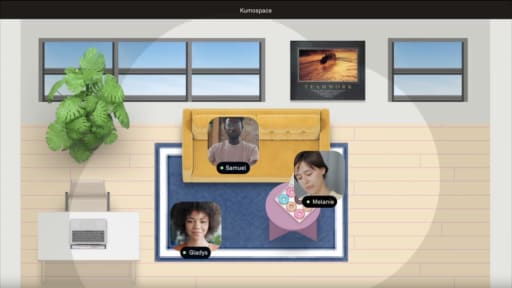
A video chat room is a virtual space where users can join and interact via live video, audio, and text chat simultaneously. Unlike traditional phone calls or text messaging, these rooms let you see and hear the person on the other end, creating more meaningful conversations.
The key difference lies in how these rooms function. A random video chat pairs you one-on-one with strangers online for quick, anonymous encounters, similar to how Omegle operated before shutting down in 2023. Multi-person video chat rooms, on the other hand, host several participants at once, making them ideal for social hangouts, study groups, or remote team collaboration. Platforms like Kumospace take this further by offering spatial virtual environments where users can move between different rooms, similar to walking through a physical space.
Since around 2010, video chat rooms have shifted from simple browser-based cam sites to more immersive virtual spaces. Early platforms relied on basic webcam streaming with limited features, but modern solutions now include HD video, spatial audio, customizable environments, and advanced moderation tools.
Real-world uses range from meeting new friends and having casual conversations with like-minded strangers to hosting online events, coworking sessions, and virtual offices. Whether you want to talk to people from different countries or create a persistent space for your distributed team, video chat rooms provide the structure to make it happen.

Users can choose between several types of video chat rooms depending on their goals. Whether you want to chat with strangers for a few minutes or build a persistent virtual workspace for your team, there is a format designed for your needs.
Random 1-on-1 Video Chat Rooms: Fast matching with strangers, instant skipping, ideal for spontaneous socializing and meeting new people from anywhere.
Themed Public Rooms: Rooms centered on specific topics like gaming, language exchange, music, or hobbies—often visible in a room directory for easy browsing.
Private or Password-Protected Rooms: Used for friends, family gatherings, and small group hangouts where only invited guests can join.
Always-On Team Spaces: Persistent virtual offices like those offered by Kumospace, where colleagues can walk into different rooms throughout the workday.
Hybrid Rooms: Some platforms offer text-only and text-plus-video modes in the same room, giving users flexibility based on their comfort level.
Random 1-on-1 Video Chat Rooms
The matching flow in a random video chat room is straightforward. Click “Start,” allow your camera and mic permissions, and get paired instantly with a stranger from anywhere in the world. Sessions begin immediately, and many platforms do not require registration.
Users can often specify interests or basic filters like region or language to improve match quality. This helps connect you with like-minded strangers who share your hobbies or speak your native language.
Common use cases for random 1-on-1 rooms include:
- Quick social breaks during the workday
- Practicing a foreign language with native speakers
- Satisfying curiosity about other cultures and countries
- Making friends with people you’d never meet otherwise
- Anonymous conversations without long-term commitments
Sessions are designed to be short and skippable. A “Next” button lets you move to another person at any moment if the current match is not a good fit. This creates a low-pressure environment for spontaneous conversations.
Group & Community Video Chat Rooms
Group rooms host several participants at the same time, functioning like digital hangout spaces or community events. These rooms typically display a participant list, support host and moderator roles, and include features like screen sharing and text chat sidebars.
Kumospace uses spatial audio in larger rooms, making conversations feel more natural. Voices get quieter as you move further from someone and louder as you approach, which mirrors how sound works in real life. This allows multiple small conversations to happen simultaneously within the same space.
Common scenarios for group video chat rooms include:
- Online clubs and community meetups
- Streaming watch parties with friends
- Language exchange sessions with rotating partners
- Casual “open door” group chats for anyone to join
- Gaming sessions and virtual game nights
Virtual Offices and Coworking Video Rooms
The concept of using a video chat room as a persistent office has transformed remote work. Instead of scheduling formal video calls, team members drop into a virtual space throughout the day, similar to walking into a physical office.
Benefits for remote teams include:
- Spontaneous conversations that replace water-cooler chat
- Easy check-ins without formal meeting scheduling
- Replicating in-person office dynamics for distributed teams
- Status indicators showing who’s available, busy, or away
- Integrated screen sharing for impromptu collaboration
These rooms often integrate with calendars and productivity tools, making them a central hub for remote collaboration rather than just another video app.

Not all video chat platforms deliver the same experience. When evaluating a video chat room for socializing, work, or events, look for these essential features:
- HD Video and Clear Audio: The baseline requirement for an enjoyable chat experience. Look for platforms that use modern codecs to compress video efficiently while maintaining quality.
- Interest Tags and Smart Matching: Features that help you connect with people who share your interests, language, or location preferences.
- Integrated Text Chat: The ability to send messages, emojis, and links alongside your video feed for richer interactions.
- Cross-Platform Access: Mobile and desktop accessibility without heavy downloads, ideally web-based apps that work directly in your browser.
- Screen Sharing: Essential for work collaboration, presentations, or watching content together with friends.
- Background Effects: Virtual backgrounds and blur options to protect your privacy and maintain a professional appearance from any location.
- Virtual Environments: Interactive rooms like those offered by Kumospace, where spatial movement adds another dimension to video chat.
Safety, Privacy, and Moderation
Modern platforms rely on multiple layers of protection to keep users secure. AI detection systems flag inappropriate content in real time, while user reporting tools allow quick escalation of violations. Human moderators handle complex cases that automated systems cannot resolve.
Privacy controls have become significantly more sophisticated:
- Stay anonymous with usernames instead of real names
- Control exactly what your camera shows with virtual backgrounds
- Limit who can join your room with passwords or waiting rooms
- Block specific users from contacting you again
- Adjust data retention and recording permissions
Reputable platforms avoid selling sensitive user data and provide transparent privacy policies. Kumospace and other responsible providers enforce strict rules against harassment, hate speech, and illegal content. Behavior that violates community guidelines is prohibited and can result in account suspension.
Always verify a platform’s safety features before engaging with strangers online. Look for clear reporting mechanisms, visible moderation presence, and responsive support teams.
Customization and Virtual Environments
Some platforms go beyond simple video tiles to offer customizable rooms and virtual spaces. This turns a basic video chat into an immersive environment that feels more engaging and personal.
Customization options typically include:
- Changing room backgrounds and themes
- Adding virtual furniture and decorative elements
- Branding spaces with logos for events or companies
- Creating multiple rooms within a single space
- Designing layouts that guide user flow and interaction
Kumospace allows users to design themed rooms such as lounges, conference halls, cafés, or game zones. Event organizers can create branded experiences with sponsor booths and multiple stages. Remote teams can build virtual offices that reflect their company culture.
This level of customization helps events, communities, and remote teams create spaces that feel uniquely theirs, moving beyond generic video grids to experiences that keep participants engaged.
Joining a video chat room today usually takes less than a minute. Modern platforms have streamlined the onboarding process so you can get connected quickly.
Here’s the basic flow:
- Visit the site or open the app in your browser
- Allow camera and microphone permissions when prompted
- Select your mode: random chat, group room, or specific space
- Adjust any filters like interests, language, or region
- Click “Start” or “Join” and begin chatting
Most platforms work directly in Chrome, Firefox, and Edge on both desktop and mobile browsers. No separate app download is required for basic functionality.
Before entering a room, it helps to test your camera and mic in the platform’s settings. Adjust your lighting so your face is clearly visible, and position your camera at eye level for a more natural angle. A neutral background keeps attention on you rather than your surroundings.
Choosing interests or room topics before you start helps match you with people who share your hobbies, profession, or language preferences. This usually leads to more relevant and enjoyable conversations.

Joining a Random Video Chat Room
To join a random video chat room, follow these steps:
- Navigate to the platform’s random chat or “Talk to Strangers” section
- Click “Start” or “Begin Chat”
- Accept camera and microphone permissions in your browser
- Wait briefly while the system matches you with another user
- Begin your conversation when your chat partner appears
The interface typically shows a local preview window, a main video window for your chat partner, a text chat area, and a “Next” or “Skip” button to move on to another person.
Be respectful in your interactions, end any chat that feels uncomfortable, and use the platform’s reporting tools for violations instead of engaging with problematic users. Many random chat platforms allow you to connect without registration, though creating a free account often unlocks additional filters and saved settings.
Creating or Entering a Group Video Chat Room
Creating your own group room gives you control over the environment and who can join. The process is straightforward:
- Choose a room name that describes its purpose
- Set privacy options (public or private)
- Generate an invite link to share with participants
- Customize any additional settings like waiting rooms or participant limits
- Enter the room and wait for others to join
Share invite links through email, messaging apps, or social media to bring friends, coworkers, or community members into your space. As the host, you typically have controls to mute participants, lock the room, or remove disruptive guests.
Setting simple rules and expectations before sessions begin helps keep rooms friendly and organized. A brief welcome message that explains the room’s purpose can make a strong first impression.

Good etiquette and safety awareness make every video chat experience better for you and everyone else in the room. A few simple practices go a long way.
Presentation basics:
- Good lighting on your face (natural light or a ring light works well)
- Neutral, uncluttered background or a virtual background
- Camera at eye level for natural conversation angles
- Appropriate clothing for your audience and context
Safety essentials:
- Never share sensitive personal information with strangers
- Use platform blocking and reporting tools immediately when needed
- Leave any chat that feels wrong; trust your instincts
- Respect that “no” means no in any interaction
- Be mindful of cultural differences in communication styles
Community guidelines exist for a reason. Respecting them creates spaces where everyone can engage comfortably.
Technical and Social Etiquette Tips
- Test your microphone and camera before joining important group rooms or events
- Use headphones to avoid echo and feedback issues
- Mute yourself when not speaking in larger rooms to reduce background noise
- Introduce yourself clearly, including your name, optional location, and what you are interested in discussing
- Be patient with network lag, accents, and unfamiliar cultural norms
Hosts carry additional responsibility. Greet newcomers, explain the room’s purpose, and set expectations early. A welcoming atmosphere encourages participation and helps new users feel comfortable engaging.
Protecting Your Privacy
When chatting with strangers, protect your personal information:
- Avoid sharing your full name, address, workplace, or financial details
- Use a nickname or username that doesn’t reveal identifying information
- Disable video or use virtual backgrounds if you’d prefer not to show your surroundings
- Check platform privacy settings, including recording permissions and data retention policies
- Log out and clear sessions when using shared or public devices
Remember that age restrictions exist on most platforms, typically requiring users to be adults aged 18 or older. Personal details should only be shared when you feel secure and with people you trust.