Illustration of person analyzing charts on laptop screen, symbolizing workforce analytics and data insights.

What Is Workforce Analytics?

By Sammi Cox

Workforce analytics helps organizations turn employee and operational data into better hiring, retention, and workforce planning decisions. Rather than relying on intuition alone, companies can use analytics to identify trends, improve performance, and make more informed talent strategies.

This guide explores the four main types of workforce analytics, how each works, and how organizations can use them to build a stronger, more effective workforce.

Key Takeaways

  • Workforce analytics includes four main types: descriptive, diagnostic, predictive, and prescriptive. Together, they help HR teams move from reactive reporting to proactive strategy.
  • These analytics improve workforce planning, reduce labor costs, and align talent decisions with business goals, driving measurable business success.
  • Specific use cases include optimizing the hiring process, designing better training programs, and using employee engagement analytics to boost workforce performance and employee retention.
  • Companies of all sizes can start simple with descriptive analytics and mature into diagnostic, predictive, and prescriptive approaches over time.

What Is Workforce Analytics?

Workforce analytics refers to the practice of collecting and analyzing human resources data to improve workforce management and business outcomes. It involves gathering data about employees throughout the entire employee lifecycle-from the hiring process and onboarding through employee training, performance management, engagement, and retention-and turning that employee data into actionable insights.

Workforce analytics overlaps with HR analytics and people analytics but typically emphasizes operational outcomes like employee productivity, labor costs, and workforce planning. It shifts HR from an administrative function to a strategic one. For example, a company could analyze workforce data and identify rising overtime in certain teams. By combining HR data and attendance records, leaders may uncover issues such as understaffing or uneven workload allocation. In another case, remote teams using Kumospace's Space Analytics redesigned hybrid norms after engagement scores showed remote workers spending less collaborative time in virtual shared spaces.

Modern cloud tools and collaboration platforms can make workforce analytics more accessible for mid-sized companies, although successful implementation still depends on reliable data, appropriate systems, and internal expertise. With existing HR systems and existing HRIS data, most organizations already have the data points they need to begin.

The Four Main Types of Workforce Analytics

Organizations typically progress through four levels of analytics sophistication. Each answers a different question:

Type

Question It Answers

Descriptive

What happened?

Diagnostic

Why did it happen?

Predictive

What is likely to happen?

Prescriptive

What should we do?

Combining all four types of HR analytics is what unlocks the full benefits of workforce analytics. Below, each type gets its own breakdown with definitions, examples, and benefits.

Descriptive Workforce Analytics

Descriptive analytics summarizes past workforce trends and metrics to show what has happened over a specific period. Common workforce metrics include:

  • Headcount by department, role, and location
  • Employee turnover rate (voluntary and involuntary)
  • Absenteeism and overtime hours
  • Labor costs and time-to-hire
  • Completion rates for training programs
  • Basic engagement scores

Simple charts and HR analytics dashboards make this data easy to scan for HR leaders during monthly or quarterly reviews. For instance, a software company might spot a spike in voluntary resignations among mid-level engineers between January and June 2025, or identify lower engagement from remote teams via Kumospace usage data.

Descriptive analytics is the foundation. Without reliable historical data and clear dashboards, more advanced analytics types become risky or misleading. Workforce analytics is applied across the entire employee lifecycle, and descriptive reporting is where that journey starts.

Diagnostic Workforce Analytics

Diagnostic analytics explains the reasons behind workforce trends by segmenting data and looking for correlations. Rather than just seeing that turnover rose, you discover why.

Practical techniques include comparing results by manager, team, location, tenure, or work model (onsite vs. hybrid vs. fully remote). For example, you might discover that high turnover in 2024 is concentrated among employees with limited access to upskilling opportunities, or that absenteeism is higher on teams with unclear workload distribution.

Combining quantitative performance data (scores, goal attainment) with qualitative information, such as exit interviews, pulse surveys, and comments from Kumospace standups, strengthens diagnostic insights. This helps leaders avoid surface-level conclusions and focus on root causes before investing in new policies.

Predictive Workforce Analytics

Predictive analytics forecasts future workforce outcomes based on historical data using statistical or machine learning models. Using predictive models helps identify burnout risk factors to reduce turnover, and predictive analytics can forecast employee turnover and skill needs months in advance.

Specific use cases include:

  • Predicting which roles will be hardest to fill in 2026 based on past hiring process data
  • Estimating future labor costs under different growth scenarios
  • Identifying employees at risk of leaving based on declining engagement scores, fewer logins to collaboration spaces, or stalled career progression

Prescriptive Workforce Analytics

Prescriptive analytics recommends actions to optimize workforce strategies, going beyond prediction to tell leaders what to do next. Prescriptive models simulate scenarios-such as increasing training budgets, changing shift patterns, or adopting full-time hybrid collaboration and show likely impacts on retention, engagement, and labor costs.

For example, a company might use prescriptive analytics to decide whether to invest in leadership training or external hiring to fill manager roles over the next 18 months. These tools often appear in optimization software for staffing, compensation planning, and learning-path recommendations.

Human judgment remains essential. HR professionals and managers should treat prescriptive outputs as decision support, not automatic commands, weighing trade-offs like cost, employee satisfaction, and cultural fit.

Key Use Cases and Examples of Workforce Analytics

Different departments-HR, operations, finance, line managers-use workforce analytics in complementary ways. Here are key use cases from 2023–2025, with relevance to hybrid and remote work.

Optimizing the Hiring Process with Analytics

Recruitment analytics measures cost per hire and time to hire, surfacing exactly where candidates stall (a delayed second-round interview, an unclear job description, a slow reference check), so hiring teams can fix the specific step causing the drag instead of guessing.

  • Diagnostic analytics reveals why candidates drop out (delays between interviews, unclear role descriptions, poor virtual experiences)
  • Predictive analytics estimates quarterly hiring needs based on projected growth and historical turnover
  • Organizations analyze recruitment channels to optimize talent acquisition, and prescriptive approaches recommend which channels to prioritize: referrals, job boards, or virtual hiring events

The same workforce analytics that match candidate history to role requirements also flag likely early-turnover risks before an offer goes out, letting hiring managers weigh retention risk alongside skill fit rather than discovering it six months in.

Designing Better Training Programs and Employee Development

Companies use descriptive analytics to track participation rates, completion rates, and post-training employee performance changes. Diagnostic analytics show which training formats (live sessions, self-paced modules, interactive workshops) actually improve promotion rates.

This is where workforce analytics extends into planning: skills-gap data feeds forward into forecasting which capabilities the organization will need (data literacy, AI skills) and estimating how many employees require upskilling to close that gap by 2027. Prescriptive analytics recommends personalized learning paths based on role, performance data, and career aspirations. Linking learning data to employee productivity, sales, or customer satisfaction metrics lets you measure ROI on employee training investments.

Employee Engagement Analytics and Retention

Employee engagement analytics analyzes employee surveys, collaboration patterns, feedback, and employee retention trends to understand engagement levels and identify factors that influence retention. Aggregating survey results enhances visibility into both overall employee sentiment and retention trends across the organization.

  • Descriptive analytics tracks engagement scores over time by team, location, and work model
  • Diagnostic analytics uncovers why engagement dips-manager quality, workload, recognition gaps
  • Predictive examples: estimating which teams face the highest voluntary turnover risk in the next 6–12 months
  • Employee engagement surveys correlate with stronger retention rates, and high employee engagement scores lead to better performance outcomes

Workforce analytics can also flag disengagement patterns that call for different fixes depending on their cause. Targeted recognition programs help close recognition gaps, redesigned meeting cadences help with overload, and new hybrid rituals like virtual coffee chats help with isolation on distributed teams.

Improving Workforce Performance and Labor Cost Management

Descriptive analytics tracks workforce performance metrics: goal attainment, productivity per FTE, error rates, and revenue per employee. Performance management analytics helps set realistic performance goals based on actual data rather than guesswork.

Workforce analytics identifies operational bottlenecks and optimizes workflows to increase productivity. It can also help manage labor costs by identifying hidden costs-unnecessary overtime, overstaffing, inefficient scheduling. Labor often represents 50–70% of total business costs, yet many employers still rely on reactive decision-making.

Prescriptive tools suggest optimal staffing plans, shift mixes, and cross-training strategies. For knowledge work, analytics reveals the cost of excessive meetings, prompting redesign through more efficient virtual spaces like Kumospace to monitor employee productivity patterns.

Kumospace: Collaboration Analytics for Hybrid Teams

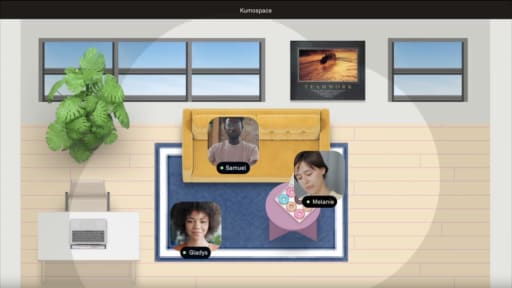
Kumospace brings workforce analytics into the day-to-day collaboration experience through its Space Analytics dashboard. Instead of focusing on traditional HR metrics alone, it tracks meeting participation, workspace usage, user presence, collaboration patterns, and activity across virtual offices.

These insights help organizations better understand how hybrid and remote teams interact, identify engagement trends, evaluate virtual workspace adoption, and make more informed decisions about collaboration, team structure, and hybrid work policies. Features like spatial audio, which enables natural conversations based on proximity, provide additional context into how employees collaborate within virtual spaces. For companies that rely on virtual offices, Kumospace serves as a valuable complement to broader workforce analytics platforms.

Best Practices for Implementing Workforce Analytics

To implement workforce analytics successfully, treat it as an ongoing journey, not a one-time project. Strong data governance, privacy protection, and transparent communication with employees are essential. Only 22% of HR professionals currently find value in people analytics, and just 23% of HR professionals integrate business and HR data often-meaning there is significant room for improvement. Regularly monitor workforce metrics to ensure data relevance.

Align Analytics with Business Goals and KPIs

Start with three to five concrete business questions, such as understanding voluntary turnover drivers or improving time-to-hire for critical roles. Define 5–10 KPIs to measure workforce analytics success, including key performance indicators like turnover rate among high performers, internal promotion rate, and training completion linked to performance uplift. Involve executive leadership early so chosen key metrics tie directly to revenue, customer outcomes, or HR strategy priorities. Revisit KPIs annually as strategy and workforce composition evolve.

Selecting Tools and Building Dashboards

Invest in technology solutions that align with business needs. Selection criteria should include integration with existing HR systems-HRIS, ATS, payroll, learning platforms, and collaboration tools. Start with simple dashboards displaying core descriptive metrics in an executive-friendly layout. Build toward self-service data analysis where HR and managers can slice data by team, location, and role without needing dedicated analysts. Set a regular review cadence and ensure data security through role-based access controls.


Summary

Workforce analytics helps organizations use employee and operational data to improve hiring, retention, workforce planning, and overall business performance. It progresses through four stages: descriptive, diagnostic, predictive, and prescriptive analytics, allowing HR teams to move from reporting past trends to forecasting outcomes and recommending actions. Organizations can start with simple reporting and gradually adopt more advanced analytics as their data capabilities mature.

Common use cases include optimizing recruitment, improving training programs, increasing employee engagement and retention, managing labor costs, and strengthening workforce performance. By combining data from HR systems, performance tools, and collaboration platforms, companies can make more informed, data-driven talent decisions while aligning workforce strategies with broader business goals.

Frequently Asked Questions

Transform the way your team works from anywhere.

A virtual office in Kumospace lets teams thrive together by doing their best work no matter where they are geographically.

Headshot for Sammi Cox
Sammi Cox

Sammi Cox is a content marketing manager with a background in SEO and a degree in Journalism from Cal State Long Beach. She’s passionate about creating content that connects and ranks. Based in San Diego, she loves hiking, beach days, and yoga.

Transform the way your team works.