Calling a company “remote-first” does not make its processes remote-first. If decisions still happen in hallway conversations, important information reaches headquarters first, and promotions depend on who managers see regularly, you are running an office-first system under a remote-first label.
Most remote-first company mistakes look like that: not policy failures, but process defaults nobody went back and revisited. They are easy to miss because nothing appears broken, and they show up later in who got promoted and who quit.
Key Takeaways
- Remote-first companies need to design meetings, communication, decision-making, and career growth around distributed employees rather than office-based habits.
- The clearest warning signs are delayed information, fewer high-visibility opportunities for remote workers, poor documentation, and performance evaluations influenced by physical presence.
- The most effective fixes are simple: document decisions, run key meetings remotely, assign work based on skills and outcomes, and avoid surveillance or blanket return-to-office policies.
What "remote-first company mistakes" actually are

Remote-first companies prioritize remote work as their default approach. That means meetings, documentation, hiring, promotions, and decision-making are all designed with the remote worker as the baseline, not as an afterthought. A remote-friendly company permits flexibility but doesn't restructure anything. A fully remote organization has no meaningful office. Remote-first sits between: offices may exist, but every system should work equally well for the person at a desk in headquarters and the person working remotely from another country.
The business case for getting this right is concrete. Remote-first companies can hire wherever they can legally employ, cut real-estate overhead, and offer the kind of flexibility that keeps people around. None of those benefits materialize if processes still assume everyone is in the same room.
Having offices is not itself a remote-first mistake. It is designing processes that give office employees better access to information, collaboration, feedback, or growth. Physical presence may be necessary for labs, hardware, or regulatory work, but the mistake is treating the office as the default when the company claims to be remote-first.
Signs your "remote-first" setup is quietly breaking down

These are patterns across multiple decision cycles, not single incidents. One occurrence of any sign below proves nothing. A missed Slack message, a quiet meeting, or one promotion that went to an office-based person could each have a dozen explanations. What matters is whether the same pattern shows up repeatedly, across teams, over weeks or months.
Remote employees hear about important decisions later than office staff
Updates about strategy changes, budget decisions, or personnel moves surface first in the HQ conference room, over lunch, or at someone's desk. Remote workers get a recap days later in a Slack message or a forwarded email. Insufficient communication is a common problem in remote-first organizations, and this is where it usually starts: not in a lack of words, but in who gets the words first.
Check timestamps. Compare when announcements appear in shared channels against when in-person meetings took place. If remote employees consistently learn news 24 to 72 hours after office staff, that is an office-first communication norm wearing a remote-first label. A one-off crisis meeting at HQ is not the same thing. Repetition across multiple announcements is the signal.
Hybrid meetings where remote workers are mostly silent
In an all-hands or project review, people in the room drive the discussion. Remote workers stay muted, use chat only, or drop early. The camera shows a conference table; the microphone picks up crosstalk. A 2019 ethnographic study of hybrid meetings at two global software companies in Denmark and the UK found recurring technical, social, and cultural asymmetries, with remote participants talked over or left out of pre- and post-meeting discussion.
Time-zone fatigue or unclear agendas can explain silence too, so the fix is not "force people to talk." A truly remote-first company would default these meetings to fully remote video calls or invest in deliberate facilitation: named speaking queues, a dedicated chat monitor, and a camera setup that does not reduce remote workers to a thumbnail in the corner.
Work and learning cluster around HQ or the largest office
Complex, high-visibility projects and informal mentoring gravitate toward co-located coworkers. Remote employees end up on maintenance tasks. An analysis of two million white-collar workers by Live Data Technologies found that 3.9% of fully remote employees were promoted in 2023, against 5.6% of those working in an office full time or on a hybrid basis. Communication silos can lead to isolated teams, and those silos often form along location lines.
Review the last two quarters of major initiatives and check whether fully remote workers got comparable opportunities. If remote workers consistently got fewer stretch projects or leadership roles, that is a pattern worth investigating. A pilot team co-located for hardware or lab access is a legitimate exception, as long as it is bounded and documented rather than open-ended.
Slack and email carry decisions that never make it into documentation
Many remote teams rely solely on chat for communication. Remote workers scroll long threads asking why a decision was made, while in-office teammates resolved the question at someone's desk and never wrote it down. Companies must document decisions to avoid repetitive questions in remote settings, yet this habit is one of the hardest to build.
Undocumented decisions push the cost onto whoever was not in the room, who spends hours reconstructing context that nobody wrote down. Ask yourself how often you personally say "I'll explain when we're in the office" instead of posting a short written summary. If the answer is more than once a week, you have a documentation gap that remote employees are absorbing silently.
Performance reviews feel different for remote and office employees
Not setting clear expectations can create confusion at review time. Similar output may receive different ratings, remote employees may get less specific feedback, and promotions may favor those who are more visible in person. Proximity bias can reinforce these patterns, so look at whether performance evaluations consistently focus on outcomes rather than physical presence.
Genuine performance differences, staffing changes, or new roles can also explain uneven reviews. The diagnostic question is whether patterns map cleanly to location or remote status. Review anonymized ratings by work arrangement and raise clear discrepancies with HR for further analysis.
Leaders say "remote-first," but new policies assume office presence
All-hands scheduled exclusively in one time zone without rotation. Mandatory in-office "collaboration days" with no remote alternative. Perks like catered meals or gym access available only near HQ. Time zone differences can create an invisible organizational hierarchy, and policy decisions that ignore distributed employees reinforce it.
Local regulations or specific client requirements sometimes force in-person work, and that is not automatically a remote-first mistake. Compare policy rollouts and perk announcements against what is available to fully remote employees. If you consistently find that policies favor headquarters, the gap between stated culture and practice is real.
Why remote-first company mistakes keep showing up
The most common cause under your direct control is transplanting office-era rituals into a remote organization without redesign. Meetings built for a conference room, decisions made by walking to someone's desk, assignments handed out based on who is visible right now. Assuming digital tools alone ensure effective remote work is a mistake; tools transmit information, but they do not restructure how you make and record decisions.
A cause you partly influence is uneven manager capability. Many managers have no training in remote leadership. Raguseo et al. (2025) found that remote work increases the psychological distance between evaluator and evaluated, pushing managers toward outcome-focused rather than process-focused judgment. That shift is not inherently bad, but without deliberate adjustment, it penalizes people whose work is less visible.
Some causes are harder to change, such as leadership preferences for in-office visibility or existing commitments to offices and leases. When leaders still hold key meetings in person while calling the organization remote-first, they reinforce the same habits employees are expected to avoid.
Mistakes founders make going remote-first early
Founders tend to make a specific version of this mistake. In the first ten or twenty hires, everything runs on shared context: everyone was in the same conversations, so nothing needed writing down. That works until the first hire who was not there, and by then the habit of not documenting is the culture rather than a gap in it.
The second version is founder presence itself. If you are in the office most days, the office becomes where decisions get made, regardless of what the handbook says. Nobody has to intend this. People route to where the answer is fastest.
Common remote-first pitfalls, their causes, and your first move
|
Observable sign |
Likely underlying cause |
First intervention |
|
Remote employees learn about decisions days after office staff |
Decisions made in hallways or HQ meetings without written follow-up |
Require a written summary in a shared channel within two hours of every decision meeting |
|
Remote workers stay muted or drop early from hybrid meetings |
Meeting design favors the room: one mic, one camera, no facilitation for remote participants |
Move one recurring meeting to all-remote for four weeks; add a facilitator who monitors chat |
|
Stretch projects and mentoring cluster around the largest office |
Assignments based on physical proximity rather than skills and availability |
Use a shared tracker for project staffing; review last quarter's assignments by location |
|
Key decisions live only in chat threads or disappeared conversations |
No documentation habit; in-office staff resolve things verbally |
Create a one-page decision log per project with date, owner, decision, and rationale |
|
Performance ratings or promotions skew toward office-based staff |
Evaluation criteria reward visibility over output; proximity bias unchecked |
Audit anonymized ratings by work arrangement; surface discrepancies to HR |
|
New policies assume office presence despite remote-first label |
Leadership defaults to co-located norms; time-zone hierarchy unexamined |
Before publishing any policy, check whether it works identically for a fully remote employee in another region |
How to correct remote-first mistakes without breaking your team
Run key meetings in a genuinely remote-first way
Move your most important recurring meeting, whether it is an all-hands, sprint review, or leadership check-in, to a fully remote format. Even if some people sit in the same room, everyone joins from their own screen. Share a clear agenda 24 hours in advance. Assign a facilitator who watches chat and manages a speaking queue. Record the session and post a written recap in a shared space. Weekly team update meetings enhance communication and transparency when they follow this structure.
This costs only attention and small habit changes. Try it for four weeks on one meeting before expanding, which is long enough to see the participation change described in the FAQ. If it still does not work, tighten the time-zone window or break a large meeting into smaller, better-facilitated sessions. Effective remote teams require clear communication and regular check-ins, and this is where those check-ins start.
Document decisions and expectations where everyone can see them
Create a minimal decision log: one shared document per project with date, owner, decision, and rationale. Commit personally to writing a 3-to-5 sentence summary after each major decision meeting, and tag remote employees who are affected. Writing things down more than feels necessary is what makes information reachable, and a decision log is the most durable form of it. Asynchronous communication enhances flexibility in remote work, but only when the substance is actually recorded somewhere findable.
If people ignore the log, start each weekly meeting by reviewing the last few entries. That models the habit and makes the document the source of truth instead of someone's memory.
Make assignments and recognition location-agnostic
Pick owners for high-impact projects based on skills and availability visible in a shared tracker, not based on who was in the office today. Review the last quarter's major initiatives and check whether fully remote workers got comparable opportunities. Setting team goals fosters collaboration and strengthens bonds, so tie assignments to those goals rather than to proximity.
A lightweight recognition ritual helps too: a monthly written highlight reel that calls out contributions across regions and time zones. If resistance appears, involve HR or leadership to revisit promotion criteria and role definitions. Assigning onboarding buddies improves new team member integration and gives remote hires a person to ask questions that they would otherwise miss by not being in the office.
Equip managers to lead remote and hybrid teams
Most mistakes made going remote-first come from managers reusing office patterns, so short, focused training on remote management habits earns its time back quickly. Cover specific topics: setting expectations for remote work, running remote 1:1s, handling time zones, and separating outcomes from online presence. Tracking output instead of hours fosters trust in remote teams, and managers need to hear that clearly. Small teams enhance support and development in remote settings, so consider breaking large groups into smaller pods with dedicated leads.
Some teams adopt virtual office tools and structured remote rituals after basic skills are in place. If leadership support for training is limited, recommend a small manager peer group that meets monthly to swap remote-first lessons learned and troubleshoot problems.
Use intentional social time only after the basics are fixed
Virtual coffee chats and team-building help only when communication, clarity, and fair assignment are already working. Sequenced the other way around, they feel hollow.
Suggest specific, bounded experiments: a 30-minute monthly social call tied to a concrete milestone or celebration, not mandatory weekly "fun time." Schedule social time within work hours and make participation optional, especially for distributed teams. If turnout is low, it may indicate unresolved workload or trust issues rather than a need for more creative social formats.
Remote-first "fixes" that usually make things worse

Time-tracking software, random screenshots, and status-light policing measure visibility rather than output. They push remote workers to perform being busy instead of doing deep work. Digital burnout can result from always-on communication cultures, and surveillance tools accelerate that cycle. Constant pings, mandatory status updates, and an expectation that every message gets a reply within minutes are a different thing from documentation, and they produce the opposite result. One makes information findable later. The other makes people available now.
Mandatory "cameras on at all times" rules and long daily standups overcorrect for low engagement without addressing why engagement dropped. They add friction to the work life of every remote employee for the sake of satisfying a manager's need to see faces. Teams already juggling too many disconnected tools do not need another one, so adding another monitoring layer on top of existing tools makes the environment worse, not better. Cybersecurity challenges also increase in distributed organizations when you layer on poorly vetted surveillance tools.
Blanket return-to-office mandates remove flexibility without fixing the broken processes that created the problem. If your meeting design, documentation, and assignment systems are flawed, moving everyone back to the same building just hides the damage. A better alternative in each case: redesign the process that is failing rather than adding a new control on top of it.
How Kumospace can support a more remote-first workplace
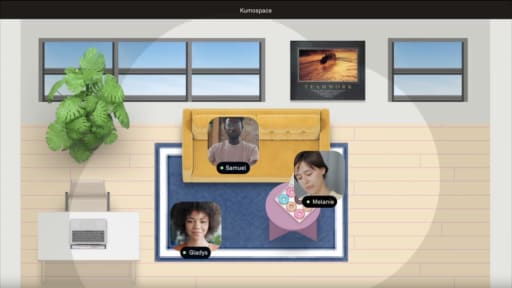
Remote-first teams can still lose the benefits of distributed work when informal conversations, quick questions, and spontaneous collaboration happen mainly in the office. A virtual office platform like Kumospace can create a persistent shared space where remote employees can see who is available and connect naturally without relying entirely on scheduled meetings. Features such as spatial audio and informal drop-in conversations can make everyday collaboration more accessible across locations.
The goal is not to recreate the physical office or add another communication channel. It is to give distributed employees more equal access to the informal interactions that can otherwise favor people working near headquarters. This works best alongside documented decisions, remote-first meetings, and outcome-based management.
Where to Start
Remote-first is about your processes, not your policy. The tell is simple: if information reaches headquarters first and the same people keep getting the visible projects, the label is not describing how the company actually runs.
Most of the fixes cost nothing. Move your most important recurring meeting to fully remote for four weeks, everyone on their own screen. Keep a one-page decision log per project. Staff projects from a shared tracker. Then audit last quarter's assignments and ratings by work location.
Skip the surveillance tools, the camera mandates, and the return-to-office orders. They change how the problem looks without touching what causes it, and they cost you the flexibility that made remote-first worth doing in the first place. Kumospace is a virtual office platform, so the informal-conversation piece is the part we think about most. It matters, but it is the last thing to fix, not the first. The meeting format and the decision log come before any tool.
Frequently Asked Questions
Small changes like better agendas and written recaps often show visible impact within two to four weeks, measured by who speaks in meetings and how often people ask "what did we decide?" Deeper shifts in promotion patterns or company culture take two to three review cycles, so track one or two metrics, such as meeting participation balance or assignment diversity, to see whether changes are working.
Be transparent about specific changes you are trying, such as "we are moving this meeting to fully remote for the next month," rather than blaming past decisions or any person. Invite feedback from both remote workers and in-office staff so they can point out remaining gaps you might not see.
Bring two or three concrete examples with business impact, such as delayed launches, lost candidates for a remote job, or money spent onboarding replacements for avoidable turnover. Frame it in replacement cost: the fully loaded expense of backfilling one mid-level hire is usually a larger number than anything you are asking for.
Very small teams often run informally and get away with it. Once you have more people than can hold the same context in their heads, ad-hoc habits start to break the remote experience first. The learning curve is real, but putting basic remote-first structures in place early saves you from rebuilding foundations during a rapid growth phase, whether you are a startup, a nonprofit, or a department that started working remotely for different reasons.
Compare their output, deadlines, and documented goals to peers in similar roles rather than relying on how visible they are in chat or meetings. If expectations were never clearly written down, the first step is clarifying the role, the schedule, and the goals before labeling anything a performance problem. If several remote workers show the same pattern while hitting their targets, the problem is in how work is assigned and reviewed, not in the people.