Business professional with wrench and computer gears, symbolizing process improvement methods and how to start.

Process Improvement Methods: Top Methodologies and How to Start

By Sammi Cox

Process improvement methodologies are structured approaches designed to make workflows faster, cheaper, and more reliable. Whether you are running a manufacturing line or managing a distributed customer support team, these frameworks provide repeatable steps for analyzing, redesigning, and controlling how work gets done.

These methods are not new. The Toyota Production System emerged in post-WWII Japan and fundamentally changed how organizations think about efficiency. Today, these same principles power process improvement initiatives across industries from healthcare to SaaS companies with fully remote teams.

No single methodology fits every organization. Leaders increasingly blend Lean, Six Sigma, Agile, and digital collaboration tools to match their culture and goals. A manufacturing facility might rely heavily on statistical process control, while a startup might favor rapid experimentation through PDCA cycles. The key is matching the approach to the problem you are solving.

What Is a Process Improvement Methodology?

A process improvement methodology is a repeatable framework consisting of steps, tools, and principles for analyzing, redesigning, and controlling business processes. Unlike ad hoc fixes, these frameworks provide governance, measurement discipline, and scalability.

Typical goals include:

  • Lower cycle times from request to completion
  • Fewer defects and errors in outputs
  • Better customer satisfaction scores
  • Reduced operational costs
  • Clearer accountability for outcomes

Methodologies support continuous improvement rather than one off fixes. Cycles like PDCA and DMAIC create iterative loops where teams test hypotheses, measure results, and learn from each attempt. For example, instead of randomly trying to speed up customer support workflows, a team using formal process improvement methods would map the current state, establish metrics like average response time, pilot small changes such as better ticket routing, measure impact, and then scale what works.

Lean and Lean Manufacturing

Lean traces its roots to the Toyota Production System developed in post-WWII Japan. Rather than pushing products through the system, Toyota pioneered a “pull” system where work flows based on actual customer demand. This philosophy fundamentally shifted how efficiency is conceptualized, focusing less on faster machines and more on eliminating activities that consume resources without creating customer value.

The Five Lean Principles:

  1. Specify value from the customer’s perspective
  2. Map the value stream to visualize all steps
  3. Create flow by minimizing interruptions
  4. Establish pull based on demand
  5. Pursue perfection through continuous process improvement

Lean identifies eight types of waste (muda): overproduction, waiting, excess motion, transportation, over-processing, inventory, defects, and unused talent. In knowledge work, waiting waste appears when team members are idle due to approvals or missing information, a common pain point for remote teams.

Tools often paired with Lean include 5S for workplace organization, Kanban for visual workflow management, and stream mapping to reveal inefficiencies. For distributed teams using virtual offices, Lean principles can simplify onboarding flows, reduce handoff delays between functions, and streamline workflows for ticket routing, maintaining flow even across timezone boundaries.

Six Sigma and the DMAIC Framework

Six Sigma is a statistically driven methodology aimed at reducing process variation and defects to near perfection, specifically targeting 3.4 defects per million opportunities. The methodology was first developed at Motorola in the 1980s and gained prominence when General Electric scaled it company-wide in the 1990s.

Six Sigma remains relevant for data-rich operations because it supports disciplined, fact-based decision making. Industries like healthcare, finance, and manufacturing, where quality failures carry high costs, rely on this structured approach.

The DMAIC phases include:

  • Define – Clearly state the issue, improvement goal, and project scope. Teams establish a charter and define success metrics.
  • Measure – Collect baseline data on current processes. How many errors occur? How long does each step take? This foundation enables all subsequent analysis.
  • Analyze – Examine the process to identify root causes of defects. Statistical tools reveal which variables most influence outcomes.
  • Improve – Address identified causes through designed solutions. Teams test changes through controlled pilots.
  • Control – Establish monitoring and governance to prevent regression. This phase ensures improvements stick.

Organizations typically establish Six Sigma roles: Yellow Belts understand basics, Green Belts lead projects part-time, Black Belts lead complex projects full-time, and Master Black Belts oversee entire programs. For digital teams, DMAIC relies on performance metrics from workflow platforms rather than physical measurements.

Lean Six Sigma

Lean Six Sigma combines Lean’s philosophy of minimizing waste with Six Sigma’s focus on variation reduction and root-cause analysis. The integration emerged because organizations realized Lean excels at removing non-value activities while Six Sigma focuses on understanding why variation exists.

This hybrid approach works well for complex processes where both speed and quality are critical. Financial services, healthcare, and SaaS support operations are common applications. During DMAIC phases, Lean tools like 5S and value stream mapping help visualize and streamline work.

A practical example is shortening software release cycles while reducing production incidents. Using Lean principles, a team identifies waste in the release process, such as unnecessary approval gates creating queues. Using Six Sigma methods, they measure variation in testing duration and identify incident root causes. The combined approach yields faster releases through waste elimination and higher quality through statistical rigor.

Kaizen and Continuous Improvement Culture

Kaizen is the Japanese philosophy of “change for better,” emphasizing small, daily improvements involving everyone. Unlike project-based methodologies, Kaizen assumes every employee has insights about their work and can contribute improvement opportunities.

Key principles include:

  • Employee participation and empowerment
  • Low-cost changes with fast experimentation
  • Focus on standard work and learning from mistakes
  • Idea boards and suggestion systems

A Kaizen event is a structured 2 to 5 day activity where cross-functional teams focus intensively on improving a specific process. In manufacturing, a classic event might reduce equipment setup time. One facility discovered half their changeover time was spent searching for disorganized tools. By implementing 5S and shadow boards, they cut changeover from 45 to 18 minutes, a significant cost savings at minimal investment.

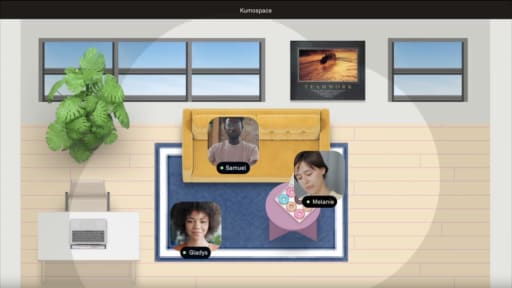
For hybrid teams, Kaizen adapts well to virtual environments. Monthly workshops conducted in collaborative spaces like Kumospace can improve meeting flows, customer handoff processes, or communication protocols. The philosophy that frontline employees drive improvements works regardless of physical location.

PDCA Cycle (Plan–Do–Check–Act)

The PDCA cycle, popularized by W. Edwards Deming, is a simple iterative model for continuous improvement and experimentation. It represents a shift from large planned changes to testing hypotheses through small cycles.

  • Plan – Form a hypothesis about what change might improve process efficiency. Design the change and establish measurement criteria.
  • Do – Execute a small pilot rather than full rollout. Document what happens and gather data.
  • Check – Compare actual results with expectations. Analyze whether the change achieved the desired effect.
  • Act – If improvement occurred, standardize and scale. If partial, refine and run another cycle. If none, abandon and try a different approach.

PDCA works at any scale. A distributed team noticing ineffective virtual meetings could Plan timeboxing discussion segments and assign a scribe; Do trial this for two weeks; Check by surveying participants; Act by either standardizing the practice or trying something else. Multiple cycles systematically improve productivity without massive upfront investment.

Total Quality Management (TQM)

Total quality management (TQM) is an organization-wide management philosophy focused on long-term success through customer satisfaction and quality improvement. The word “total” reflects that quality is everyone’s responsibility.

Core TQM elements include:

  • Customer focus driving all decisions
  • Total employee involvement across functions
  • Process orientation recognizing outcomes result from well-designed processes
  • Integrated systems viewing the organization holistically
  • Fact-based decision-making using performance metrics
  • Continuous improvement as ongoing practice

TQM rose to prominence in the 1980s–1990s as Western manufacturers facing Japanese competition recognized quality-focused management’s effectiveness. While the term is used less frequently today, TQM principles continue influencing modern quality systems and ISO 9001 implementations. Organizations pursuing certification are implicitly committing to TQM philosophy, improving quality through systematic, organization-wide commitment.

Theory of Constraints (TOC)

Theory of Constraints improves performance by identifying and systematically addressing the single most critical constraint in a system. Unlike Lean’s broad waste attack, TOC recognizes a chain is only as strong as its weakest link.

The five focusing steps:

  1. Identify the system constraint, the single point limiting overall process performance
  2. Exploit the constraint and ensure it operates at maximum efficiency
  3. Subordinate other resources to support the constraint
  4. Elevate the constraint and invest in increasing its capacity if needed
  5. Repeat and when resolved, identify the new constraint

In an order-fulfillment operation where warehouse packing is the bottleneck, TOC directs all improvement efforts there: training packing staff, streamlining layout, adding resources until packing no longer constrains throughput. This focused approach often produces faster results than spreading improvement efforts across many simultaneous initiatives.

Workplace Organization and Visual Methods

These practical visual tools make processes easier to see, manage, and improve. Visual management creates transparency, so problems become immediately obvious rather than hidden.

5S creates organized, efficient environments through five steps: Sort (remove unneeded items), Set in order (organize logically), Shine (clean and maintain), Standardize (document standards), Sustain (maintain discipline). In digital contexts, 5S applies to file systems and document storage, establishing consistent folder structures and naming conventions so information is easy to locate.

Kanban visualizes workflow using boards with columns like “To Do,” “In Progress,” and “Done.” By limiting work in progress through WIP limits, teams prevent overload and expose bottlenecks. When the “In Progress” column fills while nothing moves to “Done,” there is a constraint that needs attention. Digital Kanban boards make this practical for distributed teams, since updates happen in real time regardless of location.

Value stream mapping visualizes all steps from request to delivery, including timing data for each step and wait times between them. A map might reveal a customer request goes through twelve steps taking 10 days, but actual work only occupies 8 hours, with the rest spent waiting. This highlights where improvement efforts should focus.

Virtual collaboration platforms enable these visual methods for distributed teams. Spatial tools like Kumospace paired with digital Kanban boards make process mapping workshops possible even without co-location.

Agile and Process Improvement

Agile emerged as an iterative, customer-focused approach formalized with the 2001 Agile Manifesto. Originally developed for software, Agile principles now extend to product management, marketing, and organizational transformation.

Agile frameworks like Scrum embed continuous improvement through sprint retrospectives, regular meetings where teams reflect on what worked and what to change. A typical two-week sprint includes planning, daily standups, review, and retrospective. This creates built-in improvement cycles similar to PDCA but integrated into project governance.

Agile and Lean overlap in their focus on flow and customer value, but Agile emphasizes adaptability under uncertainty. A product team using sprints and retrospectives might identify that code reviews slow deployment. They hypothesize a clearer review checklist helps, test it in the next sprint, measure review cycle time, and decide to standardize or iterate. Each sprint includes this mini-cycle, enabling continuous process improvement alongside product delivery.

Business Process Management (BPM) and Automation (BPA/RPA)

Business process management is the discipline of modeling, analyzing, monitoring, and optimizing end-to-end business processes across departments. BPM captures how work flows through an organization, including dependencies between functions.

Business Process Automation (BPA) uses software to handle repetitive tasks such as automated approvals, notifications, and data entry. Robotic Process Automation (RPA) extends this using bots to perform tasks across multiple systems without manual intervention.

The relationship between methodologies and technology is that frameworks like Lean or Six Sigma define what changes should be made and why, while BPM platforms and automation tools enable how improvements are implemented at scale. If DMAIC analysis reveals purchase approval delays are a constraint, BPM technology might implement automated routing based on spending thresholds. If Kaizen workshops identify coordination gaps, a collaborative platform might provide shared workspaces where teams can track progress and automate repetitive tasks.

How to Choose the Right Methodology for Your Business

A highly regulated, data-rich operation like pharmaceutical manufacturing may favor Six Sigma. A startup with evolving markets might lean toward Agile and Lean; flexibility matters more than statistical perfection. Service teams often mix Kanban with PDCA cycles.

Start with small pilots and build capability gradually. Train a few Lean practitioners before scaling. For remote-first teams, prioritize visual, collaborative methods compatible with tools like Kumospace and digital Kanban boards. The technology stack should support your chosen methodology.

How to Implement a Process Improvement Initiative

A generic implementation roadmap works across methodologies:

  1. Identify the process to improve based on business impact
  2. Map and measure current state with baseline key performance indicators
  3. Analyze root causes using your chosen methodology
  4. Design improvements and test hypotheses
  5. Pilot changes on a small scale
  6. Roll out successful changes broadly
  7. Monitor for regression and new opportunities

Involve stakeholders early, since frontline employees often understand real constraints that documented procedures miss. Establish baseline metrics before making changes; without clear data, it becomes impossible to demonstrate impact.

Practical change management also matters, including clear communication about why changes are needed, training so people can perform new processes, visible leadership support, and quick wins to build momentum. In distributed environments, structured communication is critical, and collaborative digital spaces help keep cross-functional teams aligned on experiments, metrics, and new standards.

Using Technology and Remote Collaboration to Support Methodologies

Cloud tools, workflow platforms, and analytics dashboards make process measurement and experimentation significantly easier. Real-time data collection reveals how work actually moves through complex processes rather than how it’s documented.

For distributed teams, technology enables specific improvements:

  • Virtual whiteboarding for value stream mapping workshops
  • Digital Kanban boards providing visibility across locations
  • Automated SLA alerts when cycle times degrade
  • Centralized process documentation accessible to all

Virtual office platforms like Kumospace serve as coordination hubs for improvement initiatives. Teams can conduct Kaizen workshops, host retrospectives, maintain visible dashboards, and coordinate activities in persistent spaces rather than relying on scheduled meetings that end and fade from attention.

A 2026 trend: continuous improvement is becoming ongoing rather than periodic. Organizations monitor processes in near real-time using dashboards, anomaly detection, and machine-learning models that flag deviations for investigation before problems cascade.


Conclusion

Process improvement methodologies help organizations make work more efficient, consistent, and scalable by reducing waste and improving quality across teams and workflows.

The most effective teams combine approaches like Lean, Six Sigma, Agile, and Kaizen based on the problem they are solving, with a focus on measurement and continuous improvement.

In hybrid and distributed environments, clear communication and shared visibility are essential for keeping teams aligned and sustaining improvements over time.

Frequently Asked Questions

Transform the way your team works from anywhere.

A virtual office in Kumospace lets teams thrive together by doing their best work no matter where they are geographically.

Headshot for Sammi Cox
Sammi Cox

Sammi Cox is a content marketing manager with a background in SEO and a degree in Journalism from Cal State Long Beach. She’s passionate about creating content that connects and ranks. Based in San Diego, she loves hiking, beach days, and yoga.

Transform the way your team works.