Stylized illustration of a person standing beneath five speech bubbles, marking the bright yellow one with a check while the others are crossed out.

Communication Skills Performance Review: Phrases & Evaluation

By Sammi Cox

Communication skills have become the defining competency that separates high-performing engineering teams from struggling ones. In 2026, with distributed and hybrid work now the default at AI startups and high-growth tech companies, the ability to write clearly, speak concisely, and collaborate across time zones directly impacts shipping velocity, incident resolution, and team morale.

The performance review phrases here can be used by hiring managers, team leads, and individual contributors doing self-reviews or peer feedback. Every phrase must be tailored to the individual and your company culture, as generic copy-paste feedback fails to drive meaningful employee development. The article is structured as key dimensions of communication, positive and constructive phrases, self-evaluation examples, remote and hybrid nuances including Kumospace, and how to connect communication feedback to hiring and promotion decisions.

Why Communication Skills Dominate Modern Performance Reviews

By 2026, most engineering and AI roles operate in remote or hybrid environments where clear written and async communication has replaced casual hallway conversations. Cross-timezone collaboration, such as a New York data team syncing with Berlin ML engineers, demands that every Slack message, design doc, and pull request description carries its weight. Research shows that 86% of employees cite lack of collaboration and communication as the primary cause of workplace failures, making this skill set non-negotiable for high-growth companies scaling through platforms.

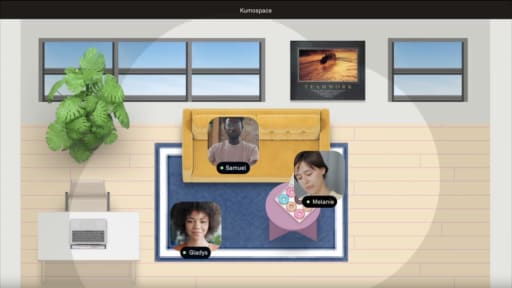
Communication quality directly impacts cycle time, defect rates, and incident resolution. When an on-call engineer writes a vague incident report, the next responder wastes precious minutes re-diagnosing the problem. When a product manager fails to document requirements clearly, development sprints derail. Virtual office platforms like Kumospace now host daily standups for distributed teams, making verbal clarity in digital spaces equally critical.

Modern performance reviews measure communication not by talkativeness, but by clarity, concision, documentation habits, and inclusivity in group discussions.

The rest of this article breaks communication into specific dimensions with ready-to-use performance review comments for your 2026 review cycles, whether you are evaluating direct reports, writing peer feedback, or assessing your own performance.

Core Dimensions of Communication to Evaluate

Managers should rate communication across several observable dimensions instead of giving a single vague comment like “good communicator.” Breaking this competency into measurable parts enables meaningful feedback and targeted professional growth. Here are the core dimensions to evaluate for engineers, data scientists, and product teams:

Clarity and Structure refers to how well an employee organizes their thoughts before sharing them. A strong performer structures design proposals with clear problem statements, options, and recommendations, and avoids burying the lead in status updates or technical documents.

Written vs. Verbal Communication acknowledges that some team members excel in written communication, such as PRs, RFCs, and documentation, while others shine in live discussions. Effective performance reviews assess both, noting whether an engineer writes clear pull request descriptions and articulates complex concepts during sprint planning.

Async Responsiveness measures how reliably someone responds to messages in Slack, email, or project management tools across time zones. This includes acknowledging messages promptly, providing estimated response times for complex requests, and not leaving teammates waiting during critical decisions.

Audience Awareness evaluates whether an employee adapts their communication style for different stakeholders. An ML engineer who can explain model drift to a non-technical founder and then dive into gradient descent details with a peer demonstrates exceptional ability in this area.

Collaboration and Listening focuses on active listening skills during team meetings and 1:1s. Does the employee ask clarifying questions, acknowledge others’ contributions, and help quieter team members participate?

Digital and Virtual Tool Proficiency evaluates engagement in platforms like Kumospace, Zoom, and Slack. This includes appropriate camera usage, effective screen sharing, and knowing when to move a Slack thread to a synchronous call.

HR teams can convert these dimensions into a simple 1–5 rating scale for 2026 performance cycles, with short behavioral anchors for each level, for example, “3 = Consistently documents decisions in team wiki after meetings.”

Positive Performance Review Phrases on Communication Skills

Positive, specific comments reinforce high-impact behaviors managers want to see repeated, while vague praise like “great communicator” doesn’t tell an employee what to keep doing. The example phrases below are ready to paste into 2026 reviews, with customization for specific projects or artifacts:

  • Consistently summarizes complex AI model trade-offs in language that founders and non-technical stakeholders understand, enabling informed decisions at the leadership level.
  • Writes exceptionally clear pull request descriptions that include context, testing approach, and deployment risks, reducing review cycles and improving overall performance of the code review process.
  • Demonstrates active listening in team meetings by restating others’ points before responding and asking clarifying questions that surface hidden assumptions.
  • Proactively documents architectural decisions in Confluence within 24 hours of sprint planning, ensuring distributed team members stay on the same page.
  • Keeps distributed teammates aligned via detailed async updates in Slack and Kumospace standups, reducing the need for follow-up clarification messages.
  • Excels at facilitating inclusive discussions where quieter team members feel comfortable contributing, strengthening team collaboration and surfacing valuable insights.
  • Translates data quality issues into actionable recommendations for product partners, demonstrating strong interpersonal skills and cross-functional awareness.
  • Delivers demo presentations that clearly articulate complex concepts to mixed technical and business audiences, supporting both career development goals and team objectives.
  • Responds to async messages within the team’s agreed SLA, providing thoughtful answers rather than quick dismissals, which contributes to a positive work environment.
  • Writes incident postmortems that balance technical depth with readability, helping the team extract continuous learning from challenging situations.
  • Adapts communication style effectively when mentoring junior team members, breaking down complex tasks into understandable steps without being condescending.
  • Uses Kumospace breakout rooms effectively to facilitate focused technical discussions with the data team, demonstrating creative solutions for remote collaboration.
  • Provides meaningful feedback in peer reviews that is specific, actionable, and delivered with a positive attitude that encourages professional growth.
  • Synthesizes weekly project updates into concise bullet points that leadership can scan in under two minutes, demonstrating strong organizational skills and respect for others’ time.
  • Models effective communication by sharing Loom walkthroughs for complex features, enabling async understanding across time zones and supporting team morale.

Constructive (Needs-Improvement) Phrases on Communication Skills

When documenting communication gaps, use neutral, behavior-focused language rather than personality judgments. Saying “poor communicator” attacks character, while saying “status updates often omit blockers, which delays problem solving” describes observable behavior with clear impact. The phrases below pair critique with direction using patterns like “would benefit from…” or “next quarter, focus on…”

  • Status updates often lack specific blockers or next steps, leaving stakeholders unable to provide timely support. Would benefit from using a consistent format: what’s done, what’s blocked, what’s next.
  • Pull request descriptions frequently omit context about why changes were made, increasing review time and risking misaligned feedback. Next quarter, focus on including a brief problem statement in every PR.
  • Tends to dominate technical discussions without pausing to invite input from quieter team members, which limits team efforts to surface diverse perspectives.
  • Often relies on ad-hoc DMs instead of documenting decisions in shared tools, leaving remote team members in Kumospace and other time zones out of the loop.
  • Written communication sometimes buries critical information in lengthy paragraphs. Would benefit from leading with the main point and using bullet points for supporting details.
  • Responses to async messages in Slack often exceed 48 hours without acknowledgment, creating bottlenecks for teammates waiting on input during the review period.
  • Incident reports during on-call rotations lack sufficient detail for the next responder, leading to duplicated diagnostic work. Focus on structured postmortem formats.
  • Handoffs to MLOps often omit deployment dependencies or rollback procedures, resulting in preventable production issues that affect business performance.
  • Design docs contain excessive technical detail that obscures the core proposal, making it difficult for cross-functional partners to provide constructive criticism.
  • Rarely asks clarifying questions during requirements discussions, leading to misaligned implementations that require rework and impact work quality.
  • Camera-off participation in team meetings limits visible engagement, making it harder for facilitators to gauge understanding or invite contributions.
  • Tends to interrupt colleagues mid-sentence in live discussions, which undermines the positive team environment and discourages participation from junior team members.
  • Written feedback on peers’ work focuses on what’s wrong without suggesting alternatives, reducing the usefulness of the review process for employee development.
  • Struggles to articulate complex concepts to non-technical stakeholders, defaulting to jargon that creates confusion rather than alignment on team objectives.
  • Infrequently participates in async discussions on Slack or Notion, making it difficult for managers to assess engagement with team communication or industry trends.

Self-Evaluation Phrases for Communication Skills

A tech startup might encourage engineers and candidates to practice honest self-assessment on communication before annual reviews or hiring conversations. Strong self-reviews demonstrate self-awareness, a key indicator of career growth potential, and give managers concrete material for development discussions. Include at least one artifact or data point, such as a document link or specific project, to support each claim.

  • I structure my design proposals with clear problem statements, options, and recommendations, but I need to be more concise in live presentations where I sometimes over-explain technical details.
  • I consistently respond to async messages within our team’s 4-hour SLA and provide estimated timelines when I need more time for a thorough answer, as shown in my Slack response metrics for Q3.
  • I’ve improved my written communication by adopting our RFC template for all architectural decisions, though I still tend to bury the recommendation at the end instead of leading with it.
  • I actively participate in Kumospace standups and weekly virtual syncs, but I recognize I could do more to draw out quieter team members during open discussion periods.
  • My pull request descriptions have become more detailed this year, as in PR #2847, including context, testing approach, and rollback plans.
  • I struggle to adapt my communication style when presenting to non-technical stakeholders and have signed up for the Q1 storytelling workshop to develop new skills in this area.
  • I recorded Loom walkthroughs for three major features this quarter, enabling async understanding for our APAC teammates and demonstrating my commitment to continuous improvement.
  • I need to improve my time management for documentation, as I often delay writing up meeting decisions, leaving teammates without written references for several days.
  • I facilitated two cross-functional retrospectives this quarter and received positive feedback for creating space for all voices, though I want to improve at managing time during these sessions.
  • My incident postmortems are thorough, such as the Q3 database outage postmortem, but I’ve been told they could be more actionable with clearer ownership assignments for follow-up items.

Evaluating Communication in Remote & Hybrid Teams (Slack, Kumospace & Beyond)

Performance reviews on communication must explicitly account for digital-first environments, not just in-person meetings. An employee who thrives in a conference room may struggle to convey the same presence over Zoom, and vice versa. Managers should evaluate the following remote-specific behaviors:

  • Clarity of async updates: Are Slack messages and written updates self-contained, with enough context that readers don’t need to ask follow-up questions?
  • Responsiveness across time zones: Does the employee acknowledge messages promptly and set expectations when a full response will take time?
  • Reliability of handoffs in tools: Are Jira tickets, GitHub issues, and Notion docs updated promptly, enabling teammates in different time zones to pick up work seamlessly?
  • Engagement in virtual spaces: During Kumospace standups or Zoom all-hands, does the employee participate actively with camera on when appropriate, unmuting to contribute, and using reactions and chat thoughtfully?
  • Inclusive facilitation: Does the employee help quieter teammates contribute in virtual settings, such as by directly inviting input or using async polls before meetings?

Example phrases for digital collaboration evaluations:

  • Uses Kumospace breakout areas effectively to facilitate focused technical discussions with the data team, improving job satisfaction for remote participants.
  • Maintains camera-on presence during critical meetings, which increases customer satisfaction during client-facing calls and builds trust with distributed partners.
  • Posts weekly written updates in our Notion standup page with clear blockers and next steps, keeping the team aligned despite 9-hour time zone differences.
  • Responds to critical Slack threads within 2 hours during working hours and sets “away” statuses with expected return times to manage performance expectations.
  • Facilitates inclusive virtual retrospectives by using anonymous polls to surface feedback from team members who prefer not to speak up live.
  • Proactively moves lengthy Slack threads to video calls when text-based discussion becomes circular, demonstrating strong problem-solving judgment.

Avoid penalizing employees for communication style differences that don’t affect outcomes. Focus instead on impact, such as missed deadlines, misaligned requirements, or repeated clarification requests.


Linking Communication Feedback to Hiring

Communication performance reviews tie directly to concrete talent decisions in 2026, including promotions to senior or staff engineer, transitions into engineering management, and selection for cross-functional leadership positions. A candidate with exceptional technical skills but poor communication will struggle to influence team members, unblock stakeholders, or represent their team in planning discussions.

Ways to use communication review data for talent decisions:

Use Case

How to Apply Communication Feedback

Interview design

Create questions that probe specific dimensions (e.g., “Walk me through how you documented a complex architectural decision”)

Promotion cases

Cite specific artifacts and behaviors from reviews that demonstrate readiness for senior/lead roles

Coaching plans

Build targeted 90-day development plans around identified gaps in written or verbal communication

L&D programs

Recommend workshops on technical writing, data storytelling, or running effective virtual meetings

Treating communication reviews as an ongoing habit:

Communication feedback shouldn’t be a once-a-year HR formality. Companies that integrate communication evaluation into monthly 1:1s, quarterly feedback cycles, and structured hiring processes see compounding returns in team performance, employee engagement, and job performance visibility. Make performance management on communication a continuous practice, not an annual checkbox, to build teams that ship faster, resolve conflicts quicker, and create a positive work environment where innovative ideas can flourish.

Conclusion

Effective communication is no longer optional for engineering and AI teams; it’s a critical driver of performance, collaboration, and career growth. By evaluating communication across clarity, responsiveness, collaboration, and digital engagement, and by making feedback a continuous practice, companies can ensure employees thrive in remote and hybrid environments. Embedding these practices into performance reviews, 1:1s, and hiring decisions helps build high-performing, inclusive teams that deliver results consistently.

Frequently Asked Questions

Transform the way your team works from anywhere.

A virtual office in Kumospace lets teams thrive together by doing their best work no matter where they are geographically.

Headshot for Sammi Cox
Sammi Cox

Sammi Cox is a content marketing manager with a background in SEO and a degree in Journalism from Cal State Long Beach. She’s passionate about creating content that connects and ranks. Based in San Diego, she loves hiking, beach days, and yoga.

Transform the way your team works.