You’ve probably heard the claim that humans now have shorter attention spans than goldfish, with 8 seconds for humans and 9 for goldfish. It’s catchy, but misleading. Attention isn’t a fixed number. It changes based on interest, environment, fatigue, and many other factors.
So what does attention span mean today? You might scroll TikTok for hours with no problem, then struggle through a 10 minute meeting. Your ability to focus shifts depending on the situation. Understanding that is the first step to working with your brain instead of against it.
This article explains attention span in practical terms. You’ll learn the different types of attention, how focus changes over time, what actually affects it, and simple ways to improve concentration, whether you’re a student, remote worker, or just tired of losing your train of thought.
What is attention span?
At its simplest, attention span is the length of time you can stay focused on a single task, thought, or activity before getting distracted. Think of it as your mental “window of focus,” or how long that window stays open before your mind wanders.
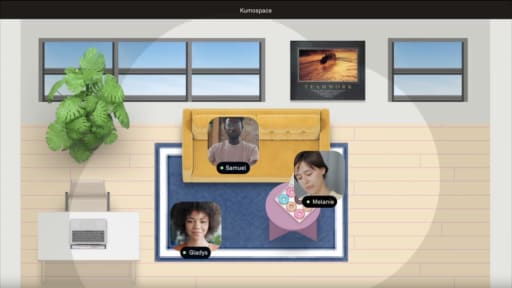
When people talk about attention span, they usually mean sustained attention, or the ability to stay engaged with one thing over time. This could be reading a chapter without checking your phone, staying present in a Kumospace meeting, or writing an email from start to finish without interruption.
Here’s what most people get wrong. Attention span is not fixed. It changes based on the task, your interest level, how tired you are, your emotions, and your environment. Someone might struggle to read a dense report for 10 minutes but easily spend 45 minutes on a hobby. Your brain directs attention based on perceived value and reward, not a universal timer.
Typical ranges show how much it can vary. Many adults can focus on deep work for about 20 to 45 minutes before needing a break. Young children usually focus on structured tasks for 5 to 10 minutes. On social media, attention often drops to just a few seconds per post because each scroll offers something new.
It also helps to distinguish between momentary and sustained attention. Momentary attention is a quick reaction, like glancing at a notification. Sustained attention is staying focused for a longer period, like completing a 45 minute work session. Both involve focus, but they rely on different mental processes and affect productivity in different ways.
Types of attention (beyond just “attention span”)

Attention is not a single skill. It includes several related functions that work together.
Transient attention is a brief response to sudden changes. A notification sound, someone entering your Kumospace room, or a loud noise can instantly pull your focus. This response is automatic and meant to alert you to important events.
Selective attention helps you filter out distractions. It lets you follow a conversation in a noisy office or focus on one speaker in a crowded virtual meeting. This filtering takes effort, which is why busy environments can feel draining.
Sustained attention is the ability to stay focused for longer periods. This is what most people mean by attention span. It shows up when you are writing, studying, or participating in a long meeting.
Divided attention is trying to focus on multiple things at once, like checking email during a call or listening to a podcast while writing. While it may feel productive, it usually lowers performance. Each switch between tasks has a cost, and your effective focus on any one task decreases.
Most real world activities use a mix of these. Driving, for example, requires filtering out distractions, staying focused on the road, and reacting quickly to sudden changes. Running a meeting in Kumospace involves staying on topic, responding to questions, and noticing when participants join or technical issues come up.
How attention span changes with age
Attention span follows a general pattern across life, though it varies widely from person to person.
Infants and toddlers have very short attention spans, often only a few minutes per activity. This is normal. Their brains are built for exploration, so they switch focus quickly to learn from many sources. Expecting a two year old to sit through a long activity doesn’t match how they develop.
As children reach school age, sustained attention improves. Early elementary students often focus for about 10 to 20 minutes, depending on interest and environment. By adolescence, teens can concentrate longer on engaging tasks, though distractions like phones and social media still make it challenging.
Attention typically continues to strengthen into the 20s and 30s. Young adults tend to reach peak sustained attention, as the brain systems responsible for focus and impulse control fully mature.
In later adulthood, some decline is common. Processing speed slows, and distractions can become more noticeable. Still, this varies a lot. People who get good sleep, stay active, and remain mentally and socially engaged can maintain strong focus well into older age. Health, lifestyle, and environment often matter more than age itself.
Factors that influence attention span today
Attention is shaped by both internal states and external conditions.
Digital distractions are one of the biggest modern challenges. Smartphones, notifications, and platforms like TikTok, Instagram, and YouTube Shorts encourage constant switching between content. While exact numbers are debated, research consistently shows that heavy digital media use is linked to more difficulty sustaining focus.
Stress and mental health also play a major role. Anxiety keeps the brain on high alert, making it harder to ignore distractions. Poor sleep reduces focus, and depression can make concentration feel extremely difficult.
Medical factors can also affect attention. Conditions like ADHD impact how the brain regulates focus and impulse control. Sleep disorders, vision or hearing issues, and some medications can all reduce concentration. When attention problems are persistent, it may be worth getting a professional evaluation.
Your environment matters more than most people realize. Noisy spaces, cluttered desks, and constant interruptions drain attention. In contrast, quiet and organized environments help protect focus. Structured virtual workspaces, like Kumospace, can also reduce interruptions and make it easier to stay engaged.
Information overload is another major factor. Managing emails, chats, social feeds, and news all at once can overwhelm your brain. What feels like a lack of attention is often just too much input competing for your focus.
Attention span, social media, and screen time
Social media is designed to capture and hold attention. Features like infinite scroll, personalized feeds, and frequent notifications encourage constant engagement and rapid switching.
Research increasingly links heavy, unstructured screen use to shorter attention spans and reduced ability to focus. Children exposed to fast-paced content early may struggle more with slower classroom tasks. Adults who frequently check social apps during work often find it harder to stay on task.
These patterns are common. Checking Instagram while reading, watching Netflix during class, or jumping between tabs during a meeting all fragment attention. Each switch has a small cost, and those costs add up.
That said, screen time itself is not the problem. You can stay deeply focused on a course, a project, or a collaborative session in Kumospace for hours. The issue is constant, unstructured switching between tasks and apps.
More intentional use of technology helps protect attention. Closing unused apps, using full screen mode, and turning on “do not disturb” during focused work can make a big difference.
Why attention span matters for learning, work, and relationships

Sustained attention underpins almost everything valuable you do with your brain. In school, your ability to pay attention determines how much you absorb from a 50-minute lecture, how effectively you read dense textbook material, and whether you can practice a new skill for the 30+ minutes often needed to make real progress. Students who struggle to maintain focus miss key details, encode information poorly into memory, and spend far more time compensating through re-reading and cramming.
At work, attention span directly impacts performance. Deep work, the focused, uninterrupted engagement required for complex problem-solving, creative thinking, and high-quality output, requires sustained attention that many modern work environments actively undermine. Project completion, error reduction, and effective participation in team meetings all depend on the ability to concentrate. Remote and hybrid workers face particular challenges, with constant pings from email, Slack, and multiple collaboration tools fragmenting focus. Tools like Kumospace aim to address this by creating more structured virtual spaces that reduce cognitive overload.
Attention span also shapes relationships. Active listening in conversations, being truly present with family and friends, maintaining eye contact and genuine engagement all require sustained focus on another person rather than your internal monologue or your phone. When attention span erodes, relationships suffer. People feel unheard, and connection becomes superficial.
The connection between attention and well being runs deeper than productivity. Scattered attention contributes to stress and overwhelm. You feel perpetually behind, unable to complete anything. In contrast, focused work generates a sense of competence and control. Finishing tasks, making visible progress, and achieving flow states all depend on the ability to sustain attention, and all contribute to mental health and overall well being.
How to measure and notice your own attention span
Formal attention span assessment involves clinical tests administered by psychologists, such as continuous performance tasks that measure how long you can maintain high accuracy and consistent focus before lapses occur. These are valuable for diagnosis but not something most people need.
Informal self observation works well for practical purposes. Try a simple test. Time how long you can read a non fiction article without checking your phone or switching to another tab. Notice when your mind starts wandering during a Kumospace team meeting or a video call. Track how far you get into a writing session before the urge to check notifications becomes strong. These observations reveal your functional attention span in real conditions.
The concept of “subjective attention span” is useful here. Pay attention to internal signals. When does mental fatigue appear? When do you feel an urge to check your phone? When does irritability or restlessness set in? These markers often appear before you consciously decide to switch tasks.
Consider keeping a short attention diary for a few days. For each focused task, note the task type, start time, when you first got distracted, and what triggered the distraction such as a notification, boredom, noise, or an internal thought. Patterns emerge quickly. You might discover that your attention span is quite long for tasks you care about, but drops in specific contexts or at certain times of day. This information helps guide targeted improvement efforts.
Practical strategies to improve attention span

The good news is that attention span is trainable. Like a muscle, it responds to consistent practice and appropriate challenges. The following strategies address environment, time structure, training exercises, lifestyle factors, and mindfulness.
Eliminate and batch distractions. The simplest intervention is often the most effective. Silence notifications during focus periods, including phone notifications, email, Slack, and browser alerts. Move your phone out of reach. Close tabs and applications unrelated to your current task.
Use time boxing methods. The Pomodoro Technique, 25 minutes of focused work followed by a 5 minute break, gives your attention span a clear target. Knowing you only need to focus for 25 minutes makes starting easier and reduces the temptation to check distractions. As your capacity grows, gradually lengthen sessions to 45 or 50 minutes. The structure supports focus by creating clear start and end points.
Practice single tasking daily. Attention span improves with deliberate practice. Start small. Read 5 to 10 pages without interruption. Write for 15 to 20 minutes with only your document visible. Complete one work block with only one application or window open. These exercises train your brain to sustain engagement rather than constantly seeking novelty. Progress comes from consistent practice, not occasional bursts of focus.
Support focus through lifestyle factors. Brain health depends on physical health. Aim for 7 to 9 hours of consistent sleep. Tired brains cannot sustain attention effectively. Regular exercise improves cognitive function, including attention and concentration. Balanced nutrition supports brain health. Limit heavy evening screen time, which can disrupt sleep quality and leave you foggy the next morning. Physical activity and good sleep do more for your attention span than most productivity strategies.
Practice mindfulness. Mindfulness meditation, even 5 to 10 minutes daily of breath focused attention, directly trains the attention system. The practice is simple. Focus on your breath, notice when your mind wanders, and gently return attention to the breath. This cycle of focus, noticing distraction, and returning is the same skill needed for sustained attention in other contexts. Research suggests mindfulness practice can improve attention span metrics by 15 to 25 percent.
Building better focus in digital and remote workspaces
Remote and hybrid work presents particular attention challenges. Your home office, laptop, or coworking space hosts email, chat applications, video calls, project management tools, and the entire internet, all competing for your focus. Without the structure of a physical office, many remote workers find themselves constantly fragmented.
Structuring your digital environment can protect attention span. In Kumospace, for example, you can create dedicated focus rooms where colleagues know not to interrupt casually. Establishing clear team norms around response times, rather than expecting immediate replies to every message, reduces the pressure to monitor channels constantly. Scheduling no meeting blocks protects time for deep work.
Concrete practices help. Mute non-urgent channels during focus blocks. Use status indicators to signal when you are heads down on concentrated work. Group meetings together rather than scattering them throughout the day, leaving longer uninterrupted windows for tasks requiring sustained attention.
Virtual offices designed with attention in mind can reduce cognitive overload compared to chaotic, tab-heavy workflows. Features like spatial audio and visual layout in tools like Kumospace can make remote interaction feel more natural, reducing the mental fatigue that comes from flat video calls and switching between disconnected applications.
When short attention span might signal a deeper issue
Occasional distraction is completely normal. Everyone’s mind wanders. But persistent, severe difficulty focusing across many situations may indicate an underlying condition worth investigating.
ADHD is the most well known attention related condition, affecting how the brain regulates focus, impulse control, and executive function. However, attention difficulties also appear in depression, anxiety disorders, sleep apnea, chronic pain, and substance use. Sometimes what looks like an attention problem is actually a symptom of something else.
If attention difficulties significantly impact your work, school performance, or relationships, professional evaluation is appropriate. A psychologist or psychiatrist can conduct formal testing to identify whether ADHD or another condition is present. There is no need to be concerned about seeking help. Attention span issues are common and treatable.
Treatment options vary depending on underlying causes and might include therapy, medication, coaching, and environmental accommodations. At school or work, this could mean structured schedules, reduced distraction workspaces, extended time for tasks, or using virtual setups that minimize interruption. The key is matching interventions to the specific factors affecting your ability to concentrate.
Conclusion
Understanding attention span is the first step to reclaiming your focus. It refers to how long you can stay engaged with one thing before distraction takes over. It is shaped by age, habits, health, and environment, and in a world of constant digital stimulation, it is under more pressure than ever.
The good news is that you have more control than you might think. Intentionally shaping your tools, routines, and spaces, including virtual offices like Kumospace for remote work, helps protect the sustained attention that learning, productivity, creativity, and relationships depend on.
Pick one small experiment this week. Maybe it is a single 25 minute distraction free block each morning. Maybe it is keeping an attention diary to notice patterns. Maybe it is adjusting your digital workspace to reduce interruptions. Start small, stay consistent, and notice progress. Your attention span can improve, but only if you choose to train it.
Frequently Asked Questions
Attention span is how long you can stay focused on a single task before getting distracted.
No, that claim is misleading since attention span varies based on context, not a fixed number.
Factors like sleep, work stress, environment, and digital distractions have the biggest impact on focus.
Yes, attention span can improve with habits like reducing distractions, time boxing, and consistent practice.
Most adults can sustain focused work for about 20 to 45 minutes before needing a break.