Whether you are catching up with family across the world, having a remote work meeting with your manager, going on a virtual date, or receiving online tutoring, 1-on-1 video chat provides something text messages cannot: the subtle facial expressions, eye contact, and vocal inflections that make human connection feel real.
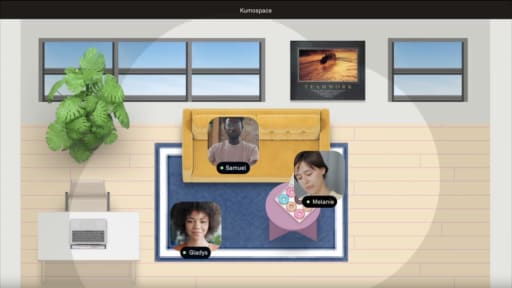
Modern platforms like Kumospace make one-on-one video calls feel natural by offering immersive virtual rooms with spatial audio, turning a flat video rectangle into an experience closer to being in the same room. You see the real people you are talking to, not just their words on a screen.
Here’s why live video call conversations outperform other communication methods:
- You catch micro-expressions and body language that reveal what someone truly means, helping you understand context that gets lost in messages
- Trust builds faster when you can see someone’s face and hear their voice, essential for job interviews, client consultations, and new relationships
- Misunderstandings drop significantly because you can ask clarifying questions in real time and read reactions instantly
- Genuine connections form when people share the same virtual space, making remote mentorship or distant friendships feel closer
- You can share screens, documents, or presentations while maintaining eye contact, perfect for collaborative work
- The conversation flows naturally without the lag of waiting for text responses, keeping energy and engagement high
One-on-one calling is not just for people you already know. Millions of users rely on video chat to meet new friends, find language exchange partners, expand their professional network, or have spontaneous conversations with strangers worldwide.
Discovery features on these platforms typically include:
- Region and country filters to connect with people in specific locations
- Interest tags matching you with like minded strangers who share your hobbies
- Profile previews letting you see basic information before you start chatting
- Language preferences ensuring you can talk to strangers who speak the same language
Random video chat apps connect you instantly with strangers for unscripted interactions. These can be fun for meeting new people, but they differ from structured spaces designed for specific purposes. Kumospace is ideal for scheduled one-on-one meetups, professional networking events, or recurring meetings in a familiar virtual environment.
If you are meeting strangers online, start with short, time-boxed calls, perhaps 15 minutes, to keep things comfortable and allow you to move on gracefully if the conversation does not click.
Finding Genuine One-on-One Connections
The difference between shallow small talk and a meaningful bonds conversation comes down to intention. Before you jump straight into any call, know what you’re hoping to accomplish.
- Set clear goals, such as practicing a language for 20 minutes, seeking career advice, or testing compatibility on a first date
- Turn your camera on with good lighting to build trust quickly
- Make direct eye contact by looking at your camera during key moments
- Use a private Kumospace room as your virtual café or meeting space, creating a consistent and inviting environment
- Ask questions and listen actively rather than treating the call like a monologue
- Follow up afterward with a brief message referencing something specific from the conversation

1 on 1 Video Call Without Language Barriers
People now regularly have real conversations across time zones and continents from New York to Tokyo, London to São Paulo, or Sydney to Berlin. Language barriers that once made these connections difficult have shrunk with modern tools:
- Built-in browser translation and third-party caption apps overlay live subtitles during calls
- Speak slowly and clearly, avoiding idioms or slang that may not translate well
- Use visual aids and screen sharing to clarify meaning when words fail
- Kumospace allows global teams to host one-on-one check-ins while referencing shared documents, whiteboards, or visual materials in the same virtual space
- Learn a few phrases in your chat partner’s language as a sign of respect and to break the ice
- Do not hesitate to ask someone to repeat themselves or type something in the text chat for clarity
Different Ways to Do 1 on 1 Calls: Video, Audio, or Text
Not everyone is always ready for live cam chat, and that is completely fine. Flexible options help more people connect in ways that suit their situation.
When to use each mode:
- Full video works best for job interviews, coaching sessions, performance reviews, virtual dates, or any conversation where reading facial expressions matters
- Audio-only suits walking meetings, low bandwidth situations, or conversations where you need to multitask slightly while staying engaged
- Text chat handles quick clarifications, sharing links, or communicating when you’re in a noisy environment or can’t speak freely
In Kumospace, participants can move seamlessly between video, audio, and text chat while staying in the same virtual room. This flexibility allows you to start a conversation on camera and switch to audio if your connection drops, or move to text to share a link without disrupting the flow.
For camera-shy users, starting with audio or text helps build comfort. Once trust develops, upgrading to video feels natural rather than forced.
Fun Extras: Filters, Backgrounds & Reactions
Small visual touches can make one-on-one calls more relaxed, memorable, and engaging, especially for casual connections or lighter conversations.
- Virtual backgrounds let you hide a messy room or place yourself in fun environments (a tropical beach, a cozy café, a professional office)
- Blur effects provide privacy without looking staged, perfect when you’re calling from a shared space
- Subtle filters can smooth lighting issues without making you look obviously filtered
- Emoji and GIF reactions add personality to conversations, especially helpful for reactive moments without interrupting the speaker
Keep visuals professional for job interviews and client calls, and save playful backgrounds and filters for virtual dates, friend catch-ups, or casual social interactions.
Privacy, harassment, and data security concerns are valid when using any video chatting platform. Understanding how to protect yourself makes the difference between confident calling and anxious interactions.
Key safety features to look for in any platform:
- End-to-end encryption protecting your video and audio from interception
- Reporting tools allowing you to flag inappropriate behavior
- Advanced AI moderation and dedicated team support teams monitoring for violations
- Ability to block, mute, or remove others from your calls
- Waiting rooms preventing uninvited participants from joining
- Password protection for private meeting rooms
Kumospace enables hosts to control room access, lock spaces during conversations, and remove disruptive participants immediately. This creates a secure environment where you can focus on the conversation rather than worrying about user safety.
Concrete behaviors to keep yourself safe:
- Never share your home address, workplace location, or personal identification documents on camera
- Avoid showing financial documents, credit cards, or sensitive information during screen shares
- Use strong, unique passwords for your video calling accounts
- Trust your instincts; if someone makes you uncomfortable, end the call and use the platform’s reporting features
- For meeting strangers through random chat services, keep initial calls short and avoid sharing contact information until you have established trust
- Be wary of fake profiles and verified user badges that might not be genuine on some platforms

How 1 on 1 Video Calls Work, Step by Step
Even non-technical users can start chatting on a video call in under a minute. The process is straightforward across most platforms.
Here’s the typical flow:
- Sign in to your chosen platform using email, Google, or another authentication method
- Allow your browser or app to access your camera and microphone when prompted
- Choose an existing room or create a new one for your conversation
- Copy the room link and send it to the person you want to meet
- When they join, start talking
Troubleshooting tips before important calls:
- Test your audio and video five minutes before scheduled meetings
- Close other applications using bandwidth, such as streaming services or large downloads
- Use headphones to eliminate echo and feedback
- Make sure your face is well-lit from the front, not backlit by windows
- Have your mobile device ready as a backup if your primary connection fails
Smart Matching and Scheduling for 1 on 1 Calls
Some apps match you automatically with new connections, similar to random video chat services, while others help you schedule calls with people you already know.
For professional workflows:
- Calendar integrations let you send booking links where others can claim available time slots for 1:1s
- Recurring meeting settings allow weekly one-on-ones, mentoring sessions, or coaching calls to happen in the same virtual room each time
- Kumospace rooms can be reused indefinitely, creating consistency where participants associate a specific space with your regular meetings
For networking and making friends with new acquaintances:
- Speed-networking events use timed one-on-one calls inside virtual spaces, rotating participants through short conversations
- Interest-based matching connects you with chat partners who share similar interests before you start video chat sessions
- Some platforms offer “next” buttons to quickly move to a new conversation partner if the current one is not a good fit
Both approaches serve different needs: structured scheduling for professional reliability and spontaneous matching for expanding your social circle.