Illustration of a person reviewing documents at a desk with a laptop, symbolizing evaluating and validating a proof of concept.

What Is a Proof of Concept (POC)? Meaning, Examples, and Steps

By Sammi Cox

Before committing months of effort and significant resources to a new idea, you need to know if it actually works. A proof of concept, or POC, provides the evidence to move forward or pivot before it’s too late, whether you’re launching an AI feature, testing a new business model, or rolling out a virtual office platform to your remote team. This article explains the meaning of a proof of concept, shows when and how to run one, and walks through real examples from software development to hybrid work transformations.

Key Takeaways

  • A proof of concept is a small, controlled experiment that demonstrates whether a specific project idea is feasible before committing significant resources to full-scale development.
  • POCs reduce risk by validating technical, business, and operational assumptions early and require clear success criteria, tight scoping, and measurable outcomes.
  • Remote and hybrid teams can run POCs effectively using virtual offices and project management tools to coordinate work across time zones.

What Is a Proof of Concept?

A proof of concept works in practice by answering fundamental questions about technical feasibility, business viability, or operational fit without requiring a final product.

A simple definition is that a POC is a small, controlled experiment demonstrating an idea is feasible enough to justify further investment.

The concept focuses on validation, not perfection, and POCs appear across software development, SaaS, biotech, hardware, and business model innovation, including internal process changes like testing whether a virtual office platform integrates with existing workflows.

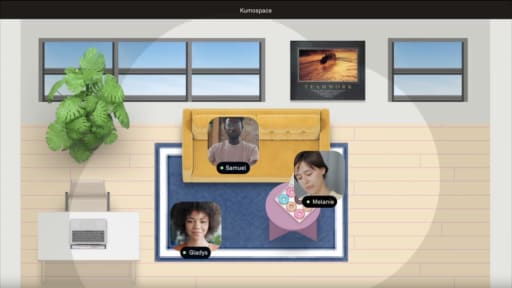
In remote-first organizations, a POC might involve a 50-person team using a tool like Kumospace for two weeks to measure whether it reduces scheduled meetings and improves spontaneous collaboration, with the goal of proving the tool is worth further development rather than perfect.

What Are Proofs of Concept Used For?

POCs function as decision gates between “interesting new idea” and “funded project.” They let you test assumptions with real data before budgeting, vendor selection, or roadmap prioritization.

Key uses include:

  • Validating product ideas: Simulating core features to confirm technical feasibility (e.g., a 2024 payments API processing 10,000 transactions per minute with 99.9% accuracy)
  • Testing emerging technologies: Exploring Web3 integrations, AI triage systems, or automation tools
  • Exploring business models: Checking if potential customers will pay for same-day pharmacy delivery
  • De-risking system integrations: Verifying that new software works with existing processes
  • Trialing internal tools: Running a 4-week Kumospace POC with one department to measure meeting participation and Zoom fatigue

In regulated industries like finance and healthcare, POCs test compliance and security controls before broader deployment.

POCs also support strategic alignment. They help leaders verify whether an initiative supports longer-term business objectives like digital transformation, cost reduction, or hybrid-work enablement.

When Should You Use a Proof of Concept?

Not every project needs a formal POC. Here’s when it makes sense:

Use a POC when:

  • You’re doing something the company has never done before (first AI feature, first virtual office rollout)
  • The technology is new to your industry (Web3 payments, generative AI assistants)
  • The potential investment is large (multi-million-dollar data center migrations)
  • Failure would damage brand, security, or compliance

Skip the formal POC when:

  • The idea is already proven in your domain
  • You’re making small UX tweaks or low-risk integrations
  • A pilot project or direct implementation with safeguards is sufficient

Before launching a POC, ask three questions:

  1. Is there real uncertainty?
  2. Is the risk material?
  3. Is there a cheaper way to get the answer through market research?

Agile development teams often treat POCs as “spikes” in early sprints to resolve technical unknowns before committing to a full software development process.

Benefits of Running a Proof of Concept

Think of a POC as an investment in learning, not extra bureaucracy. Here’s what you gain:

Benefit


Risk mitigation

Avoid spending months on unworkable ideas

Market validation

Discover if your target audience will actually pay or adopt

Technical clarity

Verify performance, integrations, and scalability before production

Stakeholder alignment

Get product, engineering, sales, and operations on the same page

Better planning

Refine timelines and cost estimates with real data

Faster funding

Potential investors prefer evidence over assumptions

Focused execution

Narrow scope to what truly matters for project feasibility

Even “failed” POCs deliver value. A negative result that kills a weak product idea early saves 5-10x the cost of a full failure. Document what didn’t work, and your product development team gains valuable insights for future initiatives.

How to Create a Proof of Concept (Step-by-Step)

The concept process follows a structured approach. Whether you’re a startup founder or an enterprise project manager coordinating across teams, these steps apply.

Use project management software to track tasks and risks throughout. For distributed development teams, running the POC inside a shared virtual environment can make stand-ups and ad-hoc conversations more natural.


Step 1: Clarify the Problem and Objectives

Every POC must anchor to a concrete problem, not just technology curiosity.

Define your problem in one sentence. For example: “Reduce average support handle time by 20% using AI summarization.”

List 2-3 measurable objectives tied to that problem:

  • Response latency under 2 seconds
  • Error rate below 5%
  • User adoption above 70%

Clearly written objectives make it easier to outline success criteria and communicate results to leadership.


Step 2: Define Scope, Timeline, and Success Metrics

Keep the POC small but representative.

Scope guidelines:

  • Limit to core features or a single use case
  • Choose a realistic timeline (2-12 weeks depending on complexity)
  • Define 3-5 key metrics (response time, error rate, NPS, adoption rate, cost per seat)

Example: A company testing Kumospace with 40 users over 6 weeks might measure daily active users, average meeting length, and self-reported focus scores.

Beware of scope creep. Log “nice-to-have” ideas for later phases instead of bloating the POC. Your predefined success criteria should remain fixed.


Step 3: Design the POC Approach and Build the Minimal Solution

Choose your experimental design: A/B test, before/after comparison, or sandbox environment.

What to build or configure:

  • A limited feature prototype or vertical slice of functionality
  • A sandbox tenant of a third-party tool
  • Mocked APIs to validate front-end UX before full integration

Keep the build light. You need enough stability to test key features, but no production-grade hardening. Save that for further development.

For distributed teams, host regular check-ins in a shared virtual “lab” space to iterate quickly. Development teams’ insights emerge faster when collaboration is frictionless.


Step 4: Run the POC, Gather Data, and Analyze Results

Execution matters as much as planning.

Onboard participants properly:

  • Briefing docs with clear expectations
  • Timeline and contact points
  • Training if needed

Collect both quantitative and qualitative data:

  • Usage metrics, performance logs, conversion rates
  • Surveys, interviews, live debriefs

Analyze results against original success criteria. Don’t cherry-pick positive data. A cloud migration POC delayed by 20% cost overruns is still useful information; it prevents worse surprises later.


Step 5: Decide, Document, and Communicate Next Steps

Close the loop with a clear decision.

Summarize findings:

  • Problem addressed
  • Approach taken
  • Key metrics achieved (or missed)
  • What worked and what didn’t

Decision pathways:

  • Proceed to prototype or minimum viable product
  • Run a revised POC with adjusted scope
  • Stop the idea and redirect resources

Store POC documentation centrally so future teams can reuse lessons learned. Companies using virtual workplaces can maintain a persistent “POC room” with pinned documents, recordings, and whiteboards for later reference.

Proof of Concept vs Prototype vs MVP vs Pilot

These four stages serve distinct purposes in the development process:

Stage

Purpose

Characteristics

POC

Proves core idea feasibility

Narrow scope, lab-like conditions, answers “can this work?”

Prototype

Shows what solution looks and feels like

Interactive mockup, explores UX, not production-ready

MVP

Live minimal product for user learning

Real users, measures adoption and demand, iterate based on user feedback

Pilot

Near-final solution in subset of real environment

Validates performance at realistic scale, one department or region

Common Mistakes and Best Practices in POCs

Many proofs of concept fail not because the idea is bad, but because the POC is poorly designed.

Common pitfalls:

  • Vague objectives and success metrics
  • Over-engineering the solution into a half-built product
  • Involving wrong users (too small, too biased, not target market)
  • Ignoring change management and communication
  • Failing to document, making it hard to justify decisions

Best practices:

  • Start with a simple, measurable hypothesis
  • Time-box the POC strictly (avoid production-grade requirements unless necessary)
  • Recruit representative users from day one
  • Use tools that keep everyone aligned; project management tools plus shared virtual spaces for daily check-ins
  • Treat the POC as a learning experiment: success is “this works” OR “this doesn’t work and we saved ourselves from larger failure”

Gather feedback continuously. Collect user feedback through surveys and interviews. A POC that identifies potential challenges early, even if inconclusive, still delivers valuable insights for project success.


Conclusion

A proof of concept is a powerful tool for testing ideas quickly and inexpensively before committing significant resources. By validating technical feasibility, business viability, and operational fit, POCs help teams reduce risk, make informed decisions, and prioritize the most promising initiatives. Whether used in software development, product innovation, or process improvement, running a well-scoped POC in remote or hybrid environments using tools like Kumospace ensures that organizations invest in solutions that truly deliver value.

Frequently Asked Questions

Transform the way your team works from anywhere.

A virtual office in Kumospace lets teams thrive together by doing their best work no matter where they are geographically.

Headshot for Sammi Cox
Sammi Cox

Sammi Cox is a content marketing manager with a background in SEO and a degree in Journalism from Cal State Long Beach. She’s passionate about creating content that connects and ranks. Based in San Diego, she loves hiking, beach days, and yoga.

Transform the way your team works.