Different strategic planning models offer structure for various organization sizes, maturity levels, and industries. You usually don’t need every model; one or two primary models, plus a few strategic frameworks, are usually sufficient.
Think of these as templates to adapt rather than rigid prescriptions. Choose a strategic planning model that fits your organizational culture and leadership style.
Basic Strategic Planning Model
This straightforward model is ideal for small businesses or nonprofits creating their first 3-year plan.
Typical steps:
- Define mission and vision
- Perform a simple SWOT analysis
- Set 3-5 goals
- Build action plans
- Review annually
A 10 to 20-person consultancy could use this model to double revenue from 2026 to 2029 through focused client expansion. Emphasize light documentation (5 to 10-page plan) and regular informal check-ins.
Issue-Based (Problem-Focused) Model
This model starts with identifying and prioritizing key priorities and strategic issues.
Process:
- Conduct SWOT
- List top 5-7 issues
- Group into themes
- Design strategies around themes
Use this when facing specific challenges like digital disruption.
Alignment Model
The alignment strategic planning model focuses on synchronizing internal processes, technology, and structure with overarching strategy.
This model is especially useful when IT, operations, and business strategy have drifted apart. Steps include reviewing the organization’s objectives, mapping current capabilities, performing gap analysis, and defining alignment projects.
Unified collaboration environments can support alignment.
Scenario Planning Model
Scenario planning builds 3-4 plausible futures over a 5-10 year horizon.
Consider external factors like:
- AI adoption rates through 2030
- Regulatory shifts affecting your industry
- Long-term remote work trends
- Legal and environmental factors
Teams brainstorm strategic responses for each scenario, choose a primary path, and keep contingency plans ready. This approach is valuable for sectors with high uncertainty such as technology, energy, and public policy.
Self-Organizing (Organic) Model
This model emphasizes organizational culture, shared learning, and continuous dialogue over rigid multi-year plans.
It suits larger organizations that value experimentation and bottom-up contributions. Practices include frequent strategy conversations, open forums, and ongoing refinement.
Use persistent digital spaces like always-available virtual lounges and team rooms to keep strategic conversations flowing across time zones.
Real-Time Strategic Planning Model
Designed for volatile environments where quarterly or monthly adjustments are expected, this model follows a repeating loop:
- Rapid assessment
- Quick decision-making
- Short implementation cycles
- Frequent review
It works well for startups or teams launching new products where market trends shift quickly. Integrate real-time data dashboards and standing virtual “war rooms” where teams can convene instantly.
Inspirational (Vision-Driven) Model
This model starts with a bold, energizing strategic vision and works backward into strategies.
Example: A company aiming to become a sustainability leader by 2030 uses that aspiration to shape goals, culture, and resource allocation.
Blend this model with structured approaches to ensure inspiration is matched by execution discipline. This combination supports desired outcomes while maintaining strategic direction.

Frameworks are analytical tools used inside any model to analyze, prioritize, and measure progress. Combining 2-4 frameworks typically delivers the clearest insights while avoiding analysis paralysis.
These frameworks can be worked through collaboratively during live planning workshops or asynchronously using shared documents and digital whiteboards.
SWOT Analysis
SWOT analysis maps Strengths, Weaknesses, Opportunities, and Threats in a simple 2x2 grid.
|
Internal |
External |
|
Strengths: Strong customer service (95% NPS) |
Opportunities: AI integration for automation |
|
Weaknesses: Legacy systems limiting scale |
Threats: Data privacy regulations |
SWOT outputs should immediately inform goal setting and issue prioritization. Revisit annually or after major market disruptions.
OKRs (Objectives and Key Results)
OKRs link ambitious qualitative objectives with 3-5 quantitative key results each quarter.
Example:
- Objective: Delight remote customers with seamless experiences in Q3 2026
- Key Results:
- NPS > 80
- Platform uptime > 95%
- Support response time < 2 hours
OKRs should cascade from organization-level to team-level while preserving transparency. Teams can review them in recurring virtual check-ins using shared dashboards.
Balanced Scorecard (BSC)
The balanced scorecard organizes objectives and metrics across four perspectives:
|
Perspective |
Example Metric |
|
Financial |
Revenue growth +15% |
|
Customer |
NPS score 50+ |
|
Internal Processes |
Process cycle time -20% |
|
Learning & Growth |
Training 40 hrs/employee |
BSC encourages leaders to avoid fixating solely on financial performance when making strategic decisions.
Porter’s Five Forces
This framework outlines industry attractiveness via five forces: rivalry, new entrants, buyer power, supplier power, and substitutes.
For a SaaS company, analysis might reveal high rivalry, low barriers to entry, and moderate bargaining power among customers. These insights guide pricing strategy, market entry decisions, and partnership priorities, particularly before capital investments planned for 2026 to 2028.
VRIO Analysis
VRIO assesses resources by whether they are Valuable, Rare, Inimitable, and Organized to capture value.
Example: Proprietary Remote Collaboration Data
- Valuable? Yes, enables product improvements
- Rare? Yes, competitors lack similar datasets
- Inimitable? Yes, built over years of usage
- Organized? Yes, integrated into product development
Resources passing all four tests can support sustainable competitive advantage and should be central to strategy formulation.
Theory of Constraints (TOC)
Theory of Constraints identifies the single most critical bottleneck limiting performance and systematically improves it.
Example: Customer onboarding backlog
- Identify the constraint (onboarding capacity)
- Exploit it (automate routine steps)
- Subordinate other processes
- Elevate capacity if needed
- Find the next constraint
This approach delivers 20-50% throughput gains and dovetails with lean practices.
PEST/PESTLE Analysis
PESTLE scans Political, Economic, Social, Technological, Legal, and Environmental factors.
Trends to consider:
- Hybrid work regulations
- AI governance and data privacy laws
- Climate-related reporting standards
- Economic growth projections (2.5% global GDP per IMF)
Use PESTLE alongside SWOT or scenario planning to build resilient strategies and prepare for external environment shifts.
Hoshin Kanri
Hoshin Kanri is a participatory planning system aligning long-term breakthrough objectives with annual and daily activities.
The “catchball” process passes goals back and forth between the leadership team and teams for refinement. A 3 to 5-year breakthrough objective (for example, “Achieve 30% market share”) breaks into annual targets and project plans with clear owners.
This method benefits from transparent spaces where everyone can see plan status across departments.

Strategic planning for business success is no longer a once-a-year retreat. It must integrate into weekly and monthly rhythms, especially with more teams working remotely.
Hybrid work requires intentional design of communication rituals and digital infrastructure. Practices include monthly virtual town halls, quarterly virtual offsites, and always-on “strategy hubs” where plans and dashboards live.
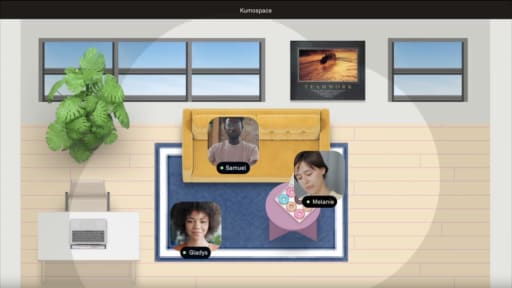
Platforms like Kumospace can host persistent virtual offices where teams meet, collaborate, and informally align around strategic priorities regardless of location.
Governance, Roles, and Cadence
Set up a simple governance structure:
- Executive sponsor
- Strategy owner
- Initiative leads
- Data owners
Recommended cadences:
- Weekly team check-ins
- Monthly initiative reviews
- Quarterly strategy retrospectives
Document decisions and action items after each review. Governance should be lightweight but consistent. Senior leadership engagement ensures accountability without bureaucratic overload.
Tools and Collaboration Practices
Create a “single source of truth” for your strategic plan accessible from anywhere.
Tool categories:
- Project management (Asana, Monday)
- Dashboards (Tableau, Looker)
- Documentation (Notion, Confluence)
- Real-time collaboration spaces (Kumospace)