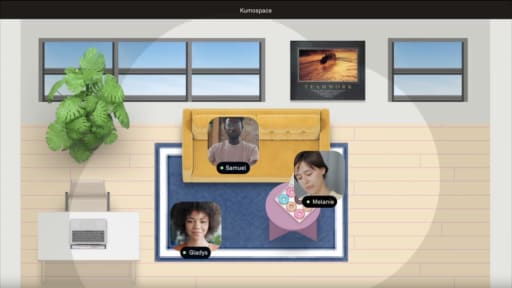
Team size matters in team building. With Kumospace, small groups of 3–15 people foster deeper connections and more meaningful collaboration than larger teams, where some members may fade into the background. Activities for small teams ensure everyone participates and contributes to the team’s success.
Small group activities give each member opportunities to speak, share ideas, and take on leadership roles. The intimate setting encourages stepping outside comfort zones while maintaining psychological safety, and skills developed in these exercises transfer easily to everyday work.
This article covers six categories of team building activities for small teams: quick icebreakers, communication builders, problem-solving challenges, creative collaboration exercises, trust-building activities, and physical games. Whether you need short exercises or more intensive sessions, you’ll find options suited to your group size, schedule, and goals.
Quick Icebreaker Activities (5-15 minutes)
Icebreakers are the perfect warm-up for any team building event or meeting. These activities help new members integrate quickly while giving established teams a fresh way to connect. The key is choosing activities that feel natural, creating a positive atmosphere for deeper work ahead.

Human Bingo works well for groups of 4–12 and takes 10–15 minutes. Create bingo cards with interesting facts team members might share—“Has traveled to three continents,” “Speaks two languages,” “Has run a marathon.” Team members mingle to find colleagues who match each square. This activity energizes the group and uncovers surprising commonalities. The friendly competition keeps energy high while personal sharing builds connections.
Speed Networking adapts professional networking for team building. Pair team members for 2-minute conversations, then rotate every few minutes. Suitable for groups of 6–16, it typically takes 10–12 minutes. Use prompts like “What’s one skill you’d like to learn this year?” or “Share something interesting about your role others might not know.” The time limit keeps discussions focused and ensures everyone interacts.
Would You Rather sparks discussion and reveals decision-making styles and values. Present choices like “Would you rather read minds or be invisible?” or work scenarios such as “Would you rather handle a tight-deadline project or a routine project with more time?” Groups of 4–10 can discuss for 8–10 minutes. This game highlights personality traits and encourages team members to explain their perspectives.
Commonalities Circle challenges small teams to find shared experiences, interests, or backgrounds. Teams of 4–8 spend 10–15 minutes identifying five things everyone shares, beyond obvious workplace facts. Conversations often uncover unexpected connections, creating unity. Teams might discover shared hobbies, music tastes, or family experiences.
These icebreakers require minimal materials (just paper and pens for Human Bingo) and can take place in any workspace. A few minutes of connection-building improves comfort and interaction in subsequent activities and everyday work.
Communication Building Activities
Strong communication skills are the foundation of every successful team. These exercises target different aspects of workplace communication, from giving clear instructions to active listening and non-verbal awareness. Unlike generic training, these activities provide immediate feedback and memorable experiences that teams can reference in future work.
Silent Line Up challenges teams to organize themselves by birthdate, height, or alphabetically by first name, without speaking. Groups of 6–12 can complete this in 10–15 minutes. The exercise highlights non-verbal communication and the importance of visual cues and confirmation. Teams often see natural leadership emerge.
Picture Perfect mirrors workplace scenarios where one team member communicates detailed information to others. One person receives an image (geometric shapes, drawings, or diagrams) and describes it while the team recreates it. After 10–15 minutes, compare results and discuss what communication strategies worked best. This reveals common pitfalls like assuming shared knowledge, vague language, or failing to check understanding.

Story Building develops collaborative communication skills through creative storytelling. The team creates a story together, with each person adding one sentence before passing to the next. Continue for 15–20 minutes or until the story concludes naturally. This activity teaches active listening, building on others’ ideas, and meaningful contribution. It also reveals individual communication styles as some focus on plot, others add descriptive details or humor.
Mirror Exercise pairs team members to practice non-verbal communication and attention to subtle cues. One person leads slow, deliberate movements while the partner mirrors them exactly, then switches roles. This 10–15 minute exercise heightens awareness of body language, facial expressions, and the patience required for clear communication. Teams often find it surprisingly challenging and gain appreciation for effective communication.
These activities work in any conference room and require only basic supplies like paper, pens, and simple images. The skills developed, clarity, active listening, patience, and confirmation techniques directly improve interactions during meetings, project coordination, and everyday work conversations.
Problem Solving Challenges
Problem solving activities push teams to work together under constraints, showing how they handle pressure, divide responsibilities, and adapt strategies. These games develop critical thinking and strategic skills while revealing different approaches to obstacles.
Newspaper Islands create a physical challenge requiring coordination and creativity. Spread newspapers on the floor and have team members stand on them. Fold the newspapers every few minutes, shrinking the “islands.” Teams of 5–10 work for 15–20 minutes to keep everyone off the floor, often using piggyback rides, human pyramids, or creative folding techniques.
Blind Geometry asks teams to form specific shapes with a rope while blindfolded, relying on verbal communication and spatial reasoning. One or two sighted members can guide the team. This 20–30 minute challenge for 6–12 people develops trust, communication, and systematic problem-solving.
Resource Trading divides 12–20 people into small teams of 3–4, each with different puzzle challenges and limited materials. Teams negotiate trades to complete their puzzles. This 30–45 minute activity develops negotiation, strategic thinking, and shows collaboration can outperform competition.
Survival Scenario presents a challenging situation where you’re stranded on an island, lost in the wilderness, or trapped in a snowstorm with 15–20 items. Teams must prioritize items and reach consensus in 25–35 minutes. This activity accommodates any group size and reveals decision-making styles and approaches to consensus under pressure.
These challenges can be set up in conference rooms or open spaces and require basic materials like newspapers, rope, office supplies, and scenario sheets. Collaborative problem solving skills directly transfer to workplace projects, crisis management, and strategic planning.
Creative Collaboration Exercises
Creative activities tap into different thinking styles and let team members contribute in ways that might not emerge in regular work tasks. They encourage thinking beyond conventional boundaries while practicing skills like building on others’ ideas, managing diverse approaches, and producing unified results.
Collaborative Canvas gives the team shared ownership of creating visual art. Provide a large canvas or several taped sheets of paper with art supplies. Each member contributes elements for 45–60 minutes. Teams of 4–15 learn how different creative styles complement each other when collaboration is prioritized over competition.
Invention Workshop challenges teams to design innovative products using random everyday objects. Give each team 5–7 unrelated items like paper clips, rubber bands, coffee filters, or toy blocks. Teams of 4–8 have 30–45 minutes to create, name, and present their invention. This develops creative thinking, resourcefulness, and presentation skills, often resulting in genuinely innovative ideas from combining disparate elements.

Group Poetry creates shared artistic expression through collaborative writing. Start with a theme related to the team, workplace, or shared goals. Each member contributes one line, building on previous lines while maintaining rhythm, theme, or rhyme. Continue for 20–30 minutes until the poem feels complete or reaches a set length. This activity works for teams of 4–15 and allows different personality types to contribute; some focus on rhythm, others on imagery, and others on emotional content. The resulting poem often becomes a meaningful representation of team identity and shared values.
Logo Design Challenge tasks teams with creating visual symbols representing group identity, shared values, or goals. Provide art supplies and allow 45–60 minutes for design, discussion, and refinement. Teams of 5–12 work well. The process reveals how team members prioritize values, their aesthetic preferences, and their ability to compromise and integrate different perspectives.
These creative exercises require art supplies, everyday objects for invention challenges, or paper and pens for poetry. The creativity generated often carries over into workplace problem solving, helping teams approach challenges with more innovative and flexible thinking.
Trust Building Activities
Trust forms the foundation of effective teamwork, requiring attention to psychological safety and gradual progression through vulnerability. These activities create structured opportunities for team members to demonstrate reliability, share authentic perspectives, and support each other meaningfully.
Trust Walk creates physical dependence while maintaining safety. One member wears a blindfold while their partner guides them through a simple obstacle course using only verbal directions. Set up chairs, cones, or desk supplies for interesting but safe navigation. After 10–15 minutes, switch roles. Best for 6–12 people, this activity develops communication precision, active listening, and confidence in teammates’ commitment.
Personal Timeline invites team members to share significant life events, career milestones, or formative experiences. Each creates a simple timeline with 4–5 key moments and shares brief stories. Allow 30–40 minutes for 4–8 people. This builds empathy and understanding while letting participants control personal disclosure.
Strengths Spotlight emphasizes recognition and appreciation. Each person identifies specific strengths in others with concrete examples. Structure as a circle where everyone receives feedback before sharing observations. This 25–35 minute activity works well for established teams of 4–10 and builds confidence while fostering a culture of recognition.
Values Auction reveals priorities and sparks discussion about shared principles. Give teams money and conduct an auction for personal and professional values like “work-life balance,” “innovation,” or “collaboration.” Limited funds force difficult choices. After 30–40 minutes, discuss which values received the highest bids. Works for any group size and uncovers insights into motivation and how individual values complement one another.
Building Psychological Safety
Create safe environments by focusing on emotional comfort and participation choice. Start trust-building sessions with check-ins on comfort levels and concerns. Establish ground rules for respectful sharing, confidentiality, and the right to opt out.
Allow optional participation for those uncomfortable with vulnerability. People may build trust by observing before engaging. Provide alternative contributions, such as asking thoughtful questions or offering encouragement.
Structure debriefs to consolidate learning without pressuring personal sharing. Focus on teamwork insights, communication patterns, and connections to workplace collaboration. This lets participants choose their openness while benefiting from the trust-building experience.
Physical Team Activities
Physical activities foster bonding through shared challenges requiring coordination, communication, and support. They generate laughter and memorable moments while developing teamwork skills beyond discussion-based exercises.
Human Knot is highly effective for 8–16 people. Team members stand in a circle, reach across to grab hands with two non-adjacent people, creating a tangle. The challenge is untangling without releasing hands. Takes 15–25 minutes, requiring patience, communication, and creative problem solving. Groups may step over or under arms or create multiple circles. The physical constraint encourages cooperation and often generates laughter that strengthens bonds.
Ball Pass Challenge adds complexity with multiple objects and rules. Start with one ball passed in a specific order to all members before returning to the first person. Time the process, then add balls while maintaining the sequence. Groups of 6–12 can manage 3–5 balls with practice. This 20–30 minute activity develops coordination, attention to detail, and systematic approaches to managing multiple priorities; skills that transfer directly to workplace project management.

Obstacle Relay requires teams to navigate a course together, with each member contributing unique skills or taking responsibility for specific sections. Set up stations requiring different abilities—crawling under tables, balancing on lines, tossing objects into containers, or solving simple puzzles. The entire team must complete the course together, often helping others through challenging sections. This 25–35 minute activity accommodates 6–15 people and demonstrates how diverse skills contribute to team success while building mutual support and encouragement.
Container Transport challenges teams to move water, sand, or small objects using unconventional methods. Provide materials like PVC pipes, funnels, cups with holes, or lengths of rope, but prohibit simple carrying. Teams must devise transportation systems that require multiple people to operate successfully. Allow 30–45 minutes for 5–12 people to develop, test, and refine their approach. This activity encourages innovative thinking, iterative improvement, and coordination under practical constraints.
Physical activities require adequate space and attention to safety. Indoor activities can work in conference rooms or open offices with furniture moved aside. Outdoor spaces provide more options but require weather contingency plans. Always consider team members with different physical abilities and provide alternative roles, such as strategists, timekeepers, or encouragers, to allow meaningful participation.
Virtual and Remote Team Options
Remote teams face unique challenges in building connections and trust without in-person interaction. Thoughtfully designed virtual activities can create meaningful shared experiences that strengthen team bonds across distances. The key is choosing activities that work well in video conferences while maintaining engagement for all participants.
Digital Escape Rooms provide immersive collaborative experiences through online platforms for remote teams. Participants solve interconnected puzzles, find hidden clues, and work together to “escape” within a time limit. Most accommodate 4–8 participants and run 45–60 minutes. Teams must communicate constantly, share screens, and coordinate investigation paths. Many platforms offer business-themed scenarios that relate to workplace problem-solving skills.
Virtual Show and Tell adapts a childhood activity for professional team building. Each member takes 3–4 minutes to share something meaningful from their workspace, home, or life—a book, hobby project, family photo, or collection. This activity works for any group size and typically runs 20–40 minutes. Personal sharing builds connections and gives insight into colleagues’ lives outside work.
Online Drawing Games use shared whiteboards or collaborative tools to create team artwork or solve visual puzzles. Teams might build a shared scene with each person adding elements or work together to recreate complex images. These activities run 15–30 minutes for 4–12 people. Visual collaboration creates shared references and often generates laughter as artistic skills vary.
Breakout Room Challenges divide larger teams into small groups for focused collaboration before reconvening to share results. Challenges can include designing a product for a remote work problem or planning a team retreat within a budget. Small teams of 3–5 spend 20–30 minutes in breakout rooms, then present solutions. This format preserves small-group benefits, accommodates larger teams, and provides leadership opportunities.
Virtual team building requires reliable technology with video calls, screen sharing, and breakout room functionality. Test platforms and backups before events. Provide clear technical instructions and have participants join early to resolve connectivity issues. Consider time zones and rotate meeting times fairly for global teams.
Implementation Tips for Success
Successful team building depends on thoughtful planning and skilled facilitation rather than elaborate activities or expensive venues. Understanding team dynamics, comfort levels, and development needs ensures activities strengthen relationships and improve collaboration rather than creating awkward or counterproductive experiences.
Matching Activities to Team Dynamics requires honest assessment of current relationships, communication patterns, and comfort with interaction. Newly formed teams benefit from low-risk icebreakers and light problem solving to establish rapport. Teams with existing trust can handle more challenging activities that surface perspectives or require cooperation under pressure. Teams experiencing conflict need carefully facilitated communication-focused activities rather than competitive challenges.
Time Management Strategies help activities feel worthwhile rather than rushed or overextended. Build in buffer time for setup, instructions, and debriefs. Many activities work better when allowed to develop naturally. Consider breaking longer activities into segments across multiple shorter sessions rather than squeezing everything into a single extended event.
Facilitator Guidelines focus on creating inclusive environments for authentic contributions. Encourage participation without pressuring introverted members. Offer multiple engagement methods—verbal sharing, listening, or asking questions. Watch for dominant personalities and redirect gently to ensure everyone participates meaningfully.
Adapting for Different Work Styles recognizes that team members approach collaboration, problem solving, and social interaction differently. Some prefer structured activities with clear rules, while others thrive in ambiguous creative challenges. Include a variety of activities to engage different strengths. Allow members to take roles that suit preferences while gently encouraging stretch opportunities.
Creating Follow-Up Opportunities ensures team building insights transfer to daily work. Reference positive moments during meetings like “Remember our tower-building challenge? Let’s bring that creativity to this project.” Implement practices inspired by successful activities, such as check-ins from trust-building exercises or problem-solving approaches from challenges.
Measuring Impact and Follow-Through
Use simple feedback methods to assess whether activities meet goals and identify areas for improvement. Brief surveys can ask team members to rate effects on relationships, communication comfort, and confidence in problem-solving. Focus on behavioral changes rather than general satisfaction.
Incorporate insights into daily work by identifying communication or collaboration strategies discovered during activities. For example, replicate structured brainstorming from creative exercises or adjust coordination based on trust-building findings.
Schedule regular sessions for sustained relationship building instead of one-time events. Quarterly activities with varying formats maintain momentum while avoiding routine. Vary duration and focus based on team needs and prior effectiveness.
Connect activities to business goals and performance metrics when possible. If communication exercises improve meetings, track meeting duration, decision-making speed, or action item follow-through. When problem-solving activities enhance project coordination, monitor timelines, cross-functional collaboration quality, or innovation outcomes.
Conclusion
Small group team building strengthens communication, problem solving, and team connections. Intimate settings let every member participate, build trust, and practice collaboration in safe, creative environments.
The most effective initiatives mix activity types like icebreakers, communication exercises, problem-solving challenges, creative tasks, trust-building, and physical activities, so all personalities and learning styles can contribute.
Consistency matters more than elaborate planning. Regular, simple activities with debriefs often build stronger bonds than one-time events. Start with 2–3 activities, note which generate engagement, and build on those successes to improve teamwork, collaboration, and overall results.
Frequently Asked Questions
Small groups allow every member to participate actively, build trust through shared challenges, and practice collaboration skills in a safe, supportive environment.
Most activities work well in 10–60 minutes depending on complexity and group size. Shorter exercises energize the team, while longer sessions allow deeper collaboration and skill development.
Yes. Activities that focus on communication, problem solving, and trust can strengthen collaboration, boost morale, and improve how teams approach real work challenges.
Offer alternative roles such as strategists, timekeepers, or observers. Optional participation and clear ground rules help ensure everyone can contribute meaningfully.
Regular sessions, quarterly or monthly, are more effective than one-time events. Consistency helps sustain relationships, reinforce skills, and integrate insights into everyday work.