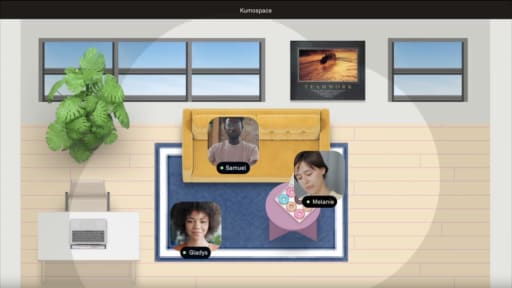
The physical office is no longer the default. In 2026, the companies shipping the most ambitious AI products often have no headquarters at all, just a virtual office address in Delaware, a collaboration platform like Kumospace, and engineers spread across four continents.
This article explains how remote-first teams build their online office infrastructure, run effective meetings without Zoom fatigue, and collaborate without ever signing a commercial lease.
Online office vs. traditional office (fast overview)
An online office combines three components: a virtual business address for legal registration and professional presence, a virtual workspace for daily collaboration, and cloud-based tools that let distributed teams work as if they shared a physical location.
Companies like Kumospace provide spatial audio environments where teammates can walk up to each other’s virtual desks. Fully remote startups founded after 2020 operate entirely on digital infrastructure with no reception desk, no conference room bookings, and no commute.
Traditional office (2015)
- High fixed costs: long-term lease, utilities, furniture, maintenance
- Hiring radius limited to commuting distance (typically 30-50 miles)
- Collaboration happens in person; remote work is an exception
- Flexibility is minimal; scaling up means finding more square footage
Hybrid workspace (2020)
- Mixed costs: reduced office footprint plus home office stipends
- Hiring radius expands to regional or national candidates willing to relocate
- Collaboration splits between in-person and video calls
- Some flexibility, but still tied to physical office location for key meetings
Online office (2026)
Variable costs include virtual address subscriptions, collaboration platform licenses, and coworking day passes as needed.
Hiring is global, spanning any time zone and any country with work authorization. Collaboration occurs in virtual workspace platforms, through asynchronous documentation, and during scheduled meetings.
Teams have full control over scaling, adding members without adding desks. Online offices enable AI startups to hire globally without leasing space in San Francisco, New York, or London. A seed-stage ML company can maintain a prestigious address in Manhattan for investor correspondence while its founding team works from Austin, Berlin, and São Paulo.
Types of online offices for modern companies

The term “online office” has evolved beyond a simple mailing address service. In 2026, it includes virtual address providers, digital collaboration platforms, and flexible access to physical meeting space, often bundled for remote-first operations.
Virtual business address services
- Provide a real street location in major cities (New York, Austin, Berlin, Singapore) that companies use for business registration, banking, and branding
- Create a professional business image by listing a prestigious business address on your website, business cards, and legal documents
- Many providers offer registered agent services for LLC or C-corp formation, making a registered agent address available in states like Delaware or Wyoming
- Pricing typically ranges from $20 to $200 per month depending on the business address location and included services
Digital mailbox and mail handling
- Services receive mail on your behalf at physical mailbox locations, then scan, shred, or forward items based on your preferences
- Mail forwarding options include domestic and international shipping, with some providers offering same-day scanning
- Compliant ID verification (e.g., USPS Form 1583 in the U.S.) ensures legal mail handling
- Teams can manage mail from a dashboard, eliminating the need to collect mail in person
- Forwarding services often include package handling for hardware shipments common in engineering teams
Online coworking platforms
- Kumospace and similar collaboration tools simulate office floors with meeting rooms, private offices, and lounges using spatial audio
- Team members move their avatars to start talking with colleagues, replicating the casual conversation of a physical office
- Features include room access for scheduled meetings, instant access to shared workspaces, and integrations with Slack and calendars
- These platforms address Zoom fatigue by making remote work feel more human and spontaneous
Flexible physical access
- Some virtual office services include meeting room access at coworking spaces in major cities
- Useful for quarterly offsites, investor meetings, or when you need to meet clients face-to-face
- Day passes or hourly rates let you save money compared to maintaining dedicated office space
- A global network of locations means your remote team can find meeting space around the world
Core components of a complete online office setup
Setting up an online office in 2026 requires more than signing up for a few SaaS tools. Here’s a practical checklist for founders building their remote-first infrastructure.
Business identity
- Register your company in a business-friendly jurisdiction (Delaware C-corp is common for startups seeking VC funding)
- Obtain a virtual office address in your target market
- Set up a professional domain and branded email (Google Workspace or Microsoft 365)
- Use your virtual address for business registration documents, banking applications, and as your official mailing address
- Ensure your virtual office location supports registered agent requirements if needed for your entity type
Communication stack
- Establish a dedicated phone number with call routing to team members based on availability or time zone
- Consider professional receptionists or AI-powered virtual assistants to handle inbound calls and maintain a professional presence
- Define response time norms for email, Slack, and Teams; most remote teams aim for 4-hour response windows during working hours
- Set up business communications channels: one for urgent issues, one for team updates, one for casual conversation
- Document your communication policies so new hires understand expectations from day one
Collaboration layer
- Choose a virtual workspace platform like Kumospace for your virtual office space where the team gathers daily
- Integrate project management tools (Linear, Jira, Notion) with your workspace for instant presence on tasks
- Configure shared calendars that respect time zones for your connected team across regions
- Establish async documentation practices: recorded Loom videos, written decision logs, and searchable wikis
- Create both shared workspaces for collaboration and focus zones for deep work
Security and compliance
- Implement SSO (Okta, Google Workspace) for centralized access control across all tools
- Define device policies: require encryption, MDM enrollment, and regular security updates
- Apply minimal document access principles
- Use secure hiring processes: background checks, identity verification, and fraud detection for remote candidates
- Ensure your virtual office services provider complies with data protection regulations (GDPR, SOC 2)
Online offices for remote-first engineering teams

Engineering teams operate differently than sales or marketing. They need blocks of uninterrupted focus time, async code review workflows, and minimal meeting overhead, but they also benefit from spontaneous technical discussions.
Online offices built for engineering work support both collaboration and focused work. Platforms like Kumospace let teams host daily standups in a persistent virtual office while maintaining quiet zones for deep work. Engineers can walk up to a colleague’s virtual desk for a quick architecture question without scheduling a formal meeting, replicating the best aspects of physical office proximity.
How remote-first AI startups operate
- No headquarters or long-term lease commitments
- Virtual address for legal compliance and business presence in key markets
- Kumospace or similar platform as the primary workspace
- Quarterly in-person retreats funded with savings from not paying commercial rent
AI/ML team workflows in online offices
- Schedule experiment reviews across time zones using shared calendars and recorded sessions
- Host MLOps standups in the virtual office with screen sharing for pipeline dashboards
- Run architecture discussions in dedicated meeting space with whiteboard integrations
- Maintain async documentation for model training decisions, hyperparameter choices, and deployment logs
- Use mini mode in collaboration tools to stay connected during focus work without full distraction
Improving hiring and onboarding with an online office
Hiring has changed significantly. Top engineering candidates no longer expect to travel to a company’s headquarters for onsite interviews. They now look for a remote-first process that respects their time and demonstrates how the company actually operates.
Before hiring: set up your virtual interview infrastructure
- Configure your online office with dedicated interview rooms in Kumospace
- Prepare structured interview guides with bias-audited evaluation criteria
- Define transparent salary ranges upfront as candidates increasingly expect this
- Set up technical assessment tools that integrate with your virtual workspace
A great service for new hires includes a “first week” channel where they can ask questions without feeling like they’re interrupting busy colleagues.
Choosing the right online office tools and providers
Don’t default to the first vendor or copy what competitors use. Your online office stack should match your team size, budget, and operational needs.
Evaluation criteria for virtual office address providers
- Jurisdiction requirements: Can the address be used for LLC/C-corp registration and banking in your target state?
- Mail handling SLAs: How quickly do they scan incoming mail? What are forwarding timeframes?
- Registered agent availability: Do they offer registered agent address services if required?
- Meeting room access: Are physical meeting rooms included, and where are they located?
- Pricing tiers: What’s included at each level? Watch for additional fees on mail scanning or forwarding
- Professional presence: Does the address convey the business name credibility you need?
Evaluation criteria for collaboration platforms (Kumospace, etc.)
- Ease of onboarding: Can new team members get productive within a few hours?
- Large meeting support: How many participants can join all-hands or demo sessions?
- Breakout rooms and private offices: Are there spaces for 1:1s and focused work?
- Integrations: Does it connect with Slack, Google Calendar, Notion, and your ATS?
- Bandwidth requirements: Will it work reliably for team members with variable internet?
- Spatial audio quality: Does it actually reduce meetings wave fatigue compared to traditional video calls?
Evaluation criteria for hiring and HR stack
- ATS compatibility: Does your pipeline connect with interview scheduling in your online office?
- Background check and identity verification workflows for remote hires
- Bias-audited evaluation tools built into the hiring process
- Onboarding automation: Can you provision accounts and access automatically?
Starter stack for a 5–20 person AI startup
- Entity: Delaware C-corp with registered agent
- Virtual office: San Francisco or New York virtual address for investor credibility
- Policy: Remote-first, documented async communication norms
- Collaboration: Kumospace for daily workspace and team presence
- Productivity: Google Workspace for email, docs, and calendar
- Communication: Slack for async, dedicated phone number for external calls
- Project management: Linear or Notion
- Security: Okta for SSO, documented device policies
This stack costs under $200 per employee per month which is a fraction of what you’d spend on physical office space per person.
Future of online offices for AI startups and high-growth teams

The trajectory is clear. What started as pandemic-era necessity has become the preferred operating model for companies that prioritize talent over real estate. By 2026, many AI startups have never signed a long-term lease, and never will.
The next wave of online office evolution will be driven by AI automation inside the workspace itself.
AI-powered online office features emerging now
- Smart scheduling that finds optimal meeting times across global teams without back-and-forth
- Auto-generated meeting notes and action items distributed via Slack or email
- Personalized onboarding paths that adapt based on a new hire’s role and learning pace
- Intelligent notification management that protects focus time while surfacing urgent items
Blending online and in-person experiences
- Periodic retreats (quarterly or biannually) where remote teams gather in person for deep collaboration
- Pop-up coworking days in cities where multiple team members happen to live
- Hybrid events hosted from online headquarters with in-person satellites
- Meeting space reservations through virtual office providers when face-to-face is needed
Conclusion
Online offices are no longer just a cost-saving alternative; they are the foundation of how modern engineering teams operate. By combining virtual business addresses, persistent collaboration platforms like Kumospace, and flexible access to physical meeting spaces, companies can hire globally, support distributed workflows, and maintain high productivity without the constraints of traditional offices. For founders and engineering leaders, designing an intentional online office is both a strategic investment in talent and a way to build a scalable, resilient organization that can adapt to the fast pace of AI development.
Frequently Asked Questions
A virtual office address provides a physical mailing address and mail handling services, while a digital office space offers a comprehensive cloud-based workspace with collaboration tools, unified communication platforms, and virtual environments where distributed teams work together daily.
Virtual offices make multi-city expansion affordable by letting businesses establish addresses in multiple markets like New York, Los Angeles, and Chicago without renting separate physical spaces, while providing mail handling and phone services that project regional credibility.
Companies using cloud desktop solutions experience reduced IT costs and higher employee satisfaction, while gaining scalability, 24/7 accessibility from anywhere, easier deployment, simplified management, and seamless integration across collaboration ecosystems.
Modern virtual office platforms implement multi-factor authentication, encryption, compliance frameworks, and zero-trust security measures to protect sensitive information, addressing common data security and privacy concerns.
Virtual office networks eliminate geographical constraints, allowing companies to hire the best talent anywhere and establish presence in new markets without physical space costs, while providing centralized management tools that support coordination across time zones and distributed teams.