Hands interacting with a colorful project management board filled with sticky notes, charts, and graphs, symbolizing the benefits of project management.

Benefits of Project Management

By Sammi Cox

Project management is the structured planning, execution, and control of temporary initiatives, each with a defined start date, end date, and specific deliverables. Effective project management ensures that projects are completed on time, within budget, and according to quality standards. This article focuses on the tangible business benefits that strong project management delivers, including improved team coordination, clearer accountability, and better alignment with organizational goals, rather than abstract theory that may never be applied.

Key Takeaways

  • Effective project management keeps projects on time, within budget, and aligned with business strategy, helping teams meet deadlines and avoid costly miscommunication.
  • Organizations using structured project management achieve projects 2.5 times more successfully, resulting in higher completion rates, better ROI, and fewer failures.
  • Modern project management tools and virtual platforms like Kumospace help remote and hybrid teams coordinate work effectively across sprints, roadmaps, and standups.

What Is Project Management?

Project management is the structured planning, execution, and control of temporary initiatives to deliver specific outcomes. Unlike ongoing operations, every project has a defined beginning and end.

Consider the difference: launching a new app in Q4 2026 is a project with clear milestones and a finish line, while ongoing customer support is business-as-usual and continues indefinitely without a closure phase. The project management process handles the former, while operational management handles the latter.

The discipline matured from 1950s engineering and defense applications, including the U.S. Navy’s Polaris program, where PERT was developed, and was formalized in 1969 with the founding of the Project Management Institute. What began with highly structured, sequential methods later evolved into more flexible, software-supported practices that teams across industries can apply today.

Even teams without formal project manager titles use project management techniques daily, including sprints (short iterative cycles, typically 1–4 weeks), roadmaps (visual timelines of milestones), Kanban boards (visual workflow trackers), and virtual standups (daily 15-minute syncs).

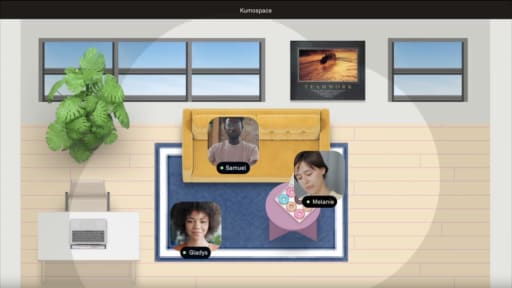
In hybrid and remote settings, project management is the glue that replaces in-office visibility, and digital tools, cloud documents, and virtual collaboration spaces like Kumospace simulate co-presence for coordination, keeping distributed teams aligned without requiring everyone in the same room.

Clear Goals and Strategic Alignment

Well-run projects start with clear, measurable goals tied directly to company strategy. Without this foundation, teams may focus on low-impact work while high-value initiatives stall, and project objectives like “increase self-serve revenue by 15% by December 2026” give everyone a target worth hitting.

Project charters, OKRs (Objectives and Key Results), or SMART goals (Specific, Measurable, Achievable, Relevant, Time-bound) prevent scope drift and keep effort focused on outcomes, not just tasks, so teams understand the project scope and its connection to business priorities and can make informed decisions about where to spend their time.

Alignment is harder in distributed teams due to visibility gaps, and recurring goal reviews via video or virtual office sessions help keep cross-functional teams synchronized; for example, running a weekly alignment check in a Kumospace room ensures product, engineering, and marketing share the same objectives throughout the project lifecycle.

Aligned project goals also make portfolio prioritization easier, allowing leadership to decide which initiatives to delay or cancel based on strategic fit and ROI rather than gut feelings or who complains loudest.

Structure That Keeps Projects On Time and Within Budget

The project management process replaces ad-hoc chaos with structured phases: initiation, planning, execution, monitoring, and closure. Each project phase has clear deliverables and checkpoints that control time and cost before they spiral.

Core planning practices that keep projects managed effectively include:

  • Work breakdown structures (WBS): Hierarchical decomposition of the entire project into manageable tasks
  • Gantt charts: Visual timelines showing dependencies and the critical path
  • Schedule baselines: Approved plans against which you track progress and measure variance

Common scheduling tools that help teams hit project timelines include calendars, Kanban boards, time tracking software, and Gantt charts.

Improved Collaboration, Communication, and Accountability

Modern projects rely on cross-functional collaboration. Product, engineering, marketing, and finance must coordinate without stepping on each other, or waiting weeks for handoffs. Effective project management clarifies who does what, by when, enabling teams to move faster with less friction.

Accountability tools that work:

  • RACI charts: Matrices defining who is Responsible, Accountable, Consulted, and Informed for each deliverable
  • Clear task assignments: Explicit ownership prevents the “I thought you were handling that” conversations
  • Decision logs: Documented choices reduce finger-pointing when project risks materialize

Always-on virtual offices like Kumospace make quick clarifications, standups, and informal check-ins feel more like in-person collaboration. When a designer can “tap” a developer’s virtual shoulder for a 30-second question instead of scheduling a meeting, team collaboration improves significantly and project progress accelerates.

Better Risk Management and Change Control

Uncertainty is unavoidable. Supply-chain disruptions, regulatory updates, and staffing changes hit projects regardless of how well you plan. Risk management gives skilled project managers tools to anticipate and handle problems before they derail the entire project.

Practical risk management involves identifying risks, building a risk register listing threats with probability and impact scores, assigning mitigation owners to ensure accountability, and creating contingency plans with pre-approved responses when risks materialize.

Formal change control prevents uncontrolled scope creep by using a change log, impact analysis showing time and budget trade-offs, and sponsor approvals to keep stakeholders informed of shifts and their reasons.

For distributed teams, real-time discussion of project risks via video huddles or virtual war rooms helps resolve issues before they escalate, and dedicated project spaces, including virtual rooms in tools like Kumospace, allow cross-functional teams to address problems with the same urgency as if they were in a physical conference room.

Smarter Use of Resources and Higher Productivity

Resource management helps leaders assign the right people to the right work at the right time. Without it, your best contributors burn out while others sit underutilized—and bottlenecks multiply across multiple projects.

Key resource allocation practices:

  • Capacity planning: Matching skills to demand across the project lifecycle
  • Resource leveling: Balancing workloads to prevent burnout
  • Historical data analysis: Using past project data to improve estimate accuracy

Standardized project workflows, templates, and checklists reduce repetitive setup work:

Asset Type

Use Case

Impact

Launch templates

Product releases

25% reduction in setup errors

Onboarding checklists

Client implementations

Consistent quality, faster ramp

Review frameworks

Design/code reviews

Fewer missed issues

Project management software with task automation features handles routine work like status reminders, approval requests, and handoff notifications. This frees team members for creative and strategic work instead of administrative busywork.

In hybrid workplaces, clear schedules of focus blocks, collaboration windows, and virtual office “open door” times improve deep work. When your team knows you’re available in Kumospace from 2-4pm for questions but focused until then, context-switching drops, and productivity climbs.

Higher Quality Outputs and Happier Stakeholders

Good project management doesn’t just deliver “on time”; it delivers “done right,” with quality control embedded from planning through closure rather than added at the end when fixing problems is most costly.

Quality assurance practices that matter include acceptance criteria with measurable standards, a definition of done checklists to ensure completeness before handoff, review and testing stages to prevent defective work from shipping, and stakeholder sign-offs before launch or delivery.

Regular structured updates to stakeholders, including status reports, demos, and review meetings, build trust because there are no end-of-project surprises.

Project management also improves internal satisfaction by clarifying activities, documenting expectations, and celebrating milestones together, and even virtual celebrations in shared spaces like Kumospace create connections that sustain high-performing teams.

Learning, Continuous Improvement, and Future Readiness

Disciplined project management turns every project into a learning opportunity. Rather than repeating the same mistakes, teams capture insights that make future projects faster, cheaper, and higher quality.

Post-project reviews (retrospectives) should capture:

  • What worked well and should be repeated
  • What failed and should be avoided
  • What processes need refinement for the next cycle

Across multiple project life cycles, such as annual product releases, yearly client programs, and quarterly campaigns, this learning builds competitive advantage. Teams that run software development projects using data from previous iterations estimate more accurately, deliver faster, and spend less on rework.

Modern collaboration environments, including persistent virtual offices, make it easier to schedule and run retrospectives that include all contributors regardless of location or time zone. When participation is effortless, continuous improvement actually happens instead of being skipped because teams are too busy.


Using Digital Tools (Including Virtual Offices) to Unlock These Benefits

While principles matter most, digital tools make structured project management practical for teams spread across cities and countries. The right project management software turns good intentions into consistent execution.

Key features to look for in project management tools:

Feature

Why It Matters

Shared task boards

Visual progress tracking for everyone

Timeline/Gantt views

Dependency and critical path visibility

Documentation storage

Single source of truth

Automations

Reduce manual status updates

Integrated chat/video

Communication tied to work

Conclusion

Effective project management turns strategy into results by combining clear goals, structured planning, risk management, quality control, and continuous improvement. By using the right tools, templates, and virtual collaboration spaces like Kumospace, teams can stay aligned, adapt quickly, and maintain high performance across projects. Investing in disciplined project management not only increases delivery success and ROI but also strengthens team satisfaction and organizational learning, making it a critical capability for any business aiming to thrive in a complex, distributed work environment.

Frequently Asked Questions

Transform the way your team works from anywhere.

A virtual office in Kumospace lets teams thrive together by doing their best work no matter where they are geographically.

Headshot for Sammi Cox
Sammi Cox

Sammi Cox is a content marketing manager with a background in SEO and a degree in Journalism from Cal State Long Beach. She’s passionate about creating content that connects and ranks. Based in San Diego, she loves hiking, beach days, and yoga.

Transform the way your team works.