Illustration of distributed employees linked by lines, representing challenges of asynchronous communication.

Downsides of Async Communication on Remote Teams

By Brett Martin

Async-only communication is what happens when a team removes real-time contact entirely, so every decision, disagreement, and escalation has to travel through text. Most teams land there by swinging away from meeting overload, and the downside isn't slower typing. It's that nothing forces a decision to close.

A week-long Slack thread over a decision that would have taken five minutes on a call is the tax nobody notices. Async-only teams don't fail loudly: work keeps moving, tickets close, docs pile up, while decisions quietly stall and disagreements harden in writing.

Key Takeaways

  • Async-only cultures rarely fail in an obvious way; the costs show up instead as slower decisions, unresolved disagreements, and rising friction in written channels.
  • The clearest early sign is work that looks busy in trackers and threads while decisions and ownership stay unclear for days at a time.
  • The fix is naming a few specific situations (urgent blockers, sensitive topics, and escalating conflict) where the team deliberately switches to a quick real-time conversation.

The hidden cost of async work on remote teams

Async communication is genuinely useful: it reduces interruptions, gives remote workers control over their own schedule, and cuts down on meeting overload for complex questions that deserve a thoughtful answer instead of a rushed one on a call. Companies like GitLab have built their entire operating model around asynchronous defaults, and for many teams, that trade-off is a real win. None of that is the problem.

The hidden cost shows up when async becomes the only communication style: no live meetings, no phone calls, no way to be present simultaneously on a shared question. That absence can quietly undermine the same work-life balance async was supposed to protect, as people feel compelled to check in across time zones at all hours just to stay current in threads that never close. What started as freedom from constant meetings becomes a different kind of always-on pressure. Teams that lean on async specifically to cut down on interruptions can swing too far and remove the real-time mechanisms needed for healthy disagreement and fast problem-solving; email, messaging, and shared docs are efficient for exchanging information, but they don't replace spontaneous interaction, and without it, team bonding tends to fade. What gets called the cost of async work is almost always the cost of async-only, and that distinction decides which fix actually applies.

When async communication fails: observable signs

Each sign below is visible in a week of data you already hold: thread activity, response patterns, your tracker, and the tone of written messages. While an isolated incident may simply reflect temporary workload pressures, recurring clusters of these indicators signal a deeper structural bottleneck.

Decisions stretch across days in chat without closure

A product, engineering, or marketing decision sits in threaded Slack messages or document comments for three to five days. Multiple people post "any updates?" or "bumping this," and the thread grows without ever producing a clear final owner or closure.

This happens because async-only norms discourage short live huddles, even for decisions with clear urgency or dependency chains. Tools like Asana and Jira improve visibility across time zones, but they can't force a decision, and delayed feedback lengthens project timelines, especially when downstream work depends on the answer.

Consider alternate explanations before concluding async is the culprit: unclear decision rights, a new manager still learning the team, or rapid growth can create the same pattern even in mixed sync/async cultures. A naming decision or policy approval that keeps stalling because the people who need to agree never overlap live is a strong signal that async is the bottleneck. But if only one project stalls while others move fine, look at ownership and scope first.

Written disagreements escalate while people avoid calls

Long thread arguments where tone hardens over time, more people get added, and messages get longer, but nobody suggests jumping on a quick call, are a distinct pattern. A 2026 review in Perspectives on Psychological Science describes how text-based, asynchronous exchange lowers social presence and loosens inhibition, which makes people readier to criticize and readier to simply not reply. The same effect can help quieter people speak up, which is part of why async-only cultures don't feel broken from the inside.

Async culture combined with remote work lowers the cost of adding an opinion to a thread, so sensitive topics attract more participants than they can absorb, and the exchange escalates because each person is responding to the last message without any of the softening effect a real conversation provides. The tell that separates this from ordinary disagreement: the thread grows in participants and message length at the same time, and nobody proposes moving it live even though it clearly isn't converging. The more benign explanation is that people are conflict-averse or unsure how to convene the right group, not that anyone actually wants a fight.

Projects have lots of comments but little forward movement

Look at your tracker, whether that's Jira, Asana, Trello, or a shared board. Items accumulate comments, questions, and status changes while delivery dates keep slipping, with no decisive re-planning conversation to reset them. A 2026 study in Frontiers in Organizational Psychology based on 13 interviews with management consultants in Germany, Austria, and Switzerland during the pandemic, found that decisions and approvals took longer when the communication layer was text-only, and every clarification, tradeoff, or dependency check that has to happen via text adds another day of lag to the project.

Similar stagnation can also come from unrealistic scope, understaffing, or unclear priorities. If dates are slipping on projects with strong ownership and clear scope, async-only communication is more likely the actual bottleneck; count the comments against the delivered outcomes on your last major project to see which explanation fits.

Team members over-document but still feel "out of the loop"

Teams with extensive docs, recordings, and tickets can still have people routinely saying "I didn't know that changed" or "where was that decided?" Documentation is genuinely valuable for async work, but async-first cultures can produce information sprawl instead of clarity when there's no real-time recap or synthesis to align everyone's understanding. A handbook, a company wiki, and a shared drive that all claim to hold current policy leave nobody sure which one is authoritative, and decisions buried in Slack or Teams channels are hard to find again later even when the information technically exists somewhere.

Rapid organizational change or several overlapping systems of record can create this same confusion even when the sync/async balance is otherwise reasonable. Documentation as a helpful source of truth is one thing; documentation as the only way to catch up is exhausting, and no amount of organized folders fully solves that on its own.

People are online everywhere but hard to reach for actual decisions

Statuses show activity across time zones, notifications are constant, and chat is lively, but when a decision or escalation is actually needed, nobody is available in real time. In a 2026 essay, Andrea Fortuna coined the term "availability theater" to describe how workers perform responsiveness through quick message timestamps while remaining functionally unavailable for meaningful real-time problem solving.

This connects to a broader pattern of async fatigue, where people batch their responses and avoid any synchronous touchpoint even when a short call would save hours of back-and-forth, largely because nobody wants to be the one who interrupts someone else's focus time. Benign explanations exist: distributed teams with little time zone overlap or a seasonal workload spike can temporarily limit live interaction, and protected focus time is genuinely good. But if nobody ever opens a two-way channel, coordination pays for it, and an immediate reply becomes impossible even when the situation actually demands one.

Misunderstandings cluster around sensitive or complex topics

Recurring misreads in written updates on performance feedback, role changes, budget or scope cuts, or incident reviews often surface later as "that's not what I meant" or "I didn't realize it was that serious." Removing that much tone, timing, and immediate clarification from sensitive topics makes async-only channels risky even when the writing itself is careful. Removing that much tone, body language, and immediate clarification from sensitive topics makes async-only channels risky even when the writing itself is careful.

Cultural differences, language barriers, or a new manager unfamiliar with the team can also drive misunderstandings. But when a short video call or live conversation consistently resolves confusion that written exchanges keep circling, you've found where async-only reaches its limit.

Why problems with async-first culture emerge on remote teams

These are structural patterns, not individual failings. You likely helped create them by doing what seemed reasonable for remote work: cutting meetings, giving people flexibility, investing in tools.

Async as the default for everything. Many organizations swung from meeting-heavy in 2020 to almost no live touchpoints since, partly out of real frustration with meetings that weren't earning their time, and now run chat and docs even for conflict, coaching, and incidents. But the pendulum went past async-first into async-only, where even brainstorming sessions and incident reviews happen entirely in threads. You control this directly through your own communication norms and escalation paths.

Time zone sprawl without overlap windows. A global team spread across North America, Europe, and APAC that never schedules any live overlap time forces every topic into slow-turn async channels by default. Schedule design is usually yours to change even when company-wide staffing isn't, and making a small overlap window visible, even just an hour or two most days, gives cross-timezone blockers a place to resolve quickly instead of drifting for days.

Tool sprawl disguised as clarity. Multiple project management tools, chats, and wikis create an illusion of transparency while nobody knows which place is authoritative for decisions. The tool stack expands as each team picks its preferred system, so consolidation means negotiating with those teams rather than issuing a mandate. Until that happens, people check four places and trust none completely.

Over-indexing on deep work without guardrails. Fewer interruptions and protected focus time are genuine benefits, but when any synchronous request gets treated as a failure, people become reluctant to propose a quick call even when a 10-minute conversation would save days of back-and-forth.

Leaders modeling absence from real-time channels. When managers never hop on quick video calls or hold office hours, the team infers that everything must be solved asynchronously regardless of complexity. When Dropbox moved to asynchronous-by-default in late 2020, employees who preferred a conventional nine-to-five schedule left, producing one of the highest attrition rates in the company's history. Dropbox said it had lost the in-person connection that shared identity and purpose require. A later survey, in 2022, found 78% of remaining employees felt more productive. You can only escalate this one if the pattern is coming from above you.

Recognizing these causes is the first step toward a targeted fix rather than a wholesale reversal back to a meeting-heavy calendar.

How to tell when async-only communication is hurting your team

Match what you've noticed to the closest row, then try that intervention before changing anything else.

Observable sign

Likely underlying cause

First intervention

Decision threads run 3+ days with "any updates?" nudges and no resolution

No named decision owner; no norm for switching to sync

Name one person accountable for the call and set a 48-hour async window before a 20-minute live checkpoint

Written disagreements grow longer and add participants without converging

Sensitive topics handled in text with no live de-escalation path

Post "Let's do a 15-minute call" with two time options when a thread hits 10+ messages without agreement

Tracker items have many comments but delivery dates keep slipping

Every clarification and tradeoff runs through async, adding a day of lag per round

Add a weekly 20-minute decision review call tied to the tracker for active projects

Extensive documentation exists, but people still say "I didn't know that changed"

Decisions live in multiple tools with no single authoritative source

Pick one place as the source of truth for decisions and link all other channels to it

Statuses show "online" across time zones, but nobody is reachable for real-time decisions

Deep work norms prevent any synchronous interruption, even for high-stakes items

Establish 1-2 overlap hours per region marked as "available for quick calls"

Misunderstandings cluster around feedback, role changes, or scope adjustments

Nuance stripped from text; no nonverbal cues or immediate clarification

Classify feedback, role changes, and incident reviews as sync-first topics

Remote employees feel slower or less connected than those who occasionally meet in person

In-office colleagues resolve things in a conference room while remote teammates wait in async backchannels

Require that any decision reached in person gets posted to the shared channel within the hour with full context

People silently disengage from long threads and stop replying

Async fatigue from never feeling fully logged off; threads demand attention at all hours

Set realistic response time expectations for different channels and enforce them by example


These last two are common enough to act on even without a section of their own. Check your reading against what people actually say, since a pattern here is a hypothesis rather than a verdict.

What to do about the downsides of async-only communication

You are not abandoning async work. You are adding a targeted real-time layer where asynchronous communication routinely fails. A hybrid communication model balances the strengths of synchronous and asynchronous methods, and the goal is to find the smallest effective sync intervention, not to rebuild the calendar you escaped.

Define a simple "switch to sync" rule and model it yourself

Create two or three explicit triggers for moving from async to real-time communication: more than 10 messages without agreement, anything affecting scope or staffing, or a thread whose tone has turned heated. Apply the rule to your own work first: when a thread crosses one of these lines, post "let's do a 15-minute call, here are two times" and follow through.

This costs no budget and depends only on your willingness to occasionally interrupt focused work for a high-leverage sync moment. Review last month's threads for the recurring cases where a 20-minute live conversation would have saved multiple days. If the team doesn't pick up the rule within a few weeks, try lower-stakes versions first, like a voice note or a two-minute screen recording in place of a wall of text.

Run decisions with clear owners and time-boxed discussions

Name one person accountable for each decision, sometimes called a directly responsible individual, set a deadline, and cap the async discussion window before a live decision checkpoint. Tie the decision to a specific task in your tracker so it doesn't float in a vague thread with no endpoint.

A short weekly decision-review call creates a pressure valve for the topics that keep bouncing around in async channels, and meeting-notes tools can capture summaries and action items automatically so the async record stays clean afterward. If time zones prevent one shared live meeting, rotate the time slot or use a recorded video brief plus one real-time slot that's accessible to most stakeholders, and set clear response-time expectations tied to urgency so people know what warrants an immediate reply versus a next-day one.

Establish minimal overlap hours for complex or cross-team work

Set one to two hours of overlap per region reserved for real-time communication and incident response. This doesn't mean full in-office hours, just a predictable window where people know they can reach each other synchronously when async communication stalls, with clear response-time expectations for both inside and outside that window. A simple "available for quick calls" status, whether that's a calendar block or a shared virtual space, makes it easy to spin up short, ad hoc live conversations without recreating meeting overload. Leadership has to protect these windows from being swallowed by standing status meetings, or they lose their value for unblocking work.

Route sensitive topics away from async-only channels

Classify a few categories as sync-first: performance feedback, role changes, serious conflicts, and post-incident reviews. Written messages in async channels can still set up the conversation with context, an agenda, and options, but the actual discussion happens live, where tone and clarification are possible. Document the outcome afterward so the async record captures the decision without anyone having to re-read the whole exchange.

For globally distributed teams, this might mean a short, focused video call plus a written summary shared async afterward rather than one long meeting. If people resist live conversation for conflict specifically, a structured format, an agenda, and a named facilitator make a 20-minute call feel far less intimidating than an open-ended team meeting.

Use occasional synchronous rituals to stabilize an async culture

A monthly all-hands, a weekly standup, or a quarterly project review, kept short, focused, and agenda-driven, provides the ambient awareness and relationship-building that makes day-to-day async collaboration feel more generous and less brittle. Rotating meeting times matter here too, so no single region always draws the inconvenient slot.

Light-touch virtual co-working sessions, where someone can ask a quick question without it becoming a formal meeting, only work once the earlier changes have taken hold; a shared space with no norms behind it just relocates the same problem. These rituals need to stay short, predictable, and optional where appropriate, or they'll read as a regression to the meeting overload the team was trying to escape in the first place.

When async-only communication is not the main problem

Some similar-looking patterns have other roots entirely: chronic understaffing, unclear strategy, compensation or promotion inequities, or a single manager creating a bottleneck. If delays cluster around one leader or one function regardless of channel, the issue is more likely ownership or workload than async communication itself.

If remote employees' opportunities or performance ratings lag systematically behind in-office colleagues, the pattern may be proximity bias or policy, which is worth reviewing with HR or counsel rather than treating as a communication problem. Comparing two teams using similar async practices helps isolate the cause: if only one struggles with misalignment and slow delivery, look at leadership, scope, and skills on that team before redesigning the whole communication system, since the diagnosis determines which fix actually works.


Turning overlap hours into an actual space to meet

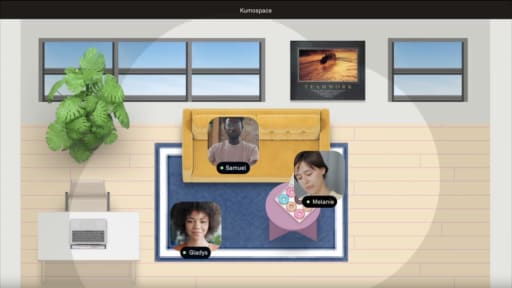
Overlap hours and an "available for quick calls" norm only work if people can tell at a glance who's free right now. A calendar block or a Slack status doesn't show whether someone's mid-thought on a call or just forgot to update it. Kumospace is a virtual office platform for remote and hybrid teams, built for exactly that kind of ambient visibility.

Its persistent virtual office stays open so people can see who's around and drop into a chat the way they'd pass a desk, and its spatial audio lets them overhear and join nearby conversations the same way. It doesn't replace a calendar or a decision log; it just gives a distributed team a place for the spontaneous conversations async-only channels lose, and it works best once those async-first habits are in place.

Where to start this week

The downsides of async-only communication don't announce themselves; they accumulate as specific, diagnosable costs in decision speed, clarity, and trust while every dashboard still looks fine. The fix is a deliberate, minimal layer of real-time conversation for the situations where text alone keeps falling short. Pick one switch-to-sync rule, apply it to your own work first, and watch which recurring problems actually ease.

The goal is a healthier blend of protected focus time and targeted real-time contact, not a return to the meeting-heavy calendar most teams were relieved to escape. Get the balance right and async keeps its real advantages (faster documentation, more thoughtful responses, fewer interruptions) without quietly costing you the decisions and relationships that only happen in real time.

Frequently Asked Questions

Transform the way your team works from anywhere.

A virtual office in Kumospace lets teams thrive together by doing their best work no matter where they are geographically.

Headshot for Brett Martin
Brett Martin

Brett Martin is the President & Co-Founder of Kumospace. He has spent his career as a serial entrepreneur, either building or investing in technology startups. To date, he has invested in over 60 companies through his fund, Charge Ventures. Brett and his companies have received numerous awards and have been featured in hundreds of media outlets. Outside of tech, Brett founded an indie rock band, started a non-profit, and sailed 6,000 miles on a 30ft sailboat.

Transform the way your team works.