Active listening is a learnable skill, not an innate talent. The good news is you can start practicing it today with simple exercises that fit into everyday routines.
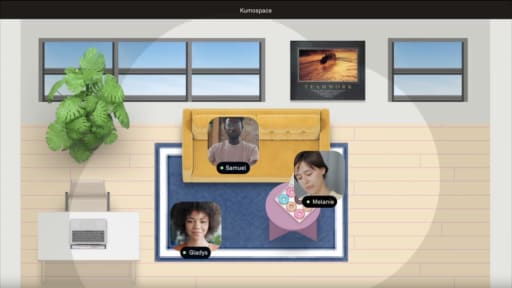
Whether you are in one-on-ones, remote meetings, or personal conversations, this article offers practical active listening drills you can use alone, with a partner, or in groups. These techniques also apply in virtual office tools like Kumospace, where spatial audio helps create more natural conversations.
What Is Active Listening?
Active listening means focusing fully on the speaker’s words, tone, and body language, then responding in ways that confirm you understood their point of view. It is the difference between hearing words drift past while you check Slack and genuinely engaging with someone’s message to gain a deeper understanding.
The distinction matters because hearing is passive. Sound enters your ears whether you want it to or not. Active listening is intentional, curious, and reflective. You are choosing to be fully present rather than treating conversation as background noise while planning your own ideas.
Core behaviors of active listening include paraphrasing what the speaker said in your own words, asking clarifying questions to ensure you understood their perspective, and validating emotions by acknowledging how the person’s feelings come through in their message. These are not tricks to seem engaged, they are genuine interest made visible through communication skills.
In hybrid meeting rooms, remote video calls from home offices, and asynchronous voice updates, these behaviors become even more critical. Nonverbal cues are harder to read on a small screen. Distractions compete for attention at every moment. The exercises in the following sections will help you operationalize these behaviors so you can listen actively, not just understand the theory.
Core Principles Behind Effective Active Listening Exercises

Good exercises all reinforce three core principles: attention, empathy, and feedback. Understanding these principles helps facilitators adapt drills to different teams, classrooms, or virtual environments.
Attention means maintaining focus despite distractions. In practice, this translates to paying attention with your eyes, ears, and mind simultaneously. Exercises that train attention often involve removing phones, closing browser tabs, or deliberately practicing focus during a set time window.
Empathy involves approaching the speaker without judgment. This means trying to understand their perspective even when you disagree, seeking clarification rather than assuming, and validating their experience before offering your own thoughts. The research calls this “unconditional positive regard,” where you are a sounding board, not a critic.
Feedback is the active demonstration that the speaker has been heard. This happens through verbal techniques like paraphrasing and summarizing, plus nonverbal signals like maintaining eye contact and nodding.
Solo Active Listening Exercises
Solo exercises are useful for introverts, busy professionals, and anyone who wants low-pressure practice before engaging with partners or groups. They also suit people with social anxiety who need to build foundational listening skills privately.
Awareness Exercise: Podcast Pause
Listen to a 5-minute podcast or recorded meeting. Pause afterward and write down the speaker’s main point and the emotion you noticed in one sentence. This distills critical listening to its essence: extracting key points and recognizing emotional undertones. For example: “The speaker explained Q1 results (factual) and seemed frustrated about missed targets (emotional).”
Mindful Listening Walk
Walk for 10 minutes and focus entirely on surrounding sounds, such as traffic, birds, distant conversations, and your own footsteps. Notice when your mind wanders to work tasks or personal worries. Gently return attention to listening without judgment. This trains attention and creates mental space by clearing internal noise.
Journaling Drill
After a daily conversation (such as a Monday status update), write:
- 3 things you heard
- 1 feeling you noticed in the speaker
- 1 follow-up question you could have asked but didn’t
This practice deepens awareness of your listening patterns and identifies specific areas for improvement.
Recording Review
Use recorded video calls from Zoom, Teams, or sessions in a Kumospace room to review your own listening behavior. Watch for eye contact with the camera, interruptions, or visible multitasking. Count how many times you spoke before the other person finished. This creates accountability through objective self-assessment.
Partner Active Listening Exercises

Partner drills create immediate, reciprocal accountability. They are ideal for couples, friends, peers, or manager direct report practice sessions where both the listener and speaker can experience what genuine listening feels like from both sides.
Timed Speaker-Listener Drill
One person speaks for 5 minutes about a real challenge, such as preparing for a Q2 presentation or navigating a difficult project deadline. The listener employs active listening techniques exclusively:
- Paraphrasing what they hear
- Asking clarifying questions
- Reflecting emotions
The listener is explicitly instructed not to suggest solutions, share related personal experiences, or offer advice. After five minutes, roles reverse. This exercise directly trains attention, empathy, and the verbal techniques of active listening.
No-Solutions Round
For 5 minutes, the listener is not allowed to give advice. This removes the habitual problem-solving mode and forces focus on empathy and validation. Many people discover through this exercise that they naturally shift into fix-it mode rather than simply understanding the other person’s perspective.
Feedback Debrief
After the listening round, partners spend 2-3 minutes each sharing what made them feel heard or not. Specific observations matter:
- “When you made eye contact, I felt more confident sharing.”
- “When you looked away, I felt rushed.”
- “Your paraphrase captured exactly what I meant.”
This meta-conversation about listening creates awareness of how specific behaviors land with the speaker.
Partners can run these exercises over video inside a Kumospace office, keeping cameras on and phones away to simulate an in-person feel. The spatial audio helps conversations feel more natural than traditional video calls.
Group & Team Active Listening Exercises
Teams, classrooms, and workshops benefit from structured listening drills because active listening reduces misunderstandings and strengthens relationships across the group. When listening becomes a deliberate team practice rather than an implicit expectation, it shifts culture.
Paraphrasing Circle
Gather 5 to 10 people, either in person or virtual. Each person speaks for 1 minute about a recent project or work update. Before the next person shares, they must paraphrase what the previous speaker said, capturing both content and feeling. The original speaker confirms accuracy.
This exercise can feel uncomfortable at first because it slows communication and exposes weak listening habits. However, it builds the habit of genuine comprehension before moving forward.
Recognize Poor Listening Demo
A facilitator intentionally models bad listening behaviors: typing on a laptop, glancing at a phone, interrupting, or offering unsolicited advice mid-sentence. The group then identifies what felt off. This negative-example approach creates memorable contrast and helps people recognize poor listening patterns in themselves.
For remote or hybrid teams, adapt these activities to virtual spaces by assigning each triad to a separate breakout room or a dedicated space in Kumospace. Spatial audio keeps discussions separate and focused.
Mindfulness-Based Listening Exercises

Mindfulness reduces internal noise, such as stress, racing thoughts, and preoccupation with your own ideas, that can block listening. It is a vital tool for becoming an effective listener because you cannot fully absorb someone else’s message when your mind is elsewhere.
Three Deep Breaths Before You Respond
Before answering a question or responding to a concern, take three deliberate deep breaths. This activates the parasympathetic nervous system and creates a pause that helps prevent reactive responses. Over time, this becomes automatic and reduces interruptions by building in a natural pause.
Body Scan Before a Call
Before a critical conversation, systematically scan your body for tension:
- Notice tightness in shoulders
- Check for jaw clenching
- Observe shallow breathing
Consciously relax these areas. Physical tension interferes with cognitive presence; a person whose body is tense is in a defensive state that undermines listening capacity.
Mindful Listening Drill
Sit with a partner. One person speaks for 2 minutes while the listener focuses on their own breathing and the speaker’s tone of voice. The listener does not formulate responses or take notes, but simply listens. Afterward, reflect in a single sentence capturing both content and emotion: “You explained the timeline issue and seemed frustrated about the lack of coordination.”
Integration into Meetings
Begin recurring virtual meetings with a 60-second breathing or silence period to reset collective attention. This signals that the meeting prioritizes mindful listening over rushed efficiency.
Exercises to Practice Specific Active Listening Skills
It is useful to isolate individual listening skills and train them separately before combining them. This follows principles of deliberate practice, developing specific competencies through focused repetition.
Paraphrase Only Drill
The listener responds to every statement with:
- “What I’m hearing is…”
- “It sounds like…”
- “So what you’re saying is…”
No opinions, no questions, no suggestions, only paraphrasing. This develops fluency in capturing meaning without distortion. A speaker might say, “I am frustrated that my project scope keeps expanding,” and the listener responds, “It sounds like you are frustrated because the expanding scope makes planning difficult.”
Open-Ended Questions Only
For 5 minutes, the listener may only ask questions beginning with “what,” “how,” or “tell me more about.” Never “why,” “did you,” or “don’t you think.”
Questions starting with “why” often feel accusatory and trigger defensiveness. Open-ended questions invite exploration: “What do you think is the root cause?” rather than “Why did that happen?”
Summary at the End
After a 10-minute conversation, the listener summarizes:
- Main points discussed
- Key emotions expressed
- Identified next steps
All in under 3 sentences. If the summary misses critical points, the speaker corrects immediately. This trains the skill of extracting signals from noise for clearer understanding.
Teams can rotate these drills through weekly standups or monthly training sessions, both in physical conference rooms and virtual spaces like Kumospace.
Measuring Progress: How to Know the Exercises Are Working

Deliberate practice should be paired with simple ways to track improvement. Without measurement, you lack feedback on whether your practice is translating into behavioral change.
Monthly Feedback from Colleagues
Ask trusted colleagues or partners how “heard” they feel in 1:1s on a 1 to 10 scale. External perspective matters because people are often poor judges of their own listening quality. A manager might feel they listened carefully while their direct report experiences them as distracted.
Recording Review
Use call recordings or meeting replays from Zoom, Teams, or Kumospace sessions to self-audit:
- Count interruptions
- Analyze tone of voice
- Note facial expressions and body language
This objective data reveals patterns that subjective memory misses.
Pick one metric like reducing interruptions and focus on it for a set period such as April-May 2026. Concentrated effort on a single behavior prevents cognitive overload.
Integrating Active Listening Exercises into Daily Life
Small, daily practice is more effective than rare intensive workshops. Sustainable change requires weaving these exercises into existing routines rather than treating them as special events.
Micro-Moments to Practice
- Daily check-ins with a partner: 5-10 minutes where you practice listening without offering solutions
- Weekly project updates with direct reports: Focus on not interrupting and asking clarifying questions
- Monthly retrospectives with remote teams: Include reflection on communication quality
Meeting Integration
Reserve 5 minutes at the end of recurring meetings where one person shares an update while everyone else practices listening without interrupting. Then provide brief feedback on what was heard. This normalizes active listening as a team value.
Virtual Office Hours
Leaders can establish always-open virtual spaces, such as a Kumospace floor dedicated to office hours, for scheduled listening practice and open Q&A sessions. This creates accessibility for distributed teams and normalizes continuous learning.
Conclusion
Active listening is not a passive skill or a personality trait, but a set of behaviors that can be trained through deliberate practice. By combining mindfulness, structured exercises, and real-world application, you can steadily improve how well you understand and respond to others.
The goal is not to follow scripts in every conversation, but to build habits that make presence, empathy, and clarity automatic over time. Small practices, repeated consistently, lead to meaningful change in how people experience your attention.
Whether in one-on-ones, team meetings, or virtual environments like Kumospace, stronger listening improves trust, reduces misunderstandings, and creates more productive conversations. The most effective listeners are not the ones who speak the least, but the ones who make others feel most understood.
Frequently Asked Questions
Active listening is fully focusing on what someone is saying and responding thoughtfully, and in practice it looks like eye contact, paraphrasing, and asking clarifying questions.
Examples include summarizing a colleague’s point before responding, asking follow-up questions in one-on-ones, and reflecting back what a client said to confirm understanding.
You can improve active listening by practicing paraphrasing before responding, using intentional silence before replying, and focusing on fully processing the speaker’s message.
Hearing someone out is passive while active listening requires intentional effort to understand, question, and reflect what the speaker is saying.
Active listening improves interviews and team settings by strengthening rapport, reducing misunderstandings, and making people feel heard, which leads to better collaboration.