Virtual meetings became a daily norm after 2020, turning video tools from optional into essential. Today, many companies support flexible work, making virtual meeting etiquette a direct factor in productivity, brand image, and team trust.
Poor etiquette adds up quickly. Late starts, background noise, and multitasking can waste significant meeting time. For a team with recurring calls, that can mean dozens of lost hours each month. Well-run meetings can be more inclusive than in person ones, with chat, reactions, and captions giving more people a way to contribute.
This article covers etiquette tips for attendees and hosts across Zoom, Microsoft Teams, and Google Meet in business and client settings.
Key Takeaways
- Arrive on time, manage mute and camera thoughtfully, reduce distractions, follow clear agendas, and treat every virtual meeting with the same seriousness as an in person one, since tools like Kumospace, Zoom, and Microsoft Teams depend on shared etiquette.
- Good etiquette spans the full meeting lifecycle, from preparation and tech checks before the call to clear communication during and follow up after.
- Hybrid and global teams require attention to time zones, inclusion, clear norms, and considerations like security, recording consent, and data privacy.
Before the Meeting: Preparation and Setup
Five to ten minutes of meeting prep before a call prevents most virtual meeting problems. Preparation separates meetings that waste time from conversations that stay productive.
Share a Clear Agenda
The host should create and share a meeting agenda at least 24 hours before the call, either in the calendar invite or via Slack/Teams. A good agenda includes:
|
Section |
Purpose |
|
Objective |
Why we’re meeting and expected outcomes |
|
Decision items |
Topics requiring a vote or choice |
|
Updates |
Status reports or announcements |
|
Q&A |
Time for open questions |
|
Time allocations |
Minutes assigned to each topic |
Run a Quick Tech Check
Before joining, test your microphone, speakers, camera, and internet connection. Confirm you’re running the latest app versions to avoid permission issues. Keep a backup ready, such as phone audio dial in or a mobile hotspot, for critical remote calls.
Set Up Your Environment
Go to a quiet area with the door closed and keep household members informed. Silence phone notifications and disable desktop alerts. For recurring client meetings, consider using dedicated rooms in Kumospace to maintain a controlled, professional setting.
Optimize Background and Lighting
Keep your background simple and professional, such as a bookshelf or plant. If using a virtual background, test it beforehand to avoid glitchy edges. Face a window or lamp at a 45 degree angle, and position your camera at eye level using stacked books if needed.
Dress Appropriately
Match your typical office dress code. For client pitches, business casual signals respect. Skip hoodies and graphic tees when external stakeholders are involved.
Prepare Materials
Have slides, spreadsheets, meeting links, and shared documents open and ready before the call starts. For global teams, enable live captions and share pre reads. Note time zones in invites so attendees can plan accordingly.
During the Meeting: Professional Behavior and Communication

Once the call begins, etiquette shifts to how you communicate. Camera presence, audio discipline, body language, and turn taking keep meetings focused.
Be Punctual
Join a few minutes early for important calls. If you’re late, acknowledge briefly in chat (“Apologies for the delay”) without a long explanation that derails the discussion. Treat virtual time as important.
Camera Etiquette
For small or collaborative meetings, start with your camera on to build rapport. Turn it off only for large webinars, bandwidth issues, or health reasons, and notify the host if you will stay off camera.
Mute Discipline
Stay muted when not speaking. Unmute to contribute, then mute again. Avoid typing loudly, eating, or shuffling papers while unmuted to reduce distractions.
Speak Clearly
Look toward the camera at times to simulate eye contact. Speak clearly and slightly slower than in person, especially with international teams. Pause to invite questions to avoid people talking over each other.
Active Listening
Avoid multitasking. Close unrelated tabs, silence phones, and avoid checking email. Use nods, reactions, and brief acknowledgments like “Got it” or “I agree” to stay engaged.
Turn-Taking and Interruptions
Use raise hand features or chat to signal you want to speak. Avoid interrupting others. Hosts should invite quieter voices to contribute. Kumospace spatial audio can help with natural turn taking.
Use Collaborative Tools
Shared docs, whiteboards, and polls keep discussions active. Breakout rooms help larger groups work in smaller teams. Keep chat relevant and professional.
Stepping Away
If you need to step away, note it in chat, turn off your camera, and mute. Avoid walking around on camera unless it’s necessary.
Managing Your Space, Background, and Technology
What’s visible and audible behind you becomes part of your professional image during virtual calls.
Background Standards
Keep backgrounds neutral and uncluttered. Avoid beds, laundry, or personal posters. A bookshelf, plant, or plain wall works well. Virtual or blurred video chat backgrounds are acceptable, but test them first and avoid distracting visuals.
Audio Quality
Use a USB headset or external microphone instead of relying on your laptop mic. Clear audio matters more than perfect video, and headsets reduce echo.
Silence Everything Else
Put phones on Do Not Disturb, hide email notifications, and disable calendar pop-ups. For screen sharing, share only the specific window needed. Close other tabs and hide sensitive information. Full-desktop shares expose significantly more unintended content.
Tech Contingency Plan
If your connection drops, rejoin via phone dial-in, switch to audio-only, or notify the host via alternate channels. Hosts should include backup dial-in numbers in meeting invites. Test software updates outside critical demos to avoid surprise permission prompts.
Privacy and Security
Lock your computer before and after screen sharing. Avoid screenshots of sensitive information without permission. Be cautious in public spaces by using headphones and positioning your screen away from others.
Roles and Responsibilities for Hosts and Attendees

Smooth virtual meetings depend on shared responsibility. Hosts design the structure and attendees follow and support it.
Host Responsibilities
- Define meeting purpose clearly: Is this a decision, brainstorm, or status update?
- Invite only necessary participants (7-8 active participants is ideal for decisions)
- Assign roles: facilitator, note-taker, timekeeper
- Open with a brief welcome, agenda review, and ground rules (mute policy, camera norms, recording consent)
- Keep discussion on track and manage time
In hybrid meetings, ensure remote and in room attendees are treated equally by rotating speakers and checking chat and raised hands regularly.
Attendee Responsibilities
- Read the agenda beforehand
- Come prepared with relevant data or questions
- Respect the facilitator’s structure instead of derailing into unrelated topics
- Help capture key decisions by confirming action items, owners, and deadlines aloud
Use platform features to support roles such as breakout rooms for small group work, polls for quick decisions, and reactions to reduce interruptions. In Kumospace, different rooms allow for focused discussions.
Leaders should model good etiquette by being on time, avoiding multitasking, and using cameras appropriately to set norms.
Hybrid and Global Meetings: Inclusion Across Locations
Hybrid meetings where some attendees are in a shared office while others join remotely require heightened attention to inclusion.
Apply the Remote-First Principle
Design meetings so remote attendees have equal access to information, audio, and participation as those in the room. Avoid side conversations that exclude the screen.
Room Setup for Hybrid Calls
- Use a single audio source (avoid multiple unmuted laptops creating feedback)
- Position the camera so remote attendees can see all faces
- Share one screen for content so everyone sees the same page
Assign a “remote advocate” to monitor chat, hand raising, and reactions, ensuring remote voices aren’t ignored.
Time Zone Fairness
Rotate meeting times for recurring global calls so the burden of very early or late starts doesn’t always fall on the same region.
Cross-Cultural Communication
Speak clearly, avoid idioms and slang, and recap key points. State decisions directly rather than relying on implied agreement to reduce misunderstandings.
Virtual office platforms like Kumospace can reduce meeting overload by allowing quick, informal conversations in virtual rooms instead of scheduling formal calls. Record important meetings with consent and provide summaries for those who cannot attend due to time zone conflicts.
After the Meeting: Follow-Up, Documentation, and Continuous Improvement
Professional etiquette continues after the call ends through documentation and clear next steps.
Send Follow-Up Promptly
The host or note taker should send meeting notes within a day, or sooner for critical calls. Good follow up includes a concise summary of decisions, action items with owners and deadlines, unresolved questions, and links to recordings or documents.
Leverage AI Tools
Use meeting transcriptions and summaries available in platforms like Granola to reduce manual note taking, while maintaining privacy and consent.
Store notes in shared locations instead of private inboxes so decisions remain accessible.
Reflect and Improve
Use quick polls to evaluate meeting effectiveness and adjust over time. Cancel or shorten meetings when updates can be handled asynchronously.
Consistent follow through on action items is part of etiquette, as missed tasks reduce trust and effectiveness.
Modern Rules: Recording, Privacy, and Security Etiquette

In 2026, remote work etiquette includes legal and ethical responsibilities around recording and data privacy.
Recording Consent
Always inform other attendees before recording. Use verbal confirmation at the meeting’s start and respect anyone who declines by offering alternatives like written notes or anonymized summaries.
Handling Recordings
Clarify who can access recordings, how long they’re stored, and where. Avoid sharing recordings outside the intended audience. Consider auto-delete policies (e.g., 30-day retention) for routine meetings.
Screen Sharing Security
Close confidential files before sharing. Hide desktop icons with sensitive names. Avoid full-desktop sharing when working with privileged client or HR data.
Confidentiality
Avoid discussing sensitive topics in public spaces without headphones and do not share confidential information outside approved channels.
Platforms like Kumospace, Zoom, and Microsoft Teams offer controls such as password protected rooms and locked meetings that hosts should use for external or high stakes calls. Professional etiquette also means speaking up if you notice a potential data issue, such as sensitive information visible on screen.
How Platforms Like Kumospace Support Better Virtual Meeting Etiquette
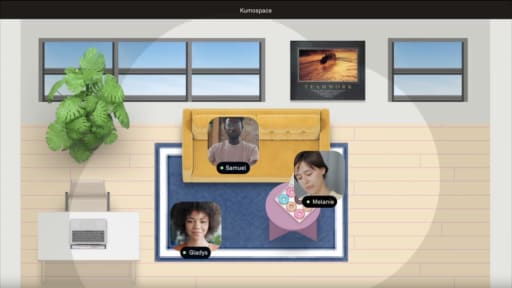
Kumospace is a virtual office and meeting platform that uses spatial audio and customizable rooms to recreate natural office behavior online.
Unlike flat video grids, its layout features multiple rooms, floors, and proximity based audio. People “walk” to the right space instead of bringing everyone into one large call. This encourages better etiquette, since conversations stay contained and you can see who is busy or available.
Features that support etiquette include:
- Easy muting/unmuting with clear spatial cues about who’s in which conversation
- Private rooms for focused discussions
- Persistent rooms for recurring meetings
- Customizable décor and branding for client-facing spaces
Quick stand ups or one on one check ins can shift from formal calendar meetings to informal drop ins, reducing meeting fatigue while respecting boundaries. Teams can also define etiquette norms directly in their virtual office. For example, signage in a Kumospace lobby can outline cameras and mute expectations and quiet zones.
Conclusion
Virtual meeting etiquette shapes how teams communicate and build trust in remote and hybrid work. Small habits like being prepared and staying present make meetings more effective. Platforms like Kumospace, Zoom, and Microsoft Teams provide the structure, but consistent etiquette keeps meetings productive and inclusive.
Frequently Asked Questions
For small team discussions, 1:1s, and client calls, cameras are usually expected unless there is a clear reason, while for larger meetings it is generally acceptable to stay off, but follow norms and inform the host if needed.
Mute immediately, briefly acknowledge the issue if needed, turn off video if stepping away, and plan ahead by reducing potential distractions or using a quieter space such as Kumospace.
Address minor issues privately through direct message and raise recurring concerns with the host or manager to reinforce shared team norms.
When active participants grow beyond a small group, decision making slows, so use breakout rooms and summaries to keep discussions effective.
Test early, turn off video if needed to stabilize audio, have a backup like phone dial in or hotspot, and inform the host in advance.