The psychological basis lies in your brain’s evolutionary need for quick pattern recognition amid information overload. Here’s how implicit or unconscious bias develops:
- Early environment: Family upbringing and education establish default assumptions that persist for decades
- Media exposure: News, TV, and social platforms from 1980 to 2025 have consistently portrayed tech leaders as white men in their 30s-40s, building implicit associations
- Workplace norms: Repeated narratives in your industry reinforce certain groups as “natural fits” for leadership roles
- Digital cues: Remote communication introduces new triggers like avatar styles, chat responsiveness, background noise, or camera use that can amplify bias
This section talks about the core types of unconscious bias that appear in hiring, promotion, meetings, performance reviews, and everyday collaboration. Each example includes a definition, a specific workplace scenario, and a practical fix. These patterns appear in both office and remote settings, including virtual meetings and digital collaboration spaces.
1. Gender Bias
Gender bias favors one gender over another based on societal stereotypes, such as assuming men are “natural leaders” while women belong in administrative roles. Women currently hold about 10% of Fortune 500 CEO positions.
Scenario: Women are routinely asked to take notes or organize team celebrations. Fathers get overlooked for flexible work options compared with mothers. In remote meetings, women are interrupted more frequently on video calls.
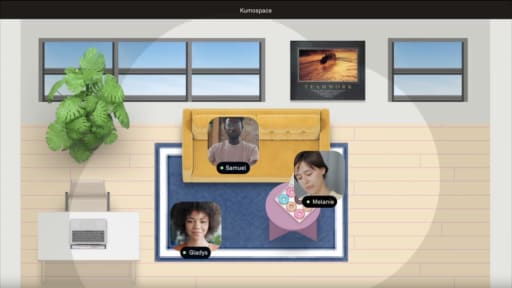
Fix: Use structured interview questions, gender-balanced hiring panels, and clear promotion criteria. Shared agendas in collaborative spaces like Kumospace rooms can help ensure equal speaking time.
2. Ageism
Ageism stereotypes employees as less capable because they’re “too old” or “too young.” Research in the U.S. and UK shows high percentages of workers over 50 reporting age discrimination.
Scenario: A candidate in their 60s is passed over for a SaaS role because the team assumes they won’t learn new tools. A 24-year-old’s process improvement idea gets dismissed as “naive.”
Fix: Remove age-coded language from job postings (“digital native,” “recent grad”), mix age groups in cross-functional teams, and highlight expertise across generations in all-hands events.
3. Name Bias
Recruiters and hiring managers often unconsciously deprioritize candidates with unfamiliar international names, quietly eroding the global DEI initiatives their organizations publicly champion.
Scenario: A recruiter scanning 150 applications unconsciously skims past unfamiliar international names, directly undermining global DEI goals.
Fix: Implement name-blind resume review, use standardized screening scorecards, and leverage collaborative hiring tools where multiple reviewers see anonymized profiles.
4. Affinity Bias (Similarity Bias)
Affinity bias, also called similarity bias, is the tendency to prefer people with similar backgrounds, interests, or career paths. This includes the same university, hometown, or hobbies.
Scenario: Choosing a candidate because they “feel like someone we’d grab a drink with” rather than because they are the most qualified. In remote settings, managers may spend more informal time in virtual spaces with people who share their interests.
Fix: Hire for “culture add,” not “culture fit,” rotate meeting facilitation, and use structured agendas within digital offices so everyone contributes.
5. Beauty Bias

Beauty bias favors people perceived as conventionally attractive, associating looks with competence.
Scenario: Rating well-dressed candidates higher regardless of skills. Assuming someone with visible acne is less “client-ready.” Video-heavy workplaces can magnify this through webcam quality, lighting, and backgrounds.
Fix: Prioritize skills tests and work samples, allow camera-optional policies for some meetings, and standardize evaluation rubrics that exclude physical appearance. Avoid beauty bias by focusing assessments on demonstrated capabilities.
6. Height and Weight Bias
Height bias associates taller people with authority. Weight bias assumes lower discipline or professionalism.
Scenario: Picking a taller team member for client demos. Linking weight with “energy levels” during performance reviews. Even LinkedIn photos can trigger these biases.
Fix: Keep evaluation criteria tightly tied to role requirements and challenge comments about “executive presence” when they are really referring to body shape.
7. Halo Effect
The halo effect allows one positive trait, such as an elite university degree or charismatic speaking style, to overly influence overall judgment.
Scenario: A new hire from a top MBA program is assumed to be strong at everything, so their mistakes get excused. Online polish in Slack or virtual town halls can also lead to over-crediting certain employees.
Fix: Establish clear, measurable role expectations, use multi-rater feedback, and run calibration sessions where leaders compare ratings to specific evidence.
8. Horns Effect
The horns effect is the opposite: one negative detail colors all perceptions of a person.
Scenario: A candidate who stumbles on one interview question is labeled “unprepared” despite strong experience. An employee who missed a deadline during 2023 layoffs gets tagged as “unreliable” permanently.
Fix: Use multiple interview stages, focus on trend data rather than single incidents, and review written feedback for loaded language.
9. Confirmation Bias
Confirmation bias means seeking information that confirms pre-existing beliefs while discounting contradictory evidence.
Scenario: An interviewer believes “career changers don’t stick around” and only notices examples supporting that view. Leaders ignore DEI data that challenges their “meritocracy” narrative.
Fix: Ask disconfirming questions in interviews, run structured experiments instead of relying on anecdotes, and review DEI data regularly with fresh eyes.
10. Anchoring Bias
Anchoring bias means relying too heavily on the first piece of information encountered, such as an initial salary expectation, first performance rating, or first candidate interviewed.
Scenario: The first candidate sets the benchmark for all others. A starting performance rating from 2022 shapes every future review. Initial offers in salary negotiations become immovable reference points.
Fix: Consider ranges instead of single numbers, revisit initial assumptions midway through decisions, and normalize re-evaluation based on new data.
11. Authority Bias
Authority bias places excessive weight on opinions from people with impressive titles or positions of power.
Scenario: A senior VP’s offhand comment about a candidate causes the entire panel to lower scores. In virtual meetings, people may silently agree with leaders even when the data suggests another approach.
Fix: Invite written, anonymous input before leaders speak, rotate facilitation roles, and train managers to explicitly ask junior team members for dissenting views.
12. Conformity Bias
Conformity bias means suppressing views to align with the majority or loudest voices. Peer pressure in hiring panels can sway decisions away from evidence.
Scenario: One strong opinion in a hiring panel sways everyone. Junior developers don’t challenge risky timelines. Hybrid setups can worsen this when in-office attendees dominate over remote participants.
Fix: Use silent brainstorming, anonymous voting tools, and separate small-group discussions within virtual office rooms. Avoid conformity bias by actively soliciting diverse input before group discussion.
13. Status Quo Bias

Status quo bias favors familiar approaches even when evidence suggests change would benefit the organization.
Scenario: Relying on referrals from a homogeneous leadership team because “it’s always worked.” Resisting hybrid work tools while insisting that “real work” only happens in physical offices.
Fix: Conduct regular policy audits, run pilot programs for new DEI initiatives, and publish before-and-after metrics to help overcome status quo bias.
14. Recency Bias
Recency bias occurs when recent events are overweighted and earlier performance is underweighted.
Scenario: Year-end reviews in 2025 focus mostly on Q4 results, ignoring strong Q1 to Q3 work. Managers remember whoever they interacted with most recently on chat or calls.
Fix: Keep running performance notes, use quarterly check-ins, and require managers to review full-year data before assigning final ratings.
15. Perception Bias and Stereotyping
Perception bias forms broad views based on simplified social stereotypes about race, disability, nationality, or accent.
Scenario: Assuming introverts are less committed. Believing people with non-native English accents are less expert. Judging professionalism based on family sounds in the background during calls.
Fix: Run bias-awareness workshops, support employee resource groups, and normalize diverse communication styles in virtual spaces.
16. Illusory Correlation
Illusory correlation is the tendency to perceive relationships between variables that are actually unrelated.
Scenario: After one negative experience with a contractor from a particular country, a manager views all candidates from that region suspiciously. “Remote workers are always less engaged” persists despite contrary data.
Fix: Rely on well-designed analytics and adequate sample sizes. Subject major HR decisions to peer review.
17. Affect Heuristic
The effect heuristic allows gut feelings or emotional reactions to dominate decisions, especially under time pressure.
Scenario: Rejecting a candidate because they remind the interviewer of someone they disliked. Making promotion decisions based on “just having a bad feeling.”
Fix: Slow down key decisions, build in cooling-off periods, and rely on structured criteria instead of vibes.
18. Overconfidence Bias
Overconfidence bias means overestimating your own abilities, judgments, or knowledge.
Scenario: Launching a product without adequate testing because the founder “just knows the market.” Leaders believing their organization is “already inclusive” despite feedback and attrition data.
Fix: Encourage pre-mortem exercises, review past forecasts versus outcomes, and invite cross-functional perspectives.
19. Attribution Bias
Attribution bias means explaining your own actions generously while attributing others’ failures to character flaws.
Scenario: A manager attributes their missed deadline to “too many priorities” but labels a team member “disorganized” for a similar slip. Assuming remote employees miss meetings because they “don’t care,” while excusing in-office lateness.
Fix: Ask “what else could be true?” during evaluations, train managers on situational factors, and conduct empathy interviews.
20. Nonverbal and Communication-Style Bias
Nonverbal and communication-style bias judges people on body language, tone, eye contact, and pace rather than content.
Scenario: Rating someone lower for not maintaining strong eye contact. Assuming quieter people lack leadership potential. Network lag in video calls can disadvantage certain groups.
Fix: Design interviews around job-related tasks, train teams on cross-cultural communication, and avoid overinterpreting “presence.”
21. Idiosyncratic Rater Bias
Idiosyncratic rater bias means performance ratings reflect the evaluator’s personal standards more than actual employee performance.
Scenario: A detail-focused manager rates everyone harshly on “organization,” while a big-picture leader rates generously on the same competency. This creates inconsistent pay and promotion outcomes.
Fix: Calibrate ratings across managers, use behaviorally anchored rating scales, and combine self, peer, and manager input.

The business case is clear: unconscious biases influence hiring quality, team composition, and employee retention.
Business impacts:
- Weaker hiring decisions from compromised candidate evaluation
- Reduced innovation from homogeneous teams
- Higher legal and compliance risk from many unconscious biases going unchecked
Cultural impacts:
- Eroded psychological safety where certain groups don’t speak up
- Clique formation along affinity lines
- Loss of trust in leadership and HR processes
Remote-specific impacts:
- Visibility bias toward employees at HQ or those on camera more
- Assumptions based on home office setups or time zones.