Remote team isolation is the gradual weakening of connection between distributed colleagues, and the signs of remote team isolation appear in behavior long before anyone says they feel lonely. Remote work offers flexibility, but it can quietly separate employees from their teammates. Isolation often develops gradually through fewer conversations, reduced collaboration, and weaker social connections, affecting engagement, well-being, and long-term retention.
This guide explores the common causes and signs of remote team isolation, along with practical strategies to build stronger connections, improve communication, and create a more engaged remote or hybrid workplace.
Key Takeaways
- Remote team isolation usually appears through behavioral changes, quieter meetings, slower internal communication, and less cross-team collaboration, long before employees say they feel disconnected.
- The biggest causes are structural, not personal. Clear communication norms, remote-first meetings, and equal access to information reduce isolation far more effectively than adding more meetings or monitoring tools.
- Spot patterns early and act quickly. Small changes to meeting design, visibility, and collaboration can prevent disengagement, improve retention, and strengthen connection across remote and hybrid teams.
Behavioral signs your remote team feels disconnected

Recognizing remote team isolation means noticing behavior, not waiting for someone to report a feeling. The two are connected: a 2025 study in the Journal of Affective Disorders found that people working remotely three or four days a week had higher adjusted odds of reporting loneliness than fully on-site workers, but that loneliness rarely surfaces in words. It surfaces in withdrawal and in output. Here are the patterns that matter most. Here are the patterns that matter most.
Meeting participation shifts in subtle but consistent ways
Isolated employees often show less engagement in meetings by staying silent during open discussions and skipping optional team catch-ups. Watch for remote workers who turn cameras off for internal team meetings but keep them on for client calls. Surface-level participation, contributing minimally and avoiding sharing opinions, often appears before full disengagement. Emotional changes may show as lower enthusiasm and increased frustration or apathy.
This often signals feeling disconnected from the room where decisions happen, especially in hybrid teams where co-located participants coordinate through body language and side conversations. Bandwidth issues or a busy sprint can explain a single quiet meeting. A persistent pattern over two or more weeks is the risk sign.
Response patterns change for internal messages
Reduced communication can manifest as shorter replies and decreased initiation of conversations. A remote employee who responds to customers within minutes but takes hours to reply in a team chat thread is showing you where they feel their effort matters. Communication drop-off indicates a decrease in responsiveness across communication channels.
A study of 462 teleworkers published in Computers in Human Behavior (2024) found that delays in receiving timely information increased feelings of loneliness among remote workers. Time zones and workload spikes can produce similar patterns, so compare current behavior to each person's own baseline before concluding.
Cross-team collaboration and informal help-seeking dry up
In Buffer's 2023 State of Remote Work survey of 3,000 remote workers, 33 percent said staying home too often because they had no reason to leave was a struggle they experienced, and 23 percent said the same about loneliness. Asked to pick a single biggest struggle, 21 percent chose staying home and 15 percent chose loneliness. Both figures describe the same underlying condition: remote work removes the routine reasons to be around other people. Employees experiencing this often participate less in casual conversations, team activities, and informal collaboration, making work relationships feel increasingly transactional.
Isolated remote employees may also avoid asking for help because they feel disconnected from the team, leading to slower problem-solving and more rework. Growing headcount or reorganizations can temporarily reduce cross-team interaction, so managers should check whether in-office employees are still building informal connections while remote teammates are unintentionally left out.
One-to-one conversations stay open while group behavior shuts down
When a remote employee is candid in one-to-one meetings but quiet in team meetings or all-hands, that person trusts their manager but does not feel heard in the broader group. Visible frustration or cynicism can arise from feeling unsupported or out of the loop. Decline in enthusiasm shows through short or transactional responses in conversations during group settings.
When an employee is consistently quiet across all channels, their silence usually stems from personal working style rather than remote team isolation.
Asynchronous spaces become purely transactional
Remote teams often communicate transactionally, lacking real connection. When chat channels drop casual context and serve only task updates, remote colleagues quickly feel like they are working alongside strangers. This environment erodes the sense of belonging that keeps people engaged.
Some teams intentionally keep certain channels focused. Compare general chat, project channels, and social spaces over time before labeling this as isolation.
Turnover and quiet job searches concentrate among remote employees
Disconnection can lead to higher turnover and loss of knowledge. Ericsson's onboarding data (2016 to 2025) showed that employees onboarded fully remotely had significantly higher early resignation rates. When exit conversations mention feeling invisible or not being part of the "real" team, that points to unresolved isolation.
Pay disparities or local job market shifts can also drive turnover, so combine these data points with the behavioral signs above.
Why remote and hybrid teams slide into isolation

Isolation traces back to structural choices: how information flows, and who is in the room when decisions get made. A 2026 study in Science by Emanuel, Harrington, and Pallais, covering 588,322 US workers surveyed between 2011 and 2024, found that workers in remotable occupations spent roughly 1.2 additional hours alone per workday. On days those workers were remote, 84 percent were spent entirely alone, against 23 percent of on-site days.
Managers can directly influence causes such as poorly defined communication norms, meeting formats that privilege in-office staff, and schedules that leave remote employees with long stretches of solo work. The causes they can partially influence: role design, recognition systems that favor visibility over output, and how promotions are decided. The causes that require escalation: organization-wide policies on compensation alignment, onboarding modality, and access to stretch assignments. Disconnection can lead to increased delays and small errors in tasks across the team.
Diagnostic guide: linking signs to causes and first moves
|
Observable sign |
Likely underlying cause |
First intervention |
|
Remote staff rarely speak in team meetings |
Hybrid meeting format favors the room |
Have everyone join from their own device; rotate facilitators |
|
Internal message responses slow while external replies stay fast |
Remote workers feel internal input does not matter |
Clarify expected response windows and summarize decisions in writing |
|
Cross-team questions and help requests drop |
Feeling like an outsider reduces willingness to engage |
Pair remote workers on joint tasks with other teams |
|
Engaged one-to-one but silent in groups |
Low psychological safety in larger settings |
Explicitly invite remote contributions first; reduce group size |
|
Chat channels become status-update-only |
No norms encouraging context or casual exchange |
Designate one channel for non-task conversation; model use |
|
Cameras off for internal calls, on for clients |
Internal meetings feel low-stakes or unsafe |
Ask the team what makes cameras helpful vs. draining |
|
Messages arriving at unusual hours |
Unclear availability norms or workload imbalance |
Co-create quiet hours and share ideas on sustainable schedules |
|
Turnover clusters among remote employees |
Feeling 'out of sight, out of mind' in career growth |
Review promotion and recognition data by location with HR |
Immediate steps to reconnect isolated remote team members
These interventions run from cheapest and fastest to more structural. Start today and layer improvements over time.
Reset communication and availability norms
Co-create clear norms with your team about expected response windows, preferred channels, and quiet hours. Establishing firm boundaries, such as non-negotiable logout times and muted notifications after hours, helps remote workers maintain a healthy balance. Say publicly what was decided and who decided it, so remote employees are not reconstructing context from fragments. Establishing clear communication expectations costs nothing and helps prevent the ambiguity that causes remote employees to feel disconnected. Revisit norms after a few weeks if patterns like delayed responses or late-night work persist.
Redesign recurring meetings for remote-first participation
Have everyone join from their own device when at least one person is remote. Use clear agendas, rotate facilitators, and explicitly invite quieter remote workers to contribute first. Weekly one-on-ones help prevent remote team disconnection alongside these group changes. If participation still lags, check privately with remote team members about what makes speaking up hard.
Make work, decisions, and recognition more visible
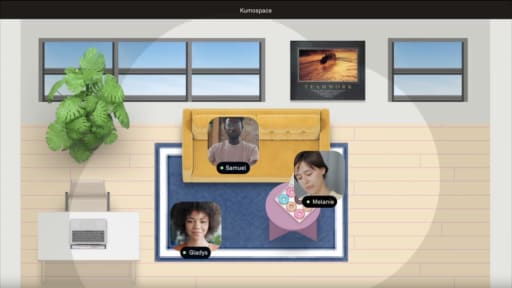
Document key decisions in shared spaces, summarize outcomes after meetings, and publicly recognize contributions from remote workers. Feeling 'out of sight, out of mind' can indicate concern over being overlooked in workplace dynamics, and visibility directly counteracts that. Some organizations use virtual office platforms like Kumospace to help distributed teams see who is available, but the core change is cultural: remote employees need equal access to information and recognition.
Align roles and workloads to reduce solo drift
Review remote employees' roles for prolonged solo work with few touchpoints. Pair newer or more isolated remote workers with experienced colleagues for joint projects, not just mentoring sessions, so connection arises from real work. This step may require coordination with HR, since it can touch job descriptions and long-term resourcing.
Add targeted social touchpoints once foundations are in place
Establishing social touchpoints can help foster connections in remote work settings, but only after structural fixes are in place. Use focused formats: interest-based channels, small-group hangouts, or short rituals at the start of existing meetings. Low-stakes text-based challenges give people a way to interact without another video call. Forced fun amplifies isolation if underlying issues like unfair workloads remain, so involve remote workers in choosing the format and timing.
Common reactions that make remote isolation worse

Certain intuitive responses deepen disconnection rather than fixing it. Monitoring for changes in behavior is essential for identifying potential employee isolation, but surveillance is not the answer.
Adding more meetings to "fix" communication overloads calendars and crowds out the focus time remote workers value. Remote employees may experience persistent loneliness despite frequent meetings, because the problem is structure, not volume. Introducing activity tracking, screenshot software, or rigid presence rules erodes the trust and psychological safety that remote teams need to feel connected. Promoting camera boundaries helps avoid burnout from forced video engagement in meetings; mandatory camera policies do the opposite. Demanding constant status updates signals that managers do not trust remote workers to manage their time, which reduces motivation and autonomy. Treating remote team members as a separate category, with different expectations or a different communication style, reinforces the in-group and out-group dynamic that causes isolation in the first place.
Kumospace: building connection beyond scheduled meetings
Remote teams can become isolated when communication is limited to task updates, scheduled calls, and project deadlines. Without the informal interactions that happen naturally in an office, employees may struggle to know when teammates are available, where to ask quick questions, or how to maintain everyday connections across a distributed team.
A virtual office platform like Kumospace can help create a more connected environment by giving remote and hybrid teams a shared space for collaboration beyond traditional meetings. Features such as virtual offices, spatial audio, and spontaneous conversations can make it easier for employees to interact naturally while working remotely. Instead of replacing existing communication tools, Kumospace can complement calendars, chat platforms, and meeting software by providing a shared environment where teams can collaborate and stay connected.
Distributed and hybrid organizations can use this approach to close communication gaps and encourage organic collaboration.
Summary
Remote team isolation develops through small shifts in communication and collaboration, so it usually goes unnoticed until retention numbers move. The earliest symptoms are behavioral: quieter meetings, slower replies in internal channels, and fewer cross-team questions.
The causes are structural. Unclear communication norms, meeting formats that favor whoever is in the room, and uneven access to information produce isolation regardless of how much people like working remotely. Most of the fixes cost nothing: reset response windows, have everyone join meetings from their own device, and document decisions where remote staff can find them.
Isolation that persists past these fixes usually points to organization-wide problems in promotion, pay, or onboarding.
Frequently Asked Questions
Small changes to meetings and communication norms can shift how connected people feel within two to three weeks. Deeper structural issues like role design or promotion practices may take several months to noticeably improve, and strong teams revisit these regularly.
Describe the concrete behaviors you notice, like quieter discussions or slower collaboration, and invite feedback. Use words like "feeling disconnected" or "feeling lonely" only if team members resonate with them, since labeling can feel clinical or accusatory.
Bring in HR or leadership when patterns cross team boundaries, affect promotions or pay, or persist despite local changes to meetings and communication. These signs often point to organization-wide alignment issues a single manager cannot fix.
Isolation usually shows up as changes in engagement or collaboration across several people, while a performance issue is specific to one person's output and skills. Address both issues by first exploring context, then setting clear expectations, and finally reminding employees that support is available.
Occasional dips in connection happen in any team, but persistent patterns, like remote workers being regularly left out of decisions, discussions, or recognition, signal a fixable structural problem. Left unaddressed, these patterns affect the ability of the whole business to retain talent and maintain productivity.