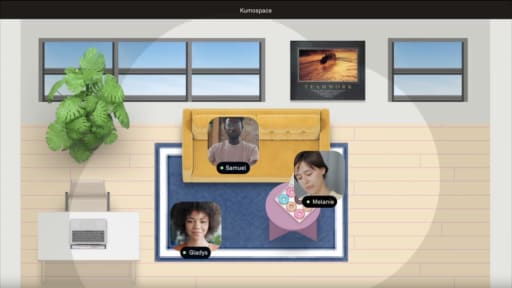
Online teamwork illustration with video call frames and productivity symbols, exploring remote employee disconnection.

Remote Employee Disconnection Despite Good Performance

By Brett Martin

Remote employee disconnection despite good performance is the pattern where someone keeps hitting every deadline while quietly withdrawing from everything around the work. The cause is usually how meetings and communication are run rather than anything about the person doing the work.

A top performer's dashboard can look perfect for months while they're already halfway out the door. The early signs are small: cameras staying off, optional Slack channels going quiet, nobody pushing back on a bad plan. They surface weeks before anything reaches an engagement score or an exit interview, and the fixes most leaders reach for, like surveillance software or more mandatory meetings, make it worse.

Key Takeaways

  • The clearest early sign is a remote team member quietly withdrawing from nonessential interactions, cameras off, quiet in optional channels, no pushback on decisions, while still hitting every KPI and deadline.
  • The usual root cause is how meetings and communication are run: recurring meetings that sideline remote voices, unclear availability norms, and a culture that reads physical presence as commitment.
  • Surveillance is the fix that backfires fastest; keystroke logging, screenshots, and mandatory camera rules measure visibility, not connection, and erode trust in exactly the people already delivering.

Recognizing a disconnected but productive remote team

These signs appear while performance dashboards still look healthy and tasks stay on track, which is why they get missed. Isolated behaviors rarely signal trouble, but several appearing across different communication habits mark a pattern worth evaluating, especially when the behavior has changed over time rather than being a person's baseline.

Cameras off for internal calls, cameras on for external presentations

Remote employees consistently keep cameras off for team standups, retros, or all-hands but turn them on and bring energy to client demos or cross-functional presentations. This gap can signal that internal meetings feel draining or irrelevant, while external meetings still carry a sense of recognition and impact; when internal calls feel like status-reporting rituals, cameras are the first thing to go. Alternative explanations include bandwidth limits, home privacy, or simple camera fatigue, so ask the team about norms before concluding.

Minimal participation in optional channels and social chats

Remote workers stop posting in informal channels like #random or #wins and rarely react to others' messages, even though they respond promptly in project-specific threads. This is the invisible remote employee problem: someone fully present in the work and absent from everything around it, and the pattern is structural rather than personal when several remote employees show it at once. Remote workers often struggle with visibility and recognition, but some people are also just naturally quieter, so the real diagnostic signal is a change over time in someone's own behavior, not a comparison to louder colleagues.

Always delivering, never pushing back or proposing changes

A remote worker accepts every task, hits every deadline, and rarely raises risks, asks for clarification, or suggests a better approach. High performers often overcompensate with productivity to prove their value, and when that overcompensation replaces voice, it usually means they've stopped expecting their input to shape decisions; they're optimizing for "no problems" rather than long-term collaboration. This might also reflect cultural differences, personality, or simply being new, so check whether the pattern persists well past onboarding.

Remote workers feel out of the loop, but metrics look fine

In 1:1s, remote employees mention hearing about changes second-hand, missing context from hallway conversations, or learning about decisions only when the ticket arrived. A qualitative study of 16 expert employees at five Finnish organizations, interviewed twice about 18 months apart between 2020 and 2022, found that working remotely cut into the spontaneous information exchange people got on-site. Isolation from the broader mission can cause this kind of disengagement in people who still care about the work but no longer feel part of shaping it. Check whether everyone is missing context, or only the remote team members.

Calendar and chat show lots of solo work, few collaborative touchpoints

A high-performing remote worker's calendar is full of focus blocks and one-way status meetings, with very few working sessions, pairings, or cross-team problem-solving slots. This can mean the person has become a ticket taker rather than a collaborator, which erodes their sense of belonging even as throughput stays high, and the isolation compounds when solo work quietly bleeds into personal time with no clear boundary between the two. Some roles genuinely need deep work, so look for a total absence of regular collaboration, not just the absence of constant meetings.

High engagement in external communities, low engagement at work

Remote employees are active on conference stages, open-source projects, or industry communities while barely showing up in internal discussions. This often means they still care deeply about their craft but no longer see their remote team as the primary place for belonging or career progression; when someone worries their efforts go unrecognized internally, they invest energy where recognition is visible instead. Don't monitor or police external activity. Use it as a prompt to ask what those spaces provide that your workplace doesn't.

Why remote teams lack connection even when results are strong

Remote work structurally reduces the informal conversations, hallway decisions, and spontaneous exchanges that build relationships in an office setting, and the loss of that informal social interaction is a large part of what drives disconnection. A longitudinal study of Finnish teleworkers found that identification with the organization declines over time for some groups, particularly those with low interaction, weak support, or short tenure, well before it shows up as a resignation. These aren't personality traits; they're conditions the organization creates.

Meeting design is the root cause leaders control most directly. When recurring meetings default to in-person facilitation, remote attendees come last in verbal order or get treated as observers, and proximity bias gives people who are physically present more influence and more access to decision-makers even when the work model is officially location-neutral. Proximity bias drives much of this: managers who can't see a remote employee's actual effort default to trusting what they can see instead. A pilot study of 14 professionals at an Indonesian services firm found the same thing and framed it as a predictable consequence of reduced visibility rather than irrational prejudice. The career cost compounds from there, and remote workers are promoted 31% less often than in-office and hybrid peers.

Communication norms carry a second structural pull. Leaning entirely on asynchronous communication can drain the empathy and connection that comes from real-time contact, while over-indexing on video calls without a clear purpose creates fatigue instead of connection. A three-wave study of 329 teleworkers at a Chinese technology service company found that feedback quality from direct leaders raised employees' sense of belonging by way of perceived organizational support, and the effect was stronger among more conscientious teleworkers. Remote workers feel their work matters less when no one tells them why it matters. That's a gap in feedback, and it's cheap to close.

Finally, your own habits play a role. Consider whose names come to mind first for stretch assignments, who gets looped into early-stage problem framing, and whose ideas get amplified in group settings. These are fixable habits, and fixing them starts with the person running the meeting.

How to read the signs when a remote team feels distant despite results

Match what you've noticed to the closest row, then try that intervention before changing anything else.

Observable sign

Likely underlying cause

First intervention

Cameras off for internal calls, on for external

Internal meetings feel low-stakes or unsafe

Ask the team to set explicit camera norms; shorten internal calls to 25 minutes

Quiet in optional channels, active in work threads

No perceived value in informal presence

Leaders post first in social channels; react to others' messages visibly

Accepts all tasks, never pushes back

Input isn't expected or has been ignored before

Ask one open question per standup: "What would you change about this approach?"

Learns decisions from tickets, not conversations

Decisions happen in hallways or side chats

Post a weekly decisions memo in a shared channel tagging affected people

Calendar is all solo blocks and status meetings

No collaborative touchpoints exist

Replace one status meeting with a 30-minute co-working or pairing session

Active in external communities, quiet internally

Recognition and growth feel stronger outside

Invite the person to lead an internal learning session on their area

Frequent after-hours pings to prove availability

Unclear expectations about responsiveness

Set clear expectations for response windows; praise output, not online hours

Drops from optional meetings without explanation

Meetings feel like observation, not participation

Rotate facilitation so remote members lead at least one segment monthly

Never mentioned in public shout-outs or recognitions

Recognition skews toward visible or co-located staff

Review the last month of shout-outs by location; correct the ratio

These last three are common enough to act on even without a section of their own. Validate your reading against what team members actually say, since a pattern here is a hypothesis rather than a verdict.

What to do about remote employee disconnection despite good performance

Key adjustments to meeting formats and decision visibility require zero budget, new software, or executive approval. They change how you run what already exists.

Fix how you use existing meetings with remote employees

Redesign one recurring meeting so remote workers speak early and often. Turn a 60-minute status call into a 20-minute async update plus a 40-minute problem-solving session where remote team members lead segments. Rotate facilitation weekly. Informal check-ins can maintain presence without creating fatigue when they replace low-value status rounds rather than adding to the calendar. Proactive communication between managers and employees provides a strong defense against feelings of isolation. If participation doesn’t increase after a month, survey the team about what makes the meeting worth attending.

Make decision paths visible to remote team members

Document decisions in one place, a shared channel, a weekly memo, or a living doc, so remote workers see what changed without needing to have been in the hallway, and tag affected people along with who was consulted. When the doc goes stale, a brief decision recap inside your existing standup does the same job without starting a new habit. Clear, measurable goals drive remote worker performance most effectively when tied to decisions the employee fully understands, and regular communication that carries context beyond the task list is what keeps a remote team feeling connected.

Change how you assign work to remote team members

Shift from handing remote employees fully scoped tickets to inviting them into early-stage problem-framing discussions for at least one project per quarter. Involve a remote engineer in the initial design review rather than assigning only implementation tasks. Regularly showing high performers the impact of their work helps them feel connected to outcomes rather than throughput. This works best when workloads are manageable. If it doesn’t shift how remote workers feel, check whether promotion or recognition gaps are undermining trust.

Audit recognition and growth opportunities for remote workers

Review recent promotions, stretch assignments, public shout-outs, and professional development opportunities to see whether remote employees are underrepresented relative to their performance. Recognition and growth opportunities should reach employees regardless of where they work. Two consecutive promotion cycles with remote employees underrepresented is enough to take to HR as a performance management issue, along with what you want changed.

Use deliberate social connection, not just more meetings

Short show-and-tell segments, shared learning sessions, or remote coworking hours tend to work better than a generic virtual happy hour, especially when they're tied to real work rather than pure social small talk. These help most when workloads are sustainable and psychological safety already exists. On an overbooked calendar, an optional social reads as pressure.

What usually backfires when remote teams feel distant

Surveillance tactics like keystroke logging, frequent screenshots, and status-light policing buy visibility rather than connection, and they cost trust in the process. How the change gets introduced matters as much as the monitoring itself, and rolling it out quietly does the most damage. These tools also target the wrong variable: remote workers who are already delivering don't need to prove anything. They need voice and belonging.

Mandated return-to-office days remove flexibility without fixing the meeting culture, recognition gaps, or communication norms that caused the disconnection in the first place, and forcing presence back reverses the retention and flexibility benefits remote work was providing. Mandatory social events can make isolation worse rather than better: when a calendar is already overloaded, required fun eats into focus time and signals that leaders see this as a morale problem instead of a structural one. And ignoring the early signals, or writing them off as a resilience problem, just accelerates attrition. The message remote workers hear is that their experience doesn't matter as long as the numbers hold, and the rest of the team notices and gets quieter too.


When disconnection isn't the real problem

Similar patterns can come from pay inequity, heavy workload, or unresolved conflict rather than remote disconnection alone. If metrics start slipping, deadlines get missed, or quality drops, you're likely looking at a capacity or engagement issue, not a connection gap. If one manager's remote team scores far below comparable teams working under similar conditions, the root cause may be that manager rather than remote work itself, and compensation that hasn't kept pace with the market can produce the same withdrawal symptoms as disconnection even though the fix is entirely different. If the pattern differs systematically by location, ask remote workers directly what feels hardest right now, check HR or compensation data for systematic differences between remote and office-based staff, and involve HR or counsel before drawing structural conclusions.

Giving disconnected remote workers a casual way back in

Most signs of remote disconnection trace back to the same structural gap: remote work strips out the low-stakes, in-between moments where someone would normally re-engage without it turning into a whole meeting. A quiet team member doesn't get pulled back in by a scheduled 1:1; they get pulled back in by something as small as overhearing a conversation and deciding to join it, and most remote setups have nowhere for that to happen.

A lot of what shows up when a remote team feels distant despite results comes down to having no visible, casual space to work in. Kumospace is a virtual office platform for remote and hybrid teams. Its persistent virtual office stays open so people can see who's around, which matters because someone who's withdrawn is more likely to show up in a visible, low-stakes space than to accept a calendar invite. Spatial audio makes re-entry casual rather than another performance: someone can drift into a conversation the way they'd wander past a desk, without it being read as a request for their time.

Where to start this week

Remote employee disconnection despite good performance is a design problem, not a resilience problem, and it's fixable with the same tools already sitting in your calendar and channels. Start with the signs that are easiest to check this week (cameras, channel activity, who pushes back), then match each one to its likely cause before reaching for anything new.

From there, the highest-leverage change is how your next meeting runs: who speaks, who decides, and who hears about it afterward. A disconnected but productive remote team almost never needs new software. It needs voice and visibility spread differently.

Frequently Asked Questions

Transform the way your team works from anywhere.

A virtual office in Kumospace lets teams thrive together by doing their best work no matter where they are geographically.

Headshot for Brett Martin
Brett Martin

Brett Martin is the President & Co-Founder of Kumospace. He has spent his career as a serial entrepreneur, either building or investing in technology startups. To date, he has invested in over 60 companies through his fund, Charge Ventures. Brett and his companies have received numerous awards and have been featured in hundreds of media outlets. Outside of tech, Brett founded an indie rock band, started a non-profit, and sailed 6,000 miles on a 30ft sailboat.

Transform the way your team works.