Remote worker in virtual meeting with code and charts, symbolizing productivity paranoia in digital workplaces.

Productivity Paranoia: What It Is and How to Fix It

By Brett Martin

Productivity paranoia is the gap between what employees produce and what leaders believe they produce, and it starts when leaders mistake visibility for productivity. Remote and hybrid employees can consistently hit deadlines and deliver quality work while managers still feel they need more status updates, check-ins, or proof that people are working. The problem is usually not a lack of effort, but a lack of clear outcomes and reliable ways to measure them.

Key Takeaways

  • Productivity paranoia is a trust and measurement problem: When employees deliver consistently, but managers still demand more visibility, the issue is often unclear outcomes rather than low productivity.
  • Manage outcomes, not activity: Set clear goals, define success metrics, and use focused check-ins to track progress instead of monitoring hours, status lights, or constant availability.
  • Avoid fixes that create productivity theater: Surveillance software, camera mandates, and blanket return-to-office policies can increase pressure without improving performance. Focus instead on clear expectations, autonomy, and measurable results.

What Productivity Paranoia Means in Remote and Hybrid Work

Productivity paranoia describes a gap in perception: leaders fear that employees working remotely or in hybrid arrangements are slacking off, even when business results do not support that fear. The term was popularized by research from Microsoft's Work Trend Index, which gave this gap a name and turned it into a measurable phenomenon. The distinction matters because systemic distrust and individual performance problems call for opposite responses.

The September 2022 Microsoft Work Trend Index Pulse Report, a survey of approximately 20,000 knowledge workers across 11 countries, found that around 87% of employees report feeling productive at work, while 85% of leaders said the shift to hybrid work made it challenging to have full confidence that their employees are being productive. Only 12% of leaders said they had full confidence that their team was productive.

Productivity paranoia is different from legitimate performance concerns. Paranoia is systemic. It affects how leaders see whole groups and is not backed by consistent data on missed outcomes, quality drops, or customer impact. Cautious leaders during economic uncertainty still rely on metrics and agreed goals. Leaders experiencing remote work productivity paranoia default to visual cues and hours worked instead. In newly remote or hybrid teams, a temporary increase in check-ins often reflects managers adapting to new workflows rather than underlying paranoia. These adjustments become counterproductive only if they harden into permanent mistrust, given that Microsoft found 49% of managers of hybrid workers struggle to trust that employees are doing their best work.

Signs Of Productivity Paranoia You Can Spot In A Week

Leaders Ask For More Status Updates Without Changing Goals

Managers suddenly request daily standups, extra progress emails, or detailed time breakdowns from remote team members, even when deadlines are met and quality is stable. This often signals leaders feeling disconnected from remote work and defaulting to process visibility instead of better outcome metrics. A new executive's reporting preferences or a short-term critical launch can explain the shift, so check whether the extra reporting ties to actual decisions. If only remote or hybrid employees are asked for extra reporting while in-office staff are not, this is one of the strongest signs that productivity paranoia is shaping how remote work gets managed on your team.

Meetings Expand To "Keep An Eye On Things"

Calendars can fill with recurring check-ins labeled “sync,” “touch base,” or “align,” especially for remote employees. When meetings mainly verify that people are working rather than unblock tasks, that can signal distrust. Microsoft reported in 2022 that the average Microsoft Teams user's weekly meeting count had risen 153% since the start of the pandemic.

Remote Workers Feel They Must Prove They Are Working

Employees may work late “so no one thinks I am slacking,” send emails at odd hours for visibility, or over-document tasks to show activity. Productivity theater often appears when employees feel pressure to demonstrate constant activity rather than focus on delivered outcomes. Common signs include unnecessary meetings, immediate replies to non-urgent messages, and staying online late.

Look for whether these behaviors are widespread among remote employees or reflect broader workplace norms. If employees consistently feel they must stay visible beyond agreed hours to avoid scrutiny, that can signal a culture where perceived activity matters more than actual results.

Leaders Push For Office Days Without Clear Performance Data

Leaders may push for more mandatory in-person work to “fix productivity” without clear evidence that remote work is hurting customer outcomes, error rates, or delivery. Using office presence as a blanket solution can signal proximity bias, although role-specific needs such as hardware labs, customer visits, or hands-on training may justify in-person work. Vague claims like “we collaborate better together” without supporting metrics are a stronger warning sign that productivity paranoia is influencing policy.

Management Watches Online Status Lights And Message Volume

Managers experiencing productivity paranoia often call out employees for appearing "away" on chat tools, praise instant replies, or equate green status dots with output. In BambooHR's 2024 return-to-office study of 1,504 full-time US employees, 88% of remote workers said they take steps to prove they are online and working, including 64% who keep messaging apps open to display a green "active" status. Visibility bias hinders productivity when managers judge performance based on physical or digital presence instead of actual deliverables. Quick responsiveness matters for customer support and incident response, so distinguish roles where availability is the output from roles where deep focus is more critical. Policing status lights drives employees to keep tools active simply to project visibility rather than focus on high-impact work.

Performance Reviews Favor In-Office Visibility Over Outcomes

Managers praise employees for being "always available" or "first in the office," while remote colleagues who hit or exceed targets receive weaker ratings. This suggests subjective presence metrics overshadow objective employee performance data, a hallmark of productivity paranoia and remote work bias. Remote employees might genuinely struggle with cross-team visibility, so check whether goals and success measures were equally clear across all locations. Review templates and calibration sessions should explicitly discuss outcomes, not just effort and attitude. Appraisals only align expectations when they measure what was delivered rather than where or when it was done.

Why Productivity Paranoia Happens In Hybrid And Remote Teams

Productivity paranoia usually grows from structural gaps in how work is designed and measured, not from individual moral failings. Economic uncertainty can amplify leaders’ concerns about performance, but managers can reduce these doubts by setting clearer expectations, measuring outcomes, and focusing on results rather than visible activity.

  • Legacy management habits (you control this): Leaders who built careers in office-centric environments equate time at desk with employee productivity. Without visual cues, they default to checking hours spent and digital presence, creating a growing disconnect between what they see and what employees actually deliver.
  • Weak goal-setting and metrics (you control this): Fuzzy KPIs, infrequent feedback, and unclear ownership leave managers with no reliable way to judge outcomes. When the only data available is hours worked, that becomes the measure, and employees feel untrusted when productivity is constantly questioned.
  • Process and documentation gaps (you partly influence): Teams may have tools but no agreed place to record decisions, ownership, or cross-team dependencies. Work in progress stays invisible without a meeting, so meetings multiply to fill the gap.
  • Economic and institutional pressure (escalate this): Boards, trustees, agency directors, or funders pushing to "do more with less" can drive leaders toward visible control mechanisms and return-to-office mandates, even when data does not support them.
  • Cultural norms rewarding busyness (you partly influence): Expectations of instant replies, long hours, and constant connectivity reward appearing productive over doing high-impact work. Distributed teams amplify these norms because time spent online is the easiest thing to observe.

Matching Signs Of Productivity Paranoia To Causes And First Steps

Observable sign

Likely underlying cause

First intervention

Daily status meetings added for remote staff only

No shared outcome metrics; leaders rely on presence for reassurance

Define 3 to 5 concrete outcomes per role for the next two to four weeks and review them in a 15 to 30 minute check-in

Calendars filled with agenda-less "sync" meetings

Process gaps making work invisible without live meetings

Require a written agenda and decision log for every recurring meeting

Managers comment on chat status or response speed

Legacy habit of equating desk time with output

Agree on core overlap hours and response-time norms, then stop tracking status lights

Employees work extra hours just to be seen online

Culture rewarding busyness and fear of being labeled unproductive

Publicly recognize delivered outcomes in team channels instead of availability

Mandatory office days introduced without performance data

Economic pressure or proximity bias driving blanket policy

Ask leadership to tie office requirements to specific tasks with documented rationale

Performance reviews cite "always available" instead of results

Review templates measuring effort and attitude, not deliverables

Update review criteria to require at least one concrete outcome per rating level

How To Overcome Productivity Paranoia Without New Tools

The most effective fixes start with how you set goals, run meetings, and make decisions. Focusing on outcomes rather than hours worked reduces productivity paranoia, and transparency in communications and clear expectations can mitigate it before you touch technology or policies. Building a culture of trust allows employees greater autonomy and better morale, reducing the need for constant supervision.

Switch From Hours Worked To Clear, Shared Outcomes

Define 3 to 5 concrete outcomes per role or project for the next two to four weeks, written in plain language and agreed with each person. Use a simple weekly ritual where each team member lists what they will deliver and what they actually delivered, using existing spreadsheets or project boards. Employees with clarity in work priorities are 3.95 times more likely to stay. If outcomes are hard to define, start with a single pilot team before extending wider. For a support team, this might mean replacing hours-logged tracking with time-to-resolution and reopened-ticket rates.

Run Shorter, Tighter Check-ins Focused On Blockers And Decisions

Convert status meetings into 15 to 30 minute check-ins where each person shares what they finished, what they will do next, and what is blocking them, without narrating their entire day. Share a written agenda beforehand and close every meeting with decisions and owners. This requires psychological safety so people surface problems without fear. If attendees stay silent, model vulnerability by sharing your own blockers first. If meetings still sprawl, trial one week where updates happen asynchronously in chat, with live time reserved for complex discussions.

Audit Your Own Biases About Visibility And Presence

Review the last cycle of performance feedback or recognition you gave and highlight reasons that mention responsiveness, hours, or visibility. Compare those with measurable results. Keep a simple log for two weeks of when you feel anxious about productivity, noting what data you actually have in that moment. This reveals how often your concern is based on presence rather than outputs. If you find bias, commit to grounding every performance conversation in at least one concrete example of impact.

Co-create Simple Team Agreements For Hybrid And Remote Work

Host a 60-minute session where the team defines shared norms for response times, core hours, meeting etiquette, and channel use, writing 6 to 10 specific agreements in a shared document. Agreements should cover when deep work is protected, how to signal availability, and how to handle urgent issues. Revisit after 30 to 60 days, and visibly follow the norms yourself. For fully distributed teams, state overlapping hours and async expectations explicitly so remote settings do not unfairly penalize workers far from headquarters.

Align Performance Reviews with Outcome-Based Metrics

Work with HR leaders or your leadership group to update review templates so they prioritize specific outcomes, learning, and collaboration behaviors over vague notions of "commitment" or "face time." Run calibration sessions where leaders compare ratings with data like project completion, error rates, or customer feedback, and check whether remote or hybrid employees are graded differently.

What Usually Backfires When You Try To Fix Productivity Paranoia

Several common responses to productivity paranoia feel reassuring to leaders in the short term but worsen trust, engagement, and employee experience over time. Poor management relationships can contribute to turnover: In BambooHR's 2025 Boss Effect study of 1,500 US employees, 58% of those who left a job in the previous year named their boss's management style as the main reason, up from 37% in 2017. Meanwhile, productivity paranoia can lead to destructive management behaviors such as micromanagement and increased surveillance.

  • Installing employee monitoring software that tracks keystrokes, screenshots, or webcam activity shifts the focus to activity metrics and encourages employees to optimize for appearances rather than outcomes. Monitoring technology that tracks screen time may undermine trust and drive a vicious cycle of surveillance and resentment.
  • Mandating camera-on rules for every internal meeting conflates appearance with contribution, increases fatigue, and penalizes employees without private spaces or reliable bandwidth.
  • Forcing broad return-to-office mandates without tying them to specific tasks removes flexibility without fixing underlying goal and measurement problems. Many leaders attempt to control the conversation by attributing return-to-office policies to "collaboration" without offering supporting data.
  • Flooding teams with dashboards measuring clicks and hours add reporting work without resolving the underlying question. Teams end up with more data and the same ambiguity about what success looks like.
  • Publicly comparing teams on visible busyness or online time breeds resentment, encourages overwork, and hides structural blockers that reduce real output. This makes it harder for companies to retain top talent who value autonomy and well-being.

How Kumospace Can Support Visibility Without Micromanagement

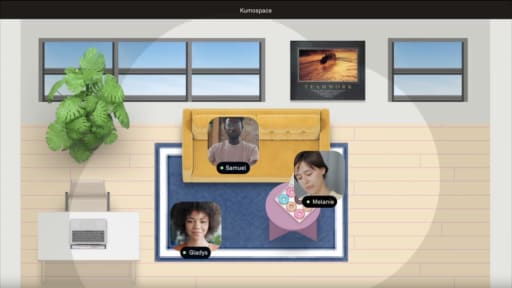
Productivity paranoia often grows when managers have limited visibility into remote collaboration and default to tracking activity. A virtual office platform like Kumospace can provide a shared space where distributed employees can see who is available and connect spontaneously, without adding more status meetings or surveillance. Persistent virtual offices and informal conversations with spatial audio can make collaboration feel more accessible while still allowing teams to focus on outcomes.

The goal is not to monitor where people are or how often they interact. It is to make communication and availability easier to navigate so managers can spend less time checking activity and more time focusing on goals, progress, and results.

When Productivity Paranoia Is Not The Real Problem

Some signs that look like productivity paranoia actually signal different issues. A team repeatedly missing deadlines while offering vague updates is a genuine performance problem that needs clear expectations, support, and direct performance management, not a reframe as paranoia. Chronic understaffing or unrealistic project scopes produce late delivery and long hours that worry leaders even when employees work at full capacity. Compensation gaps, stalled career progression, or conflict with a specific person can also cause disengagement and quiet minimal effort, especially if remote employees feel overlooked. Look at patterns across teams and locations.

If you see systematic differences by work arrangement or employee group, partner with HR or counsel, as these may reflect broader equity or management issues. You can change the conditions you control and point people toward support. Diagnosing what is going on in someone's life is not your job and rarely goes well.


Where to Start

Productivity paranoia is a measurement problem before it is a trust problem. When leaders cannot see what people are producing, they measure what they can see: hours, status lights, meeting attendance.

The evidence has to replace the proxy. Agree on three to five outcomes per role for the next few weeks. Run check-ins about blockers rather than activity. Rewrite review criteria so every rating cites something delivered. None of that requires permission, budget, or new software, which means you can start with your own team this week. If mistrust persists once outcomes are clear and being met, the problem is somewhere other than productivity.

Frequently Asked Questions

Transform the way your team works from anywhere.

A virtual office in Kumospace lets teams thrive together by doing their best work no matter where they are geographically.

Headshot for Brett Martin
Brett Martin

Brett Martin is the President & Co-Founder of Kumospace. He has spent his career as a serial entrepreneur, either building or investing in technology startups. To date, he has invested in over 60 companies through his fund, Charge Ventures. Brett and his companies have received numerous awards and have been featured in hundreds of media outlets. Outside of tech, Brett founded an indie rock band, started a non-profit, and sailed 6,000 miles on a 30ft sailboat.

Transform the way your team works.