When IBM rolled out AI across 170 countries in 2025, leaders didn’t crowdsource tools; they set a clear vision, defined a 20% efficiency target, and cascaded it across the organization. That’s the top-down approach in action.
Starting with the big picture and breaking it into actionable steps is critical for speed and alignment. Whether you’re leading a product launch, digital transformation, or quarterly planning cycle, using top-down planning effectively can determine success or failure. This article explores how the approach works across management, project execution, and software development, with examples from companies like The New York Times, and how tools like Kumospace help teams execute while staying engaged.
Key takeaways
- Top-down starts with direction, not details. Leaders define the vision, goals, and constraints first; teams execute within that framework.
- It accelerates alignment and decision-making. Especially effective in complex, regulated, or time-sensitive environments where clarity matters more than consensus.
- Pure top-down is rarely enough. On its own, it can limit innovation, miss frontline insights, and reduce engagement.
- Hybrid models are the default. High-performing organizations combine top-down direction with bottom-up input to balance speed and adaptability.
- Execution depends on visibility and communication. Modern collaboration tools enable leaders to cascade strategy while keeping distributed teams aligned and engaged.
What is the top-down approach?
The top-down approach is a decision-making model where direction, goals, and structure originate with senior leadership and cascade downward through the organization. Instead of aggregating ideas from the front lines, executives or project sponsors establish the vision, priorities, and constraints first. Teams then design execution details within those boundaries.
In a top-down model, upper management defines the “what” and “why” before anyone debates the “how.” This applies whether you’re setting annual company goals, planning a product roadmap, or structuring a cross-functional initiative.
The top-down and bottom-up approaches represent opposite starting points. Top down means vision first, details later. The bottom-up approach involves frontline employees generating ideas, estimates, and insights that aggregate upward to inform strategy. Both have merit; most organizations blend them, but they solve different problems.
Consider a global product launch at a multinational. Leadership defines the release date, target markets, and budget ceiling. Regional teams then determine localization, marketing tactics, and staffing. The company’s direction flows from the top; execution intelligence flows from below.
This pattern repeats across contexts. In corporate strategy, the CEO sets 2026 themes; department heads translate them into quarterly objectives. In engineering, architects define system boundaries before developers code. In annual planning cycles, finance establishes budget envelopes before teams propose spending.
The top-down management approach doesn’t mean ignoring input from lower-level employees. It means establishing constraints and priorities before soliciting details, so everyone works toward the same desired outcomes.
How the top-down approach works in practice
Understanding the concept is one thing; seeing how it plays out day-to-day is what makes it useful. In practice, the top-down approach follows a clear cascade: leaders define outcomes, and each layer of the organization translates them into increasingly specific actions. To see how this works, consider a mid-sized company migrating customer support to an omnichannel platform in 2026.
Stage 1: Set high-level goals and KPIs. The CEO and COO define the objective: unify support across chat, email, phone, and social by Q4 2026, reducing average response time by 30%. These become the project goals everyone references.
Stage 2: Translate goals into programs. The VP of Operations breaks this into three workstreams: platform selection, process redesign, and training. Each has a senior owner and a budget allocation. The big picture becomes visible.
Stage 3: Break work into departmental plans. IT scopes the integration requirements. HR develops a training curriculum. Customer success maps new workflows. Each department knows its role in the larger initiative.
Stage 4: Assign tasks and timelines. Project managers create detailed schedules. Team members receive specific assignments with deadlines. The final deliverable is decomposed into manageable tasks.
Stage 5: Monitor and adjust from the top. Leadership reviews progress in monthly steering meetings. If the timeline slips, executives decide whether to shift resources or adjust scope, decisions flow in one direction.
Throughout this planning process, information primarily moves downward. Leadership defines priorities; middle managers convert them into operational realities; team leads assign tasks. Questions and status updates flow back up, but decision-making authority stays concentrated.
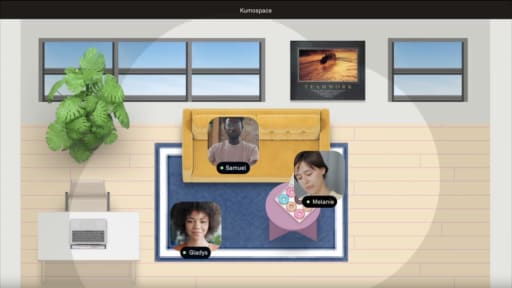
In hybrid teams, this coordination happens in real time through virtual offices. A company might host a virtual town hall where the CEO presents the strategy, then team members break into rooms to plan departmental responses. Platforms like Kumospace enable this by simulating physical proximity, leaders broadcast direction, and then teams cluster to translate it into action.
Top-down approach in management and leadership
Top-down management, sometimes called “command and control” or “autocratic,” is a management style in which key decisions are made at the top and implemented by lower levels. This doesn’t mean leaders ignore team input. It means the chain of command is explicit, and strategic objectives originate with senior management.
Company-wide directives. At the company level, the CEO might set 2026 OKRs: achieve 15% market share growth, launch two new product lines, and reduce churn by 20%. These become the company goals every department must support. Department heads then translate them into quarterly targets, marketing commits to generating 50,000 qualified leads, and product commits to shipping specific features by certain dates.
Cascading goals. This cascade continues to the team level. A marketing director sets campaign KPIs; a campaign manager assigns tasks to specialists. Everyone knows how their work connects to the larger objective. The entire team operates within a clear direction set from above.
Consider specific examples from traditional industries. A hospital chain standardized patient intake procedures in 2024 using a top-down model, mandating uniform protocols from the C-suite. The result: wait times dropped 25% across 50 facilities. A manufacturing firm rolled out safety protocols after 2023 incidents by enforcing plant-wide standards, achieving zero lost-time injuries through centralized enforcement.
Monitoring and control. Performance management under this model means goals cascade with centrally defined KPIs. Reviews measure alignment to those metrics. Leaders maintain visibility with distributed employees through scheduled all-hands meetings, structured one-on-ones, and virtual office hours. In platforms like Kumospace, executives can host open sessions where remote employees drop in for real-time Q&A, maintaining the connection that physical offices once provided.
Top-down project management and work breakdown
In project management, top-down planning starts with the final deliverable and decomposes it into phases, work packages, and tasks. This mirrors a work breakdown structure (WBS), where project managers map out what must be delivered before asking teams how long it will take.
Example: Q4 2026 mobile app launch. A fintech company wants to release a new mobile banking app by October. Leadership defines the release objective: 1 million users in 90 days, 99.9% uptime, full feature parity with desktop. Project managers then identify major modules, authentication, payments, account management, and notifications. Each module becomes a work package with its own timeline and owner.
Next, project managers draft the WBS and present it to teams. Engineers clarify technical dependencies. Designers flag UX research needs. The team enriches the top-down structure with ground-level insights, but the overall architecture comes from above.
This approach fits best when:
- The scope is clear from the start
- Regulatory constraints dictate timelines
- Projects follow repeatable patterns (annual compliance audits, standardized releases)
Coordination challenges emerge when teams are scheduling meetings across time zones. Project managers mitigate these with regular status reviews, visual roadmaps, and virtual standups. In tools like Kumospace, remote contributors can gather for daily check-ins, maintaining alignment without requiring travel.
Top-down approach in software development and product design
In software development, top-down design means starting with system architecture and high-level modules before writing any code. This is standard practice in embedded systems, fintech backends, and safety-critical software, where integration errors are costly.
Example: Banking API platform. Architects at a financial services company defined service boundaries, SLAs (99.99% availability), and security models (zero-trust architecture) before microservices development began. This reduced integration issues by 30% compared to previous projects where teams built components independently.
Top-down parsing in programming follows the same logic: start with high-level grammar or interface definitions, then refine into concrete functions and data structures. This contrasts with bottom-up methods that reuse existing libraries and components, building upward from proven code.
Most modern teams blend both approaches. Architects set boundaries; developers contribute bottom-up reuse of proven patterns. But the top-down component ensures coherence across a complex system.
Product and UX applications. A SaaS company might define a 3-year product vision (e.g., $500M ARR by 2028), then shape the 2026 roadmap, then decide quarterly themes, then prioritize individual features. Each level constrains the next, ensuring product outcomes align with strategic objectives.
Distributed product squads collaborate synchronously in virtual offices. Teams walk through high-level product maps in Kumospace before breaking down features into backlog items. This preserves the benefits of top-down planning while keeping remote team members directly engaged in the translation process.
Top-down processing in psychology and neuroscience
Beyond management, “top down” describes a fundamental cognitive process. Top-down processing refers to perception and cognition driven by expectations, prior knowledge, and context, rather than pure sensory input.
Everyday examples. You read a partially obscured street sign correctly because you expect certain words in that context. You recognize a familiar song in a noisy café because your memory provides a template that filters the input. Your brain isn’t just receiving data; it’s actively predicting based on experience.
This contrasts with bottom-up process perception, which is stimulus-driven. When you encounter something genuinely novel, you rely more on raw sensory data. But both systems operate in parallel; fMRI studies show top-down attention activates during goal-directed tasks, like focusing on a specific voice in a crowded 2026 hybrid meeting.
Workplace implications. How leaders communicate shapes how employees “perceive” new strategies. A clear “why” from leadership activates top-down processing in employees; they interpret details through the lens of the larger goal. When team members have a complete understanding of objectives, they filter information more effectively.
Advantages of the top-down approach
When does top-down deliver unique advantages? Here are the scenarios where it outperforms alternatives.
- Greater clarity and direction. Everyone understands priorities, deadlines, and success metrics. A financial firm met a 2026 cybersecurity deadline with full adherence because expectations were clear.
- Faster decision-making. Centralized authority speeds up action in high-pressure situations. During a 2025 data breach, top-down coordination enabled a response within 48 hours.
- Coordinated execution. Large, complex initiatives stay aligned. A multinational can roll out consistent standards across regions without fragmentation.
- Stronger accountability. Clear roles make ownership obvious. Decisions and outcomes can be traced directly to responsible leaders.
- Better for regulated environments. Industries like healthcare, aviation, and utilities require standardized execution where consistency matters most.
Tools like Kumospace help maintain these advantages across distributed teams by keeping communication clear and centralized.
Disadvantages and risks of a pure top-down model
While powerful, a purely top-down model has structural drawbacks, especially in fast-changing or creative domains.
- Reduced creativity and innovation. Without frontline input, teams miss valuable ideas. Research suggests up to 20 percent of innovations are lost.
- Lower engagement and morale. Employees may feel like executors rather than contributors, which reduces motivation over time.
- Information gaps. Leaders removed from daily work can overlook practical constraints, leading to flawed decisions.
- Dependency on a few leaders. Too much reliance on top decision makers creates bottlenecks and increases risk if they are overloaded.
- Communication bottlenecks. One-way communication slows updates and creates misalignment, especially in global or hybrid teams.
Turn Strategy into Execution with Kumospace
In a top-down environment, clarity only works if it translates into coordinated action across teams. Kumospace bridges that gap by giving distributed teams a shared virtual office where strategy becomes visible and interactive. Leaders can host company-wide announcements, run live town halls, or hold open office hours where employees drop in to ask questions and get context directly. From there, teams can break into dedicated rooms to translate high-level goals into actionable plans, mirroring how work would naturally flow in a physical office. Features like spatial audio, persistent workspaces, and real-time presence make it easy to see who is available, collaborate quickly, and keep momentum without constant status meetings.
Just as importantly, Kumospace supports the bottom-up feedback that modern top-down models need to succeed. Teams can surface insights, share blockers, and collaborate across functions in a way that feels organic rather than forced. Informal conversations, quick check-ins, and cross-team discussions happen naturally, helping leaders stay connected to what is actually happening on the ground. This balance of structured communication and spontaneous interaction helps organizations maintain alignment, improve execution speed, and keep employees engaged, turning top-level direction into real, measurable outcomes.
When to use the top-down approach
When is top-down not just acceptable but preferable? Here’s practical guidance.
|
Scenario |
Why Top Down Works |
|
Large-scale, multi-team initiatives |
Company-wide ERP implementations affecting finance, HR, and supply chain need unified direction |
|
Crisis management |
Cybersecurity incidents or regulatory updates require speed over consensus |
|
Highly regulated work |
Hospitals, airlines, and utilities need standardized protocols |
|
Routine projects with known patterns |
Annual budgets, Black Friday 2026 campaigns follow established processes |
|
Organizations with clear hierarchies |
Government agencies, large NGOs coordinating thousands of staff |
Even in these contexts, leaders can open limited bottom-up channels. Surveys, virtual Q&A sessions in platforms like Kumospace, and structured feedback loops let frontline workers surface issues without slowing top-down execution. The bottom-up model doesn’t have to replace top-down; it can supplement it.
How to apply a top down approach with modern teams
Use top-down effectively by combining clear direction with intentional flexibility. Be explicit about the “why” behind decisions so teams understand the context and adopt changes faster. Create structured feedback channels such as town halls, retros, or tools like Kumospace to ensure input still flows upward. Share visual roadmaps so everyone sees how their work connects to broader goals. Leave room for teams to shape execution within defined constraints to preserve innovation. Finally, invest in strong middle managers who can translate strategy into practical plans and keep teams aligned without losing trust.
|
Practice |
Impact |
|
Explicit reasoning |
30% higher adoption |
|
Visual roadmaps |
40% better alignment |
|
Manager training |
25% fewer misalignments |
|
Structured feedback |
Sustained employee engagement |
Summary
Top-down and bottom-up approaches solve different problems, and most successful teams use both. A top-down approach starts with leadership defining clear goals, constraints, and direction, which helps organizations move quickly, stay aligned, and execute complex or time-sensitive initiatives. It’s especially effective in large-scale programs, regulated environments, and situations where coordination and speed matter more than consensus.
However, top-down alone can limit innovation, overlook frontline insights, and reduce engagement. That’s why high-performing organizations blend it with bottom-up input, allowing teams to shape execution, surface ideas, and adapt based on real-world feedback.
In practice, top-down works best when paired with strong communication and visibility. Tools like Kumospace help leaders cascade strategy while enabling teams to collaborate, give feedback, and stay aligned in distributed environments.
Frequently Asked Questions
A top-down approach starts with high-level decisions made by leadership and flows directives downward through the organization. A bottom-up approach starts with input and ideas from frontline team members that get elevated to inform broader strategy.
Top-down works best when speed and alignment are critical, such as during a crisis or major pivot. Bottom up is more effective when you need innovation, team buy-in, or deep expertise from the people closest to the work.
A top-down example is a CEO setting a company-wide mandate to enter a new market, with teams executing against that directive. A bottom-up example is a customer support team identifying a recurring pain point and proposing a product change that leadership then approves.
In software engineering, top-down means designing the system architecture first and then building individual components, while bottom-up means building and testing smaller modules that get integrated into a larger system. In project management, top-down sets goals at the leadership level and bottom-up lets teams define their own tasks and timelines to meet those goals.
Yes, and most effective organizations do. A common model is leadership setting the strategic direction from the top while teams have autonomy to decide how they execute, creating alignment without micromanagement.