Your remote team can hit every deadline and still feel transactional, like a group of contractors trading tickets. That happens when work is scoped, measured, and handed off in ways that strip out context, so people know their ticket queue but not the team's reasons or each other's constraints. A remote team lacks cohesion for structural reasons more often than personal ones. In a December 2021 Gartner survey of more than 3,900 hybrid and remote knowledge workers, only about one in four said they felt connected to their organization's culture.
Key Takeaways
- The clearest early sign is work moving through tickets, DMs, and emails with minimal context, no back-and-forth, and no one touching tasks outside their narrow remit.
- The most common root cause is a lack of shared identity and shared context: people know their ticket queue but not the team's "why" or each other's constraints.
- The fixes that work are changing how you run meetings and handoffs to add explicit context and cross-functional ownership; the responses that backfire are piling on social events, forced fun, or mandated office days while leaving the underlying work system untouched.
When a remote team feels transactional instead of cohesive

"Transactional" describes a remote team that completes work but behaves like a marketplace of micro-contracts, with each interaction centered on a narrow deliverable rather than a shared goal. Remote teams can feel this way when interactions focus primarily on tasks and deadlines, with no room for the kind of communication that builds mutual understanding. In a December 2021 Gartner survey of more than 3,900 hybrid and remote knowledge workers, only about one in four said they felt connected to their organization's culture.
A cohesive remote team still works remotely, but people share context, anticipate one another's needs, and occasionally flex outside their job descriptions to help the whole. A 2024 study by Jian Shi, Sanne Feenstra, and Mark van Vugt found that identity leadership, which builds a shared sense of "us" within a team, can support team connectedness in remote settings, and employees endorsed this leadership style more strongly in a remote than an on-site context.
A remote team can hit every KPI and still lack cohesion, and this usually shows up later as turnover, cross-functional friction, and initiatives that stall without anyone owning the stall. Remote interaction skews scheduled, written, and to the point, which strips away the social cues that would otherwise signal a relationship rather than a task handoff.
Signs your remote team feels purely transactional
Handoffs are just links, not context
Work gets assigned by dropping a link to a ticket, Figma file, or Google Doc with a one-line request and no background on user impact, dependencies, or constraints. You'll notice this in Slack or Teams channels where messages read like "Please build X" or "Here's the spec" with nothing else attached, leaving the person receiving the work no way to know why it matters or who else it affects.
This usually signals the team is optimizing for speed and "unblocking" at the expense of shared understanding, which makes collaboration feel like a queue of orders and trains people to see each other as endpoints in a pipeline. A temporary time crunch, like a major product launch, can trigger this pattern. If it persists after the crunch ends, it's a structural issue, not a scheduling one.
No one volunteers for work slightly outside their lane
In standups and planning meetings, people only accept tasks that exactly match their role description. Nobody offers to help with documentation, onboarding, or glue work, and the things that hold a team together, like integration testing, writing a migration guide, or reviewing a teammate's draft, go unclaimed week after week.
This connects to a lack of team identity in remote work: remote employees feel like freelancers and start protecting their bandwidth instead of acting like members of a long-term team, and once full-time employees behave that way too, the culture shifts toward self-preservation. Tight utilization targets or recent layoffs can also make people cautious about taking on "extra" work, even if they care about the team. Check whether the pattern is new or long-standing before attributing it to culture alone.
Internal meetings are efficient but emotionally flat
Your calendar is filled with recurring status updates that start on time, run through an agenda, and end early, yet contain little debate, laughter, or visible disagreement. No one asks a follow-up question or pushes back on a decision. The meetings feel like reading a shared spreadsheet aloud.
This often reflects a culture where people feel pressure to be concise and "professional," so they skip context, pushback, and curiosity, and flat meetings reinforce the sense that nobody is particularly involved beyond their own update. A benign alternative is a team of highly introverted engineers who prefer written debate in tools like GitHub or Notion. If substantive discussion happens elsewhere in writing, flat meetings may be a sign of preference, not dysfunction, but if debate is missing everywhere, that's different.
People act like contractors in language and decisions
You hear phrases like "That's outside my scope," "Tell me exactly what you want built," or "I'll just ship what's in the ticket," especially from people who are employed full time. These phrases signal that people don't feel agency over direction and view themselves as service providers to other functions rather than co-owners of outcomes.
This language matters because it shapes how others respond. When one person says "just tell me what to build," everyone around them adjusts expectations downward, and soon nobody contributes ideas or context because they assume the other side doesn't want it. Genuine contractors or short-term freelancers may naturally speak this way, which is fine. It becomes concerning when it spreads to core employees and shapes team norms.
Cross-functional work happens through rigid, formal channels only
Marketing only talks to product through formal briefs. Engineering only talks to support through ticket queues. Any cross-team question waits for the next scheduled meeting, and informal back-channel questions like "Hey, does this landing page copy match what you told the customer?" never happen.
This pattern emerges when every interaction is calendared or channeled through tools, which removes the low-stakes, informal questions that typically build trust in co-located teams. In-person meetings create ambient context naturally; remote teams need to create those moments deliberately. In heavily regulated industries like finance or healthcare, formal channels may be required, but even there you can create informal, documented spaces for clarification and relationship building without compromising compliance.
Disagreements get routed around instead of resolved
Someone quietly goes around the person they disagree with: a product manager DMing a different engineer to get a change made, or an account lead taking a request to a junior strategist after the assigned strategist pushed back. The pattern is the same either way; the disagreement is avoided rather than resolved in a shared channel.
This keeps delivery moving but teaches people that relationships are disposable and that coordination is something to avoid, reinforcing a transactional dynamic and eroding trust and psychological safety over time. An innocent explanation is a single difficult personality making direct resolution hard. Notice whether the pattern shows up across many pairings or only one. If it's widespread, the structure is driving it, not a single person.
Why a remote team starts to feel like a group of contractors
The causes are usually structural: how work is scoped, how success is measured, and how leadership shows up matter more than whether people work remotely. Research on identity leadership and remote teams has found that when supervisors lean into behaviors that build a shared team identity, remote work's usual drag on connectedness shows up less, and employees tend to respond even more strongly to that kind of leadership once they're working remotely than they do in person. That points to the real problem: it isn't remote work itself; it's what leaders do within it.
Work is scoped as individual tickets rather than shared outcomes, so nobody has a reason to look past their own lane. A Microsoft study of 61,182 U.S. employees found that after the company shifted to firm-wide remote work in 2020, employees formed fewer new collaborator connections and collaboration networks became more static and siloed. In "The Effects of Remote Work on Collaboration Among Information Workers," published in Nature Human Behaviour, researchers analyzed 61,182 US Microsoft employees over the first six months of 2020 and found that firm-wide remote work made collaboration networks more static and siloed, cut cross-group collaboration time by about 25%, and shifted communication toward asynchronous channels. When tasks are segmented like this, people stop forming the informal bridges that used to connect them, and that's something you fully control at the team level by changing how you write and assign work.
Success is measured per person, so helping a teammate is invisible in the numbers that decide reviews and promotions. If recognition and rewards focus only on individual throughput, collaboration becomes an uncompensated side activity, and while you partly influence this, changing it fully may require escalating to whoever owns the review framework.
Managers only show up for status, so the only sustained relationship anyone has is vertical, and horizontal ones never form. If your meetings are purely progress checks and never touch tradeoffs, customer impact, or cross-team friction, your team has no forum to develop shared understanding, and that's fully within your control to fix.
Teams are reassembled for every project, so no group lasts long enough to become one. Identity takes time to form, and constant reshuffling prevents it. This is something you partly influence and usually have to escalate, since it depends on how staffing gets planned across the organization.
When a remote team lacks cohesion: signs, causes, and first fixes
|
Observable sign |
Likely underlying cause |
First intervention |
|
Handoffs are a link with no summary |
Work is scoped without context requirements |
Add three required fields to every ticket: "Why this matters," "Who else is impacted," "Definition of done" |
|
No one picks up work outside their role |
Individual metrics dominate; helping is invisible |
Discuss one cross-functional dependency per standup and name the people involved |
|
Internal meetings are flat status readouts |
Agenda rewards speed over shared understanding |
Replace half the status time with two fixed prompts: "What did we learn about customers?" and "Where are we pulling in different directions?" |
|
Employees use contractor language ("outside my scope") |
No shared outcome ties individual work to team mission |
Post one shared outcome metric where the whole team can see it and reference it weekly |
|
Cross-functional questions wait for scheduled meetings |
All interaction is calendared; informal channels are absent |
Open a dedicated channel for quick cross-team questions with a norm of replying within a few hours |
|
Disagreements are routed around, not resolved |
Conflict avoidance is easier than repair in async channels |
When you spot a workaround, bring both parties into a short synchronous call to resolve it together |
What to do when your remote team feels transactional
Your team may already be delivering, so interventions should respect current workload and focus on adjusting how you collaborate, not adding busywork. The goal is to create shared context and ownership without slowing anyone down.
Redesign recurring meetings around shared context, not status
Take one weekly meeting, your Monday standup or team sync, and cut the status-update portion in half. Dedicate the freed time to two fixed prompts: "What did we learn about our customers last week?" and "Where are we pulling in different directions as a team?" Shifting part of a meeting from status updates to shared reflection gives people a reason to pay attention beyond their own update.
Leaders should go first on the prompts, admit uncertainty, and ask genuine follow-up questions to model the vulnerability that makes this work. Rotate meeting facilitation roles so the same person isn't always driving. Give the new format four weeks before judging it, since the first two weeks are mostly people adjusting rather than responding. If participation drops after that, try collecting topics asynchronously beforehand so people arrive prepared, or rotate facilitation to someone different each week.
Add minimum context standards to every assignment
Implement a simple written checklist for tasks in tools like Jira or Trello, with three required fields: "Why this matters," "Who else is impacted," and "Definition of done." No task gets assigned until those fields are filled. These three fields give a remote teammate enough context to make a sound decision without scheduling another meeting.
As the manager, model this by refusing to assign or accept tasks without those fields and by editing your own requests first. This depends on having a manageable ticket volume. If the sheer number of tasks is overwhelming, escalate the workload issue instead of trying to enforce standards nobody has time to follow, since the ability to add context disappears when people are buried.
Shift from individual to outcome-based goals for remote teams
Reframe a set of goals from individual throughput metrics like tickets closed to shared outcomes such as incident reduction or a successful quarterly feature launch. When goals are shared, people have a reason to look past their own lane and help fellow team members, because the team wins or loses together.
Create one page or dashboard where the whole remote team can see these shared outcome metrics and how their work ties in. Celebrating teamwork helps create a cohesive unit instead of a collection of independent workers. Recognition backs that up: in Glassdoor's 2013 Employee Appreciation Survey of more than 2,000 US adults, conducted by Harris Interactive, 81% said they're motivated to work harder when a manager shows appreciation, and 53% said they'd stay longer at a company that showed more appreciation. Tying recognition to shared outcomes, rather than only individual throughput, reduces feelings of isolation among remote workers and makes the connection between individual effort and team success visible.
This usually requires at least partial support from your own manager. If broader alignment is slow, track and discuss outcomes in your own team meetings as a fallback, since even informal outcome tracking changes how people talk about their work.
Create stable, cross-functional pods with clear identities
Form small, stable groups that stay together for several months instead of reassembling for every project. In a software team, this might be one product manager, two engineers, a designer, and a support rep. In a university department, it could be one program lead, two advisors, a communications person, and someone who fields student inquiries. The importance of stability is that identity takes time to form, and constant reshuffling prevents it.
Give each pod a name, a specific customer segment, and a clear mission, so members build a shared identity and see themselves as "we," not just a list of job titles working remotely together. Building a more personal atmosphere requires creating intentional moments for connection, and a pod gives those moments a natural home. Identity leadership enhances team identification and reduces isolation when it happens within a stable group.
An account manager at Connexus, a US contact center where most of the 5,000-plus staff work from home, moved her 25-person remote team into a persistent virtual workspace and reported a 10% productivity increase alongside better day-to-day connection.
Use social rituals to reinforce, not replace, better work systems
Once you've improved handoffs and goals, adding small social rituals strengthens cohesion. Rotating "show and tell" demos where people present something they worked on, lightweight celebrations of launches and milestones, or monthly cross-pod hangouts all contribute. Tools like Donut, which pairs teammates for casual one-on-one coffee chats in Slack, can encourage peer-to-peer bonding, and dedicated channels for non-work interests help people feel connected as humans, not just role-holders.
These rituals should be voluntary, time-boxed, and anchored to real work wins, so they feel like recognition and connection rather than forced fun. If social activities are introduced before work friction is addressed, employees may disengage further because the events feel like a distraction from unresolved problems.
What usually backfires when a remote team lacks cohesion

Leaders often react to transactional remote teams with more control or more social events. Both can worsen the problem if they don't change how work actually flows, and as remote and hybrid arrangements keep expanding across industries, getting this response wrong will only cost more teams over time.
Mandating more meetings and check-ins without changing their purpose
Adding daily standups, more status meetings, or mandatory camera-on rules simply increases meeting load without creating real connection. If the meetings are still just status readouts, you now have more of the same thing that was not working.
This teaches people to share the bare minimum even faster, reinforcing the transactional feel and increasing fatigue. People who already feel disconnected will feel more so when their calendar fills with meetings where nobody actually talks about anything that matters.
Surveillance and activity tracking
Practices like keystroke logging, random screenshots, or policing status indicators measure presence, not outcomes, and tell you nothing about whether someone is collaborating or helping a teammate. These tools erode trust and push people to work around systems, making employees feel even more like replaceable contractors rather than trusted team members.
Forcing office days as a cure-all
Mandating two or three fixed office days each week without changing incentives or collaboration norms leaves the structure that made the work transactional in place. People may sit on separate video calls from the same building while the structural issues in how work is scoped and handed off remain untouched, and flexibility and trust decline while the underlying collaboration problems persist.
Relying only on perks and social events
Adding virtual happy hours, online games, or gift boxes while leaving confusing roadmaps, unclear ownership, and opaque decision-making in place treats the symptom while ignoring the cause. Employees quickly see this as performative, participation drops over time, and people who feel like their work world is transactional won't be convinced otherwise by a trivia night.
Public blame when collaboration breaks down
Leadership emails or all-hands comments that single out teams or individuals when launches slip frame collaboration breakdowns as personal failings and can deepen an already transactional dynamic. People respond by focusing on narrow task completion and documentation to protect themselves, and they stop taking risks, stop volunteering for cross-functional work, and stop raising concerns early.
When a transactional feel is not the core problem
Similar signs can come from other issues like pay inequity between office and remote workers, a single toxic manager, or an unrealistic workload. If complaints cluster around compensation, promotion, or fairness rather than collaboration, you may be seeing a reward-structure issue rather than primarily a cohesion issue. If patterns differ systematically by work location or employee group, document what you are seeing and ask HR or qualified employment counsel to review the situation rather than drawing legal conclusions from the pattern alone.
If the pattern appears only in one team or under one manager while other remote teams feel cohesive, it's more likely about that local leadership style than about how the company does remote work. Look for evidence of chronic overwork, like frequent weekend messages or missed time off, which can make everyone act more transactional simply to survive. In these situations, you should still improve collaboration practices but also raise structural concerns with HR or senior leadership instead of treating it purely as a culture problem.
Where a shared virtual space fits into rebuilding team cohesion
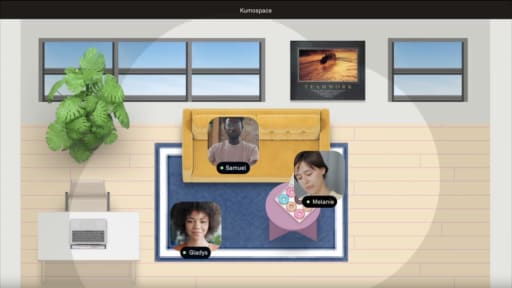
None of the fixes above require new software, but a lot of them get easier inside a persistent shared space instead of a calendar full of one-off meetings. Pods need somewhere to feel like a pod day-to-day, and informal, low-stakes conversations are hard to manufacture through scheduled calls alone. Kumospace is a virtual office platform for remote and hybrid teams built around exactly that gap.
Its virtual office gives a pod a shared space to be visibly present in throughout the day, so a teammate can drop into a conversation the way they'd stop by a desk instead of needing a calendar invite to justify the interruption. That complements, rather than replaces, the tools a team already uses: Jira still manages the work, and Kumospace provides the ambient space where the informal context that used to happen around a shared workspace can happen again.
What to change first when your remote team lacks cohesion
A remote team that feels transactional usually has a structural problem rather than a personality one: work scoped as isolated tickets, success measured only individually, and meetings that never get past status. What works is changing how work gets scoped, discussed, and rewarded, so people have a reason to look past their own lane. More meetings, surveillance, and mandated office days leave that system untouched.
Start with one recurring meeting and one assignment template. Cut the status portion of the meeting in half and spend the freed time on what you learned about customers and where the team is pulling in different directions. Require three fields on every task: why this matters, who else is impacted, and definition of done. Give it a month, then watch whether people start volunteering for work outside their lane again.
Frequently asked questions
A changed meeting format needs about four weeks before you can tell whether it's working, and durable shifts in trust and team culture take a quarter or two of consistent behavior. The key is consistency: changing formats for a week and then snapping back sends a stronger message that nothing is really different.
You can name it plainly and neutrally, focusing on observed behaviors like "we mostly talk through tickets and DMs" rather than blaming intentions. Invite concrete examples and ideas from the team, which both improves your diagnosis and signals that you see them as partners, not just recipients of change.
If you see persistent signs like open conflict between functions, chronic rework, or people explicitly describing themselves as "just contractors" despite being full-time, it is time to raise the pattern. Bring specific examples of how the current structure, incentives, or workload are driving the behavior, so leaders can address the system rather than individuals.
For early-stage teams or for newly formed remote teams, a task-focused phase is common while people are learning the work and tools. If the team stays stuck in that phase for months with no growth in trust, shared language, or informal collaboration, it is a sign to intentionally invest in shared identity.
If most collaboration works well except with one person, and issues follow them between projects, you may have an individual performance or behavior issue. If similar patterns show up across many pairings and projects, the problem is likely the team's structures and norms, not one difficult employee.