Illustration of new hire distracted at workspace, representing reasons remote employees quit early.

Remote Employee Early Attrition: Why New Hires Quit

By Brett Martin

Remote employee early attrition is when a new hire leaves inside the first few months, usually before anyone has registered a problem. It's driven far more by thin onboarding than by remote work itself. That's why remote hires don't stick even when the hiring was right, and why it shows up in behavior weeks before it shows up in a resignation.

A new hire who accepts the offer, has a great first week, and quits by month two didn't decide that in the exit interview. They decided it sometime in week three, when nobody could tell them why the work mattered or who to ask for help.

Key Takeaways

  • Remote employee early attrition is driven far more by thin onboarding than by remote work itself, and the warning signs show up in behavior weeks before anyone actually resigns.
  • The clearest early signals are visible in data managers already have: low participation in required meetings, a slipping first deliverable, and basic logistics questions still coming in during week three or four.
  • Structured onboarding, a real 30-60-90 day plan, a briefed buddy, and a guaranteed early win do more to fix this than tightening monitoring or adding mandatory office days, which tend to make it worse.

Why remote hires quit in the first 90 days: the early signs

These signs are visible in the first month using data you already hold: meeting recordings, chat history, project boards, and your own 1:1 notes. Isolated behaviors often reflect standard adjustment, but observing multiple signals within a new hire's first three weeks indicates a pattern worth acting on. The gap between what a new hire expected and what they're experiencing shows up in behavior long before it shows up in a resignation email.

The new remote hire attends required meetings but contributes almost nothing

The new employee joins every scheduled standup, all-hands, and onboarding session, but their camera stays off, they give one-word status updates, and they stop asking questions after the first few days. Most new hires start testing the waters with observations or follow-up questions once they're past the first week, so continued silence usually signals psychological distance, unclear expectations, or not feeling safe to speak up, all of which show up repeatedly in accounts of why new remote hires leave early.

Shyness, cultural norms, or plain information overload explain quietness just as often. What they don't explain is why it would resolve on its own. Quiet that starts in week one usually stays until someone changes the conditions around it. Review notes from early calls, then explicitly invite the new hire to share thoughts in a smaller setting to test whether the silence is about fear, confusion, or simply personal style.

The first meaningful deliverable keeps slipping without a clear reason

A draft due in week two is still unfinished in week four, and the new hire's updates stay vague, "still ramping" instead of naming a specific blocker. In remote settings, missing context, conflicting instructions, or hidden confusion about priorities account for most of these delays, often because the new employee doesn't know who can unblock them or doesn't feel comfortable admitting they're stuck.

Technical blockers and external dependencies can also slow delivery, but in early attrition cases, the pattern is apologetic vagueness rather than a clear request for help. Look at how the project was scoped: was there a concrete deadline, written success criteria, and a named reviewer? If not, the delay is your onboarding process, not the new hire's capability, and most of that clarity has to come from you.

Questions focus on basic logistics well after the first week

Three or four weeks in, the new remote employee is still asking how to book time off, who approves expenses, or where key documents live. An occasional late question is normal. A steady trickle of "where do I find X?" signals that onboarding information got scattered across tools without a single source of truth, or that preboarding never happened.

Review your onboarding checklist and welcome docs. What does a new employee actually receive before and during their first week? If the answer is a dozen links in a Slack message and a calendar full of back-to-back video calls, remote employees feel lost because they are lost.

The remote employee avoids informal channels but responds quickly to direct asks

Some new hires reply promptly to manager emails and direct messages but never post in team channels, skip optional social calls, and rarely react in chat. Opting out of informal spaces is one of the earliest visible signs that someone doesn't feel like part of the wider team, since remote workers already face a higher baseline risk of isolation and low belonging.

Time zones, caregiving responsibilities, or neurodivergence can also explain low social activity with no intention to quit behind it. Clarify which channels matter for actual work, explicitly invite the new hire into key conversations, and ask in 1:1s how they feel about the social side. The goal is to find out whether they're choosing quiet, or whether no one showed them where to show up.

Early 1:1s stay tactical, and the new hire offers no long-term questions

The manager drives the entire agenda. The new employee asks only about immediate tasks and never brings up career development, growth opportunities, or how their role connects to the wider team. This pattern often points to thin psychological safety, or a quiet assumption that the role is temporary, which is often the point where remote hires stop trying to stick past probation.

Deliberately ask about expectations, career direction, and how the new hire is experiencing company culture within the first three meetings. If you wait for them to raise it, many employees leave before the conversation happens. Visibility for promotions and growth opportunities gets murkier in remote settings, and early 1:1s are where you either address that directly or let it harden into a reason to leave.

The new hire stops asking about anything beyond their current task

In the first two weeks, a new hire's questions are wide: how the team works, where the product is going, what happened last quarter. By week four, those questions narrow to just this week's assignment, a shift that's visible in 1:1 notes and channel history without looking anywhere private.

Curiosity about the future is usually among the first things to go once someone has privately decided there isn't one, though a heavy first project or a genuinely complex domain can absorb someone's attention just as easily. Test it directly in the next 1:1 by asking what they'd want to be working on in six months. Someone still invested usually has an answer; someone who's checked out usually deflects.

Why remote employee early attrition happens

New remote hire turnover is rarely caused by a single dramatic event. It's more often produced by structural gaps in how roles are sold, designed, and onboarded, and circulated figures on exactly how much of it happens in the first 90 days vary too widely across studies to be useful. Your own remote-versus-in-office comparison inside your own company is the only number that actually applies to your situation.

Mis-sold role expectations. When the hiring process promises autonomy and flexibility but the remote job turns out to be tightly managed and rigidly scheduled, hires decide early that the role isn't what they signed up for. This is within your influence if you own the job ad and interview scripts, since the gap between what's promised and what's delivered is usually visible in your own materials once you go looking for it.

Fragmented onboarding. About a third of employees report a poor onboarding experience overall, and remote and hybrid teams are hit hardest, since there's no hallway to compensate for what the process missed. A study of technical roles at Ericsson in Sweden, using HR and exit data from 2016 to 2025, found that employees onboarded fully remotely were significantly more likely to resign within their first three years, and that the pattern held even after the company improved its remote onboarding. Retention recovered only once Ericsson introduced structured hybrid policies with team members and senior staff present alongside new hires. The timescale is longer than the first 90 days, but the mechanism it points at is the same one: onboarding that never builds attachment.

Manager capacity. Manager quality remains the primary driver of engagement, aligning with Gallup's landmark finding that managers account for 70% of the variance in team engagement scores across business units. When managers are overloaded, new hires in a remote job get ambiguous signals, unclear priorities, and infrequent feedback. This is partly within your control; you can change how you run your own 1:1s, but you can't fix organizational understaffing alone.

Compounding turnover cycles. Unaddressed early attrition creates institutional knowledge drain and team instability, accelerating further exits among remaining team members.

How to read the signs of new remote hire turnover

Match what you've noticed to the closest row and try that intervention first. A row is a hypothesis to test in your next 1:1, not a diagnosis.

Observable sign

Likely underlying cause

First intervention

Camera off and one-word updates past week one

Unclear expectations or low psychological safety

Invite specific input in a smaller meeting; share the agenda in advance

First deliverable slipping with vague excuses

Task scoped without written criteria or named reviewer

Rewrite the task brief with "done" defined; assign a pair partner

Basic logistics questions in weeks three and four

Onboarding docs scattered or incomplete

Audit what the new hire actually received; consolidate into a single hub

Active in direct messages, silent in team channels

No introduction to informal norms or belonging cues

Name the two or three channels that matter; post a welcome thread

1:1s stay entirely task-focused

Manager drives agenda; no space for concerns

Add a standing "worries and questions" slot; ask about six-month goals

Questions narrow from broad to only current task

Privately disengaging from the role's future

Ask directly what they want to work on in six months

No questions about career or growth by week four

Promotion paths or development unclear in remote context

Share a concrete example of how someone in the role progressed

Still unclear on team structure or who does what

No relationship map or introductions beyond manager

Schedule three 20-minute intro calls with cross-functional peers

Skips all optional social or team-wide events

Time-zone barriers or feeling like an outsider

Ask in 1:1 what format and time would work; adjust one event

Onboarding buddy relationship went silent after day two

Buddy not briefed or not given time

Re-pair or clarify the buddy's role with a short checklist

These last four come up often enough to act on even without a section of their own.

What to do about remote new hires quitting early

The first interventions should be low-cost changes to how you run onboarding and meetings, not new platforms or a bigger budget. The issue is rarely the remote arrangement itself; it's what happens, or doesn't happen, in the first few weeks.

Rewrite the first remote week around clarity, not content

Replace scattered calls and long slide decks with a time-boxed schedule, clear daily goals, and dedicated focus time. Include a single onboarding hub, a walkthrough of how the team works remotely, and a session connecting the new hire's work to customers, students, members, or other people they serve.

If confusion continues after week one, the problem is likely the onboarding sequence, not the schedule length. Build in intentional mentorship and informal support rather than expecting remote employees to find it on their own.

Guarantee a meaningful first win by day 10

Identify a small but real task, shipping a low-risk change, cleaning up a section of a shared handbook, drafting one part of a report, that the new employee can finish in their first two weeks. Define "done," assign a partner or reviewer, and publicly acknowledge completion in a team channel to reinforce belonging and competence. This gets hires productive faster than any training module.

If a new hire still struggles to complete the starter task, that's a signal of deeper issues in role clarity or tool access, not effort, and it's worth addressing those before piling on more onboarding content.

Standardize a 30-60-90 day remote onboarding plan

Create a simple template covering outcomes (what the new hire will deliver), learning goals (what they need to understand about products and tools), and relationships (who they need to meet across the team). The plan should span the full 90 days to actually support retention, not just the first week, and it should include a named buddy from day one with a short checklist of what the buddy is responsible for covering.

Tailor the plan to each role but keep the structure consistent across remote teams so patterns are easy to compare. If progress stalls for multiple hires in the same role, the role's scope or training content probably needs rework.

Change how you run 1:1s with new remote employees

For the first eight to twelve weeks, run a weekly 30-minute meeting with a fixed agenda: wins, worries, questions, and context. Add one recurring question about how the new hire feels about their workload, their support, and their wellbeing, since intentional connection is where remote new hires either start feeling part of the team or start quietly drifting.

Share your own working norms and invite feedback on the onboarding process itself. If someone still gives only short answers, send the agenda ahead in writing and allow written responses instead of forcing everything to happen live.

Why common reactions to remote early attrition make it worse

Some of the most instinctive responses to remote employee early attrition, like adding surveillance or forcing office days, worsen the very trust deficit that's driving people out. Remote workers already report feeling pressure to always be visibly "on," and layering monitoring on top of that pressure accelerates the exit rather than slowing it.

Activity tracking, screenshot software, and status-light policing measure visibility rather than output, and they often push high-performing remote employees to leave sooner, since these tools signal that you don't trust the person you just hired, which is the opposite of effective onboarding. Removing flexibility to solve an attrition problem tends to cut the thing that was keeping people in the first place. Flexibility is usually what the hire was sold during interviews, so withdrawing it in month two confirms the mis-sold-role problem rather than fixing it.

Mandatory camera rules on every call create performance anxiety, not engagement. Blanket return-to-office mandates remove the flexibility that attracted the hire in the first place without fixing any of the onboarding or role-design issues underneath. Piling on generic social events, virtual happy hours, or icebreakers adds noise instead of clarity, and can feel hollow when the new hire still doesn't know what "done" looks like for their first project. Employee engagement improves when people know what to do and who to ask, not when they're handed another calendar invite.


When remote early attrition isn't the real problem

Sometimes the pattern looks like an onboarding failure, but the cause sits elsewhere. If your pay band is below market for the remote role, no amount of better onboarding will hold people, since compensation gaps are often the invisible driver behind an otherwise well-onboarded hire quietly job hunting. Compare the role's salary to current market rates before diagnosing a process problem.

If early attrition clusters under a single manager while other remote teams retain new hires just fine, the issue is likely that manager's behavior, not the onboarding process. Check whether your stated work-life balance expectations differ from what people actually experience in the role, and whether the workload described during hiring matches the real workload. When patterns differ systematically by work location, gender, or other factors, review them with HR leaders or legal counsel rather than trying to diagnose the issue yourself; a manager's role is to change the working conditions they control and to point people toward proper support for anything outside that scope, including mental health resources.

Giving new hires an early feel for the team

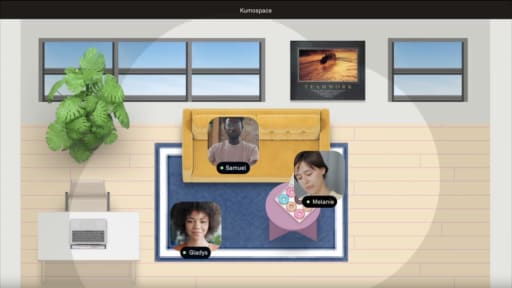
A lot of these fixes come down to giving a new remote hire enough real contact with their team to actually feel part of it, not just enough meetings to stay on schedule. Structured 1:1s and a good onboarding plan cover the planned parts of that. What's harder to schedule is the small, unplanned contact that used to happen just by being in the same room. Kumospace is a virtual office platform for remote and hybrid teams built around exactly that kind of contact.

Its persistent virtual office gives a new hire a space to sit alongside teammates during the day, so dropping in on a conversation or asking a quick question doesn't require scheduling a call. Its spatial audio makes that presence feel closer to actually sharing a room, which is exactly the kind of ambient contact a remote new hire otherwise misses in their first few weeks. It's not a substitute for a real onboarding plan or a manager who runs good 1:1s; it's a place for the informal contact that plan can't fully schedule, and it fits best for teams that already have structured onboarding and regular 1:1s in place.

What to check first

Remote employee early attrition is a process problem, not a people problem. Pull up what your last new hire's first week actually contained: who introduced them to whom, when they first shipped something, what they were told about why any of it mattered. Then ask honestly whether that would have been enough to keep you.

The good news is that the fixes are mostly free: a real first win, a briefed buddy, a 1:1 agenda with room for worries as well as tasks. Get those right and new remote hire turnover usually drops within a hiring cycle or two, at least the share of it caused by onboarding rather than pay, role design, or one manager's style.

Frequently asked questions

Transform the way your team works from anywhere.

A virtual office in Kumospace lets teams thrive together by doing their best work no matter where they are geographically.

Headshot for Brett Martin
Brett Martin

Brett Martin is the President & Co-Founder of Kumospace. He has spent his career as a serial entrepreneur, either building or investing in technology startups. To date, he has invested in over 60 companies through his fund, Charge Ventures. Brett and his companies have received numerous awards and have been featured in hundreds of media outlets. Outside of tech, Brett founded an indie rock band, started a non-profit, and sailed 6,000 miles on a 30ft sailboat.

Transform the way your team works.