Every product team has been here: someone pitches an idea that sounds promising in a meeting, gets buy-in from leadership, and then engineering spends three months building it, only to discover the core assumption was wrong. The feature doesn't solve the problem it was supposed to solve. The technical approach doesn't scale. The market doesn't respond the way the research suggested it would. Three months of work, scrapped.
A proof of concept exists to prevent exactly that. It's a small, focused exercise to validate whether an idea is feasible before a team commits real resources to building it at scale. The definition is straightforward. How teams apply it varies widely, and the difference between a well-run POC and a waste of time usually comes down to how tightly the test is scoped and how clearly success is defined up front.
This guide covers what a proof of concept is, what POC stands for in business contexts beyond engineering, how a POC release works, and how to structure one so it actually tells you something useful before you go all in.
Key Takeaways
- A proof of concept is a small-scale test designed to validate whether an idea, technology, or approach is feasible before committing full resources to building it.
- POCs are used across engineering, product, marketing, and business development to reduce risk by answering a specific question with minimal investment.
- The value of a POC depends entirely on scoping it tightly around a single hypothesis and defining success criteria before the work begins.
- A POC release is a limited deployment of a working prototype to real users or stakeholders, designed to gather feedback on viability rather than deliver a finished product.
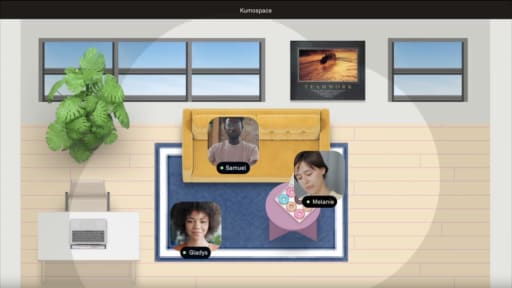
- Distributed teams running POCs benefit from real-time collaboration environments like Kumospace, where cross-functional feedback loops stay tight throughout the testing period.
What Is a Proof of Concept (POC)?

A proof of concept (POC) is a small-scale test used to determine whether an idea, solution, or approach can work in practice. Unlike a prototype, which demonstrates what a product might look and feel like, a POC focuses on feasibility rather than design or user experience. Its purpose is to validate a core assumption before significant time, money, or resources are invested. At its simplest, a proof of concept answers one question: Can this work?
For engineering teams, that might mean testing whether a system can handle a specific workload, support a new integration, or meet performance requirements. The POC doesn't need to be polished or customer-facing; it simply needs to demonstrate that the technical approach is viable. For product teams, a POC could involve validating a key user behavior, workflow, or business assumption before committing development resources. Marketing teams may use a POC to test messaging, channels, audience segments, or campaign performance on a small scale before increasing investment.
In business, the term proof of concept is also commonly used to describe a trial, pilot, or validation phase that helps reduce uncertainty before a larger commitment is made. Enterprise software vendors often run POCs with prospective customers, consultants may use them to demonstrate the effectiveness of a methodology, and startups rely on them to prove market demand before scaling. Whether evaluating a new technology, service, process, or market opportunity, the goal is the same: gather evidence, validate assumptions, and minimize risk before moving forward with a larger initiative.
What Is a POC Release?
A POC release is a specific type of proof of concept that involves deploying a working version of a product, feature, or system to a limited audience. Unlike a purely internal technical test, a POC release puts something functional in front of real users or stakeholders to gather feedback on whether the concept holds up under real-world conditions.
The "release" aspect is what distinguishes it from a bench test or an internal demo. A POC release exposes the concept to the variables that only surface when actual people interact with it: unexpected use cases, environmental factors, integration quirks, and the gap between how designers think users will behave and how users actually behave.
For engineering teams, a POC release might mean deploying a new microservice to a subset of production traffic to validate performance characteristics before rolling it out broadly. For product teams, it could be releasing a stripped-down version of a feature to a cohort of beta users to test adoption and usability. For marketing teams, a POC release might involve launching a landing page with a new value proposition and driving a small amount of paid traffic to it to measure conversion rates.
The key difference between a POC release and a beta launch is intent. A beta launch implies that the product is largely built and the team is looking for bugs, edge cases, and polish feedback. A POC release is earlier in the process. The team is still asking whether the core concept works, not whether the execution is ready for prime time.
How to Structure a Proof of Concept That Actually Tells You Something

Most POCs fail not because the idea was bad but because the test was poorly designed. A POC that tries to validate too many things at once, or that doesn't define what success looks like before the work begins, will produce ambiguous results that don't help anyone make a decision.
Start With a Single Hypothesis
Every effective POC begins with one clearly stated hypothesis. "We believe that [specific approach] will [achieve specific outcome] for [specific audience]." The more specific the hypothesis, the more useful the results. "We believe our new recommendation algorithm will increase average session duration by 15% for returning users" is testable. "We believe this feature will improve the user experience" is not.
If you find yourself with multiple hypotheses, run multiple POCs or sequence them. Bundling several questions into one test makes it nearly impossible to attribute results to any single variable.
Define Success Criteria Before You Start
Decide what outcome would validate the hypothesis and what outcome would invalidate it. Write this down before the team begins building. Success criteria prevent the very human tendency to interpret ambiguous results in whatever direction confirms the team's existing preference. If the threshold for success is a 15% increase in session duration, and the actual result is 4%, that's a clear signal to rethink the approach rather than a data point to be rationalized.
Scope the Work Ruthlessly
A POC should be the minimum effort required to test the hypothesis. Nothing more. If the hypothesis is about whether users will adopt a new workflow, you don't need a polished UI. A functional prototype with a placeholder design is enough. If the hypothesis is about system performance, you don't need every edge case handled. You need the core path tested under a realistic load.
The discipline of scoping is especially important for engineering teams, where the temptation to build things "the right way" from the start can turn a two-week POC into a two-month engineering project that defeats the purpose of testing before committing.
Set a Time Limit
POCs should have a defined end date. Without one, they have a tendency to expand in scope, absorb more resources, and gradually morph into full development efforts without ever producing a clear go or no-go decision. Two to four weeks is a reasonable window for most POCs. If you can't test your hypothesis in that timeframe, the hypothesis might need to be broken down into smaller, more testable components.
Involve the Right People Early
A proof of concept that lives entirely within one team often misses critical perspectives. Engineering might validate that something is technically feasible without realizing that the user experience makes adoption unlikely. The product might validate user interest without confirming that the approach is architecturally sound. Marketing might validate demand without checking whether the positioning aligns with the product team's roadmap.
Cross-functional input during the POC phase catches these misalignments before they become expensive. For distributed teams, this means keeping communication channels open and informal throughout the testing period. Teams working in Kumospace can pull in a quick opinion from a colleague on another team without scheduling a meeting, which keeps the POC moving at the pace it needs to move to stay within its time box.
Examples of Proof of Concept Across Different Functions
Seeing how POCs play out across different team types helps clarify how broadly the concept applies.
An engineering team at a fintech company wants to evaluate whether a new database engine can handle their transaction volume with lower latency than their current system. They build a minimal test environment, replicate a representative subset of production queries, and measure response times over two weeks. The POC doesn't involve migrating any real data or building application-layer code. It just answers the performance question.
A product team at a SaaS company hypothesizes that adding an AI-generated summary to their dashboard will reduce the time users spend parsing reports. They build a rough version using an existing language model API, deploy it to 200 beta users, and measure time-on-page and user satisfaction scores over three weeks. The summary quality isn't perfect, but it's good enough to test whether the concept resonates before investing in fine-tuning.
A marketing team at an e-commerce company wants to test whether repositioning their product as a sustainability-focused brand will attract a higher-value customer segment. They create a single landing page with the new messaging, run $2,000 in targeted paid ads over 10 days, and compare conversion rates and average order values against their existing positioning. The POC costs less than 5% of a full rebranding effort and provides concrete data to inform the decision.
A business development team at a consulting firm is exploring a new service line. Instead of building out the full offering, they approach three existing clients with a scoped pilot project at a reduced rate. The pilots test both client demand and the firm's ability to deliver the service profitably. If two out of three pilots convert to ongoing engagements, the service line gets approved for broader rollout.
What Happens After the POC

The output of a proof of concept should be a clear recommendation, not a pile of data. Either the hypothesis was validated, and the team should proceed to full development, or it wasn't, and the team should pivot, adjust, or shelve the idea.
Document the results thoroughly, even if the POC fails. What you learned about what doesn't work is just as valuable as confirming what does, especially when similar ideas surface in future planning cycles. A well-documented failed POC saves the next team from running the same test and getting the same result.
If the POC succeeds, resist the urge to ship the POC code or campaign as the final product. A proof of concept is built for speed and learning, not for durability. The transition from POC to production should involve a deliberate planning phase where the team reassesses scope, timeline, and architecture with the benefit of what they learned during testing.
Summary
A proof of concept (POC) is a small, focused test to determine whether an idea, technology, or approach is feasible before committing significant resources. Instead of building a full product or feature, teams use POCs to validate a specific assumption, reduce risk, and gather evidence that something can work in practice. The most effective ones are scoped around a single hypothesis, have clearly defined success criteria, and are completed quickly enough that they don't quietly turn into full development projects.
POCs show up across engineering, product, marketing, and business teams whenever there's a critical question to answer before a larger investment. A POC release takes this further by putting a limited version of a concept in front of real users or stakeholders to test viability under actual conditions. The goal is the same regardless of context: learn fast, minimize risk, make a better call. For distributed teams, Kumospace can help keep feedback loops tight and cross-functional collaboration moving throughout the testing process, so insights get acted on before the window closes.
Frequently Asked Questions
A proof of concept is a small-scale test that checks whether an idea actually works before a team invests significant time and resources into building it fully. It answers the question "is this feasible?" by validating a specific hypothesis with minimal effort.
POC stands for "proof of concept" and refers to any exercise that validates the viability of an idea, whether that's a technical test in engineering, a trial period offered to a prospective client, or a pilot project in consulting. The term is used across sales, product, marketing, and business development to describe low-risk testing before full commitment.
A proof of concept validates whether an idea is feasible at a fundamental level, while a prototype demonstrates what the final product might look and feel like. POCs are narrower in scope and earlier in the development process, focused on answering a single viability question rather than showing a complete user experience.
A POC release is a limited deployment of a working concept to real users or stakeholders, designed to gather feedback on viability under real-world conditions. It differs from a beta launch because the team is still testing whether the core idea works rather than polishing a product that's already largely built.
Most POCs should take two to four weeks, which is long enough to gather meaningful data but short enough to prevent scope creep and resource drain. If the hypothesis can't be tested in that window, it likely needs to be broken down into smaller, more focused questions that can each be validated independently.