A performance improvement plan often carries a negative reputation, but in practice, it’s one of the most important tools companies have for addressing performance issues in a clear, structured, and fair way. When used correctly, a PIP creates alignment between managers and employees by turning vague concerns into specific expectations, measurable goals, and a defined path forward over a set period of time.
In this guide, we’ll break down what a performance improvement plan actually is, when to use it instead of informal coaching or disciplinary action, and how to design one that genuinely supports improvement. You’ll learn what to include, how to manage the process step by step, and how modern teams use tools like Kumospace to run consistent check-ins and maintain transparent documentation, especially in remote and hybrid environments.
Key Takeaways
- A performance improvement plan is a formal document addressing recurring performance concerns over 30–90 days, co-created by the employee, manager, and human resources.
- Effective PIPs are collaborative development tools, not fast tracks to termination. Well-structured plans successfully rehabilitate 20-30% of underperformers.
- Strong PIPs use SMART goals with regular check-ins (typically weekly), and tools like Kumospace for remote 1:1s and transparent documentation.
- Managers must outline clear expectations, provide adequate support and resources, and state consequences if required improvements aren’t achieved.
- Early, fair PIPs protect both the valued employee and organization legally while building a culture of continuous feedback.
What Is a Performance Improvement Plan (PIP)?
A performance improvement plan (PIP) is a structured, written document that outlines performance concerns, specific actions an employee must take, measurable goals, support resources, and a timeline for improvement. Unlike casual feedback conversations, this formal document addresses specific, recurring performance issues over a defined period, commonly 30, 60, or 90 days, depending on issue complexity.
Key components of a PIP typically include company expectations, areas for improvement, an action plan with measurable goals, and next steps if the PIP is not followed. The plan is co-created by the manager, employee, and HR to foster buy-in and shared accountability. This distinguishes it from informal coaching, which lacks formal documentation and clear timelines.
In hybrid and remote environments, effective remote team collaboration is essential for successful PIPs. Teams working across time zones use platforms like Kumospace to create dedicated virtual rooms for recurring PIP meetings, ensuring traceable communication and reducing disputes over verbal agreements. Consider this scenario: a sales manager in March 2026 launches a 60-day improvement plan to address an employee’s missed quota over two consecutive quarters, with weekly Kumospace check-ins to review CRM metrics together.
When to Use a Performance Improvement Plan

A performance improvement plan is most effective when there is a clear, documented gap between expectations and an employee’s performance, particularly when informal feedback has not led to improvement. The PIP process should be triggered only after 2-3 months of documented underperformance showing patterns of ongoing performance issues.
Objective indicators that a PIP is appropriate:
- Attendance logs showing repeated unexcused absences
- Persistent quality issues with error rates 10% above peers
- Sales quotas at 40% of the target over two quarters
- QA scores below 85% for three consecutive months
PIPs are typically appropriate for ongoing performance issues and work best when used as a genuine development tool rather than as a punitive measure. A PIP should be used when there is a commitment to help the employee improve, rather than as a way to initiate the termination process.
When a PIP is not appropriate:
- Serious misconduct requiring immediate disciplinary action
- Clear role misfit is better addressed through reassignment
- Economic redundancy situations
Using a PIP as soon as a performance issue is identified can help create a culture where feedback and improvement are part of normal performance management, rather than something employees only associate with failure. For remote managers, running a brief pre-PIP conversation in Kumospace helps confirm the employee understands expectations and that enabling factors like tool access were provided.
What to Include in a Performance Improvement Plan
Every performance plan needs specific, documented components to be effective. The written document should include context from the prior 3-12 months, making language factual and linked to job descriptions and policies.
Core elements of a PIP:
- Context summary of performance history
- Clear expectations and performance standards
- Specific performance gaps with evidence
- Measurable objectives using the SMART framework
- Action steps with weekly milestones
- Support and resources that the company will provide
- Timeline and review dates
- Check-in schedule and format
- Potential consequences and outcomes
For distributed teams, specify which tools will be used, weekly video check-ins hosted in Kumospace, shared Google Docs for progress tracking, and CRM dashboards for metrics review.
Company Expectations and Performance Standards
This section translates company values and the employee’s role profile into concrete, observable expectations. Document these clearly so employees understand expectations from day one of the pip period.
Sample standards:
- “Resolve 90% of Level 1 support tickets within 24 hours.”
- “Maintain quarterly customer satisfaction scores above 4.5/5”
- “Achieve 90% quarterly quota attainment per the 2026 sales scorecard.”
Standards must be consistent across employees in similar roles to avoid the appearance of bias. Reference existing policies, SLAs, or departmental scorecards to remove ambiguity and clarify expectations for the entire team.
Areas for Improvement
Specific, measurable performance gaps should be documented with concrete examples rather than subjective statements. Pull data from the last 3-6 months: performance dashboards, attendance logs, customer complaints with ticket IDs, and quality metrics.
Example documentation:
- “Q1 2026 quota at 40% versus 90% standard, with activity volume 50% below peers”
- “Five customer complaints linked to ticket IDs #2341-2345 in February-March 2026”
- “Defect rate of 15% versus team benchmark of 5%”
Avoid vague phrases like “bad attitude” or “needs improvement.” Instead, focus on observable behaviors: “Missed 4 of 5 project deadlines between January-March 2026.” Before labeling something as a performance issue, verify whether enabling factors, training, tool access, and clear guidance were in place.
Action Plan and Measurable Goals
The SMART goals framework is often recommended for writing PIPs, which stands for Specific, Measurable, Attainable, Realistic, and Time-bound objectives. This approach helps both manager and employee track progress objectively.
Sample 60-day action plan for a sales representative:
- Week 1-2: Complete discovery training module by April 15, 2026
- Week 3-4: Increase daily outreach from 20 to 50 calls
- Week 5-6: Achieve 12 weekly qualified leads reviewed in pipeline meeting
- Week 7-8: Reach 80% of the monthly quota target
Break large goals into weekly milestones so managers can discuss progress at each check-in. For hybrid teams, record action items in shared tools and review them verbally during recurring virtual meetings, for example, a Tuesday 10:00 AM UTC check-in in a dedicated Kumospace room.
Support, Resources, and Check-ins
A PIP is a shared responsibility. Documentation of performance issues provides a formal record that protects the organization legally, but the company must also provide reasonable support for the employee to improve performance.
Typical supports include:
- Training courses or additional training modules
- Shadowing sessions with high performers
- Updated SOPs and process documentation
- Adjusted workload during the pip period
- Mentorship pairing
Regular check-ins, such as weekly or bi-weekly meetings, allow for progress feedback and course correction. Schedule 30-45 minute sessions with a consistent agenda: review metrics, identify obstacles, agree on next steps, and confirm additional guidance needed. For remote employees, Kumospace enables dedicated rooms for these recurring PIP 1:1s with shared documents visible to both parties.
Documentation is essential throughout the process for legal compliance and to maintain thorough records of all meetings. Note the date, topics discussed, decisions made, and progress observed.
How to Create, Launch, and Manage a PIP

Here’s a practical 5-7 step process that any manager can follow from first concern to closing the structured plan. Each stage should involve consistent use of email, HRIS, and virtual spaces like Kumospace for meetings.
Step 1: Identify and Document Performance Gaps
Gather objective evidence: performance dashboards, QA scores, CRM data, customer complaints, and attendance logs from the last 90-180 days. Summarize findings into 3-5 clear bullets that will appear under “Areas for Improvement.”
For remote workers, review chat histories and meeting notes from tools like Kumospace to verify whether expectations were clearly communicated. Check for external factors—system outages, territory changes, health issues, that may have contributed to the employee falling short.
Step 2: Involve HR and Decide on Scope and Duration
Consult HR early to confirm whether a PIP is necessary and align on risk and policy. Performance Improvement Plans typically last 30, 60, or 90 days to allow for meaningful behavior change.
Common practices:
- 30 days: Attendance issues, minor behavioral concerns
- 60 days: Moderate skill gaps, quality problems
- 90 days: Complex sales underperformance, major technical deficiencies
HR’s role includes checking for bias, ensuring consistency with past cases, and providing a standard pip template to streamline drafting.
Step 3: Draft the Plan with SMART Goals
Convert gaps into goals using SMART criteria. One common mistake in creating a performance improvement plan is failing to set clear, measurable objectives, which can lead to confusion and a lack of accountability.
Before and after examples:
- Vague: “Improve sales performance.”
- SMART: “Achieve 90% of monthly quota by June 30, 2026, via a minimum of 50 daily outreach calls.”
- Vague: “Be more responsive.”
- SMART: “Respond to 95% of support tickets within 24 hours by May 15, 2026.”
For remote roles, specify communication channels and time zones clearly to set clear expectations and avoid misunderstandings.
Step 4: Review and Finalize with HR
This quality check ensures the plan is fair, specific, and legally defensible. Review for vague language, impossible targets, inconsistent treatment compared to peers, and missing support commitments.
In regulated industries or unionized environments, legal review may be required. Align all policy references with the current 2026 versions, including remote work and data security rules. Store final versions securely in your HRIS with restricted access.
Step 5: Meet with the Employee and Launch the PIP
Set up a private, uninterrupted meeting, in person or via secure video, in a dedicated Kumospace room. Involving employees in goal-setting can significantly increase engagement, according to Gallup.
Suggested meeting flow:
- Recap prior feedback conversations
- Present documented performance concerns
- Walk through each PIP section
- Discuss available support and resources
- Answer questions and hear the employee’s perspective
- Confirm understanding and secure written acknowledgement
Share a final copy immediately after the meeting. Avoid debating every detail, listen, clarify, and focus on the future action plan to help the employee succeed.
Step 6: Monitor Progress, Coach, and Adjust Tactically
Run effective weekly or biweekly check-ins focused on data, behaviors, and blockers. Using metrics to track progress is essential; these may include performance reviews, feedback, customer metrics, or performance scales, depending on the role.
Recurring agenda:
- Review metrics versus goals outlined
- Discuss what helped or hindered progress
- Agree on next week’s actions
- Confirm any additional support needed
Step 7: Evaluate Outcomes and Decide Next Steps
At the end of a performance improvement plan, the employee’s progress is reviewed against the goals, timelines, and success measures set out in the plan. At the end of the designated improvement period, review the employee’s performance against the established goals and metrics, focusing on measurable outcomes and documented progress rather than subjective impressions.
Three standard decisions:
- Successful completion: If an employee successfully meets the objectives of a performance improvement plan, they may continue their employment with the organization, but communicate that continued good performance is expected thereafter.
- Partial improvement: Extend the PIP or adjust the role
- Insufficient improvement: When a performance improvement plan does not lead to measurable progress, it may result in further disciplinary action, reassignment, or termination, depending on the specific circumstances and company policy.
Common Performance Improvement Plan Mistakes to Avoid
Even well-intentioned PIPs fail when managers make these PIP mistakes:
|
Mistake |
How to Fix It |
|
Vague goals (“do better”) |
Use SMART criteria with specific metrics |
|
Unrealistic timelines |
Allow 60-90 days for complex skill changes |
|
Insufficient support |
Document training, tools, and mentorship provided |
|
Inconsistent application |
HR should review all PIPs for equal treatment |
|
Poor documentation |
Note every meeting with date and key takeaways |
|
Hidden termination agenda |
Approach as a genuine development opportunity |
Another mistake is not involving the employee in the PIP process, which can result in a lack of buy-in and ownership over their improvement goals. Managers often overlook the importance of providing adequate support and resources during the PIP, which can hinder the employee’s ability to improve effectively.
In remote environments, failing to schedule consistent virtual check-in meetings and skipping weeks of meetings is a major red flag that can invalidate terminations later.
Kumospace for Managing Performance Improvement Plans
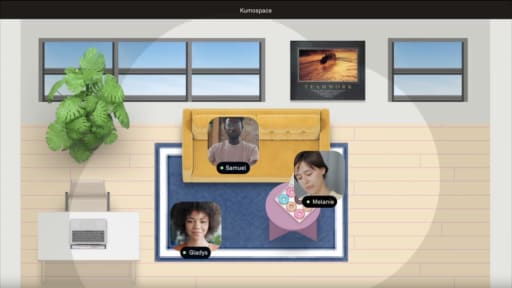
Kumospace supports performance improvement plans by creating a structured, consistent environment for ongoing communication between managers and employees. Instead of relying on scattered meetings and fragmented notes, teams can use a dedicated virtual office for weekly PIP check-ins, where goals, metrics, and progress are reviewed in real time. This consistency reduces ambiguity, keeps both sides aligned, and ensures that expectations and feedback are clearly documented throughout the process.
The platform’s virtual office setup makes it easier to maintain accountability and transparency over the full 30–90 day PIP cycle. Managers and employees can meet in the same persistent space, share screens to review dashboards or documents, and quickly address blockers without waiting for formal meetings. This creates a more continuous feedback loop, which is critical for improvement, especially in remote and hybrid teams where informal, in-person check-ins don’t happen naturally.
For companies looking to run fair, structured, and scalable performance management processes, Kumospace helps turn PIPs from one-off documents into active workflows. It enables more consistent communication, clearer documentation, and faster course correction, all of which increase the likelihood of successful outcomes while reducing risk and misalignment.
PIP Templates, Examples, and Tools
Structured templates save time and improve consistency across teams and business operations. A standard pip template includes:
- Employee info and employment details
- Role summary and reporting structure
- Performance history from the last 3-12 months
- Specific areas for improvement with evidence
- SMART goals with clear timelines
- Support plan and resources provided
- Timeline with review dates and check-in schedule
- Potential outcomes and consequences
- Signature lines for acknowledgement
Sample 60-Day PIP Example Overview
Employee: Account Executive, Q1 2026
Performance Gap: Achieved 40% of quarterly target versus 90% expected standard.
Root Cause: Low activity volume (20 daily calls vs. 50 required), weak discovery questioning
Goals:
- Complete discovery training module by Week 2
- Achieve 50 daily outreach calls starting Week 3
- Generate 15 weekly qualified leads by Week 6
- Reach 80% pipeline conversion by Week 8
Check-ins: Weekly Tuesday meetings in Kumospace, reviewing CRM exports
Potential Outcomes at Day 60:
- Full recovery to 90%+ quota: PIP closed successfully
- Partial improvement to 80%: 30-day extension considered
- No measurable improvement: Escalation to HR for disciplinary action
Summary
A performance improvement plan (PIP) is a structured, time-bound document, typically 30 to 90 days, used to address ongoing performance issues with clear expectations, measurable goals, and defined support. Unlike informal feedback, a PIP formalizes the process by documenting performance gaps, outlining specific actions for improvement, and establishing regular check-ins. When used correctly, it’s a collaborative development tool that aligns managers, employees, and HR around a shared plan, rather than a shortcut to termination.
Effective PIPs rely on SMART goals, consistent feedback, and proper documentation to track progress and ensure fairness. They are best used when there’s a clear, sustained gap between expectations and performance, not for misconduct or role misfit. Success depends on combining accountability with support, such as training, mentorship, and regular reviews, while maintaining transparency about potential outcomes. When managed well, PIPs can improve performance, protect organizations legally, and reinforce a culture of continuous feedback and accountability.
Frequently Asked Questions
Most PIPs run 30–90 days. Use 30 days for straightforward attendance or behavioral issues, and 60–90 days for complex skill or performance gaps. Shorter than 30 days feels rushed and may appear unfair, while longer than 90 days drags out uncertainty for everyone. Match the duration to how long it reasonably takes to demonstrate consistent improvement in that specific role.
A PIP is not automatically a termination notice; it’s a structured plan signaling that performance is seriously below expectations and needs urgent improvement. Many employees complete PIPs and continue their employment. Success rates range from 25-50% when goals are achievable and support is genuine. Ask questions, seek feedback actively, and use every resource offered during the pip period.
Employees can decline to sign, but the company may still proceed and document that the acknowledgement was refused. Signatures typically indicate receipt and understanding, not agreement with every detail. Employees can often attach written comments sharing their perspective. Discuss concerns openly with HR before refusing; this avoids unnecessary escalation while ensuring the employee’s voice is heard.
PIPs for remote staff follow the same structure but rely more heavily on digital tools for documentation and communication. Schedule consistent video check-ins, use shared documents for tracking goals, and host recurring PIP meetings in a dedicated virtual office like Kumospace. Clear written expectations and time-zone-aware scheduling prevent misunderstandings at a distance. Document everything in writing since casual hallway conversations aren’t possible.
In most organizations, employees can request copies of their PIP documents, including the original plan and written progress notes from check-ins. Policies vary by company and country, so check with HR or your employee handbook for specific rules. Keep your own notes after each meeting to maintain a personal record of expectations, feedback, and agreed actions throughout the pip process.