Clear communication at work isn’t just about speaking well, it’s about being understood, understanding others, and building trust in every interaction. When communication breaks down, even simple messages can create confusion, slow decisions, and strain relationships. When it works, teams move faster, collaborate better, and avoid unnecessary friction.
The good news is that communication is a skill you can improve quickly with the right habits. In this guide, we’ll break down what effective communication actually looks like, why it matters in modern workplaces, and practical steps you can apply immediately, whether you’re writing an email, leading a meeting, or collaborating in tools like Kumospace.
Key Takeaways
- Better communication means delivering clearer messages, practicing deeper listening, and building trust in both personal relationships and professional settings.
- Active listening, nonverbal cues, and emotional regulation are the three fastest ways to see noticeable improvement this week.
- Tools like video platforms (such as Kumospace for virtual offices) can recreate face-to-face nuance when you can’t be in the same room.
- Preparation, clarity, and empathy form the foundation of effective speaking, writing, and presenting, building trust is essential for effective teamwork and problem-solving.
- The concrete, step-by-step tips below can be applied in your next conversation, email, or meeting today.
What Does “Better Communication” Actually Mean?

Last Tuesday, a project manager sent a three-sentence email about shifting deadlines. By Friday, four people had different interpretations, two meetings were scheduled unnecessarily, and one team member felt blamed for something they didn’t do. No one had bad intent, the message simply wasn’t clear enough for the audience.
Better communication goes beyond talking well. It means being understood, understanding others, and reducing unnecessary conflict. Creating a positive organizational culture based on transparency, trust, and open dialogue enhances communication effectiveness and makes colleagues more receptive to your ideas.
Concrete outcomes of strong communication skills include:
- Fewer email back-and-forths
- Smoother, shorter meetings
- Faster decisions with clearer ownership
- Stronger relationships built on respect
This contrasts sharply with information dumping, where someone unloads data without considering timing, channel, or who’s receiving it. Being clear and specific about requests contributes to effective communication; vague messages force people to guess. In hybrid and remote teams using tools like Kumospace for day-to-day collaboration, communication quality directly affects both productivity and trust.
Understand What’s Getting in the Way
Most people aren’t inherently bad at communication. They’re blocked by stress, ingrained habits, or unclear thinking in fast-paced environments.
When you’re stressed or emotionally overwhelmed, you’re more likely to misread other people and send confusing nonverbal signals, which leads to misunderstandings and conflicts. That sarcastic tone you detected in a Slack message? It might have been neutral text filtered through your anxious brain.
Common communication barriers include:
- Digital distractions: Notifications interrupt focus every six minutes on average, causing missed details and repeated conversations
- Mismatched styles: Direct communicators clash with indirect ones, fueling conflict in multicultural teams
- Cognitive overload: Too many messages, too little processing time
Recognizing when you’re becoming stressed is crucial. Physical signs include tight muscles, shallow breathing, and clenched hands, signals that you may need to calm down before continuing a conversation.
Quick self-audit: For one day, notice when you check your phone mid-conversation, interrupt someone, or rush through responses. The patterns will reveal where to focus first.
Become an Active Listener
Listening more effectively is the fastest way to communicate better without learning any new frameworks. Research indicates that during conversations, people only hear about half of what the other person says. Active listening helps you capture the full message.
Active listening means paying undivided attention to the speaker, understanding their perspective, and providing appropriate responses. This creates a positive atmosphere for open dialogue. When practicing active listening, maintain eye contact, avoid interrupting, and show genuine interest in what the other person has to say.
Practical behaviors to adopt:
- Put your phone face down
- Close unnecessary laptop tabs
- Maintain natural eye contact in person and on video calls
Mini-challenge: In your next conversation, spend the first two minutes asking questions and summarizing before you offer your opinion.
Simple Habits to Practice Active Listening
This tactical checklist can be skimmed before any important meeting:
- Wait 1-2 seconds after someone finishes speaking before replying, the 3-2-1 method suggests listening for 3 seconds, processing for 2, and responding for 1 to promote thoughtful responses
- Paraphrase what you heard: Use the “Listen-Paraphrase-Ask” technique, confirm understanding with “So you’re saying…” before asking follow-up questions
- Ask one clarifying question: “What would a good outcome look like for you here?”
- Use small cues: Nodding, “I see,” or “That makes sense” signal engagement on video and in person
- Embrace strategic silences: Using pauses provides space for others to process information and reflects your confidence
- Ask open-ended questions: These encourage more in-depth conversation rather than yes/no dead ends
Minimize distractions by putting away phones and closing internal dialogues to give full attention during conversations.
Pay Attention to Nonverbal Communication
Much of what we hear is actually body language, facial expressions, and tone, not just the words. Nonverbal cues can have between 65 and 93 percent more impact than the spoken word, and people are more likely to believe nonverbal signals over spoken words if the two are in disagreement.
Tone accounts for approximately 38% of how a message is received, so aim for a calm, even, and firm voice. The remaining elements include:
|
Nonverbal Element |
What It Communicates |
|
Posture |
Confidence or defensiveness |
|
Eye contact |
Engagement or avoidance |
|
Facial tension |
Stress or ease |
|
Gestures |
Emphasis or nervousness |
|
Speaking pace |
Control or anxiety |
|
Voice volume |
Authority or uncertainty |
Inconsistent body language can lead to misunderstandings; if your body language contradicts your words, your listener may feel that you are being dishonest. Saying “I’m fine” while avoiding eye contact creates confusion and erodes trust.
Even in 2D formats like Zoom or Kumospace, posture, expression, and tone remain visible and powerful. Record a practice presentation to notice your own unconscious habits.
Improving How You Read Nonverbal Signals
This subsection focuses on reading others, not performing yourself.
Scan for patterns rather than fixating on single gestures. Tense shoulders combined with clipped answers suggest frustration, but tense shoulders alone might just mean a stiff chair.
The “50/70 rule” provides guidance: maintain eye contact for 50% of the time when speaking and 70% when listening. However, culture, age, and personality all affect what feels comfortable. Avoid jumping to conclusions.
When nonverbal signals seem off, check in verbally: “I’m noticing you seem tense, do we need to slow down?” Cameras off in virtual meetings may signal fatigue or privacy needs rather than disrespect.
Developing the ability to understand and use nonverbal communication helps you connect with others, express what you really mean, and navigate challenging situations.
Improving How You Send Nonverbal Signals
Your body language should reinforce your words, not undermine them. Nonverbal signals should match verbal messages to avoid confusion or contradiction.
Key practices:
- Adopt an open posture, open body language, such as keeping arms uncrossed, signals receptivity in communication
- Face the person or camera directly
- Speak at a measured pace with a calm, steady tone, especially when sharing difficult feedback
- Use small, genuine smiles and nods to put others at ease
In virtual environments, check your video tile in Kumospace or other platforms briefly at the start to ensure lighting and angle support clear, friendly cues.
Keep Stress and Emotions in Check

People rarely communicate well when flooded with emotion, even if they know all the right techniques. The body’s fight, flight, or freeze response shows up clearly: raised voice, rapid speech, shutdown, or sarcasm.
In high-stakes settings like performance reviews, negotiations, or difficult conversations, preparation plus emotional regulation is crucial. The effects of stress in the workplace can impair judgment, increase reactivity, and strain communication, making it harder to stay composed. Taking a breather during heated discussions helps prevent emotional responses from escalating.
Grounding strategies that work:
- Slow breathing: Inhale for 4 counts, hold for 7, exhale for 8
- Physical awareness: Feel your feet on the floor to anchor your presence
- Brief reset: Look away from the screen momentarily to interrupt the stress response
Using the “I think vs. I feel” test helps distinguish between thoughts and emotions in communication. Using “I” statements frames messages around personal feelings and needs rather than blaming others, “I felt overlooked” lands differently than “You ignored me.”
Set boundaries when needed. Pausing a heated conversation and rescheduling for later the same day once everyone has cooled produces far better outcomes.
Be Clear, Concise, and Intentional
Clarity and brevity are essential in an age of overloaded inboxes and constant chat messages. Clear and concise communication is crucial in getting your message across effectively, avoiding jargon, complex sentences, or unnecessary details that might confuse your audience.
The key to powerful and persuasive communication is clarity and, when possible, brevity. This involves defining your goals and audience before engaging.
Before you speak or write, define your goal:
- Inform: Share updates or data
- Decide: Reach a conclusion together
- Request: Ask for specific action
- Connect: Build relationship
When communicating, be clear and direct by fully describing or explaining using specific details rather than assuming your audience knows something specific. Trim filler words and front-load your main point in the first few sentences.
In real-time tools like Kumospace, people can quickly clarify misunderstandings with a 3-minute conversation instead of a long email trail, reducing resolution time significantly.
Preparing Before You Speak or Write
Use this quick planning checklist before important talks, meetings, or emails:
|
Before You Communicate |
Action |
|
Key points |
Jot down 1-3 points with one example each |
|
Anticipate questions |
Prepare honest, concise answers for 2-3 likely objections |
|
Choose the right medium |
Using richer communication mediums like face-to-face or video calls is recommended for complex or sensitive topics |
|
Review tone |
Reread important messages slowly, checking for emotional undertones |
Preparing key goals and anticipating potential questions improves communication effectiveness in important discussions. In professional settings, focus on clarity, conciseness, and structured feedback to foster collaboration.
Kumospace for Better Workplace Communication
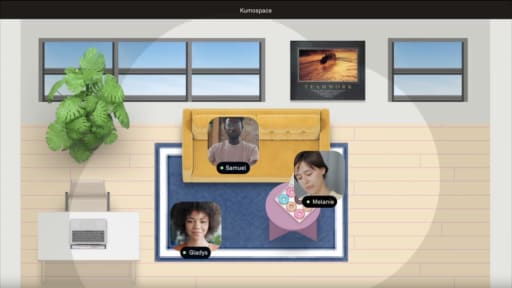
Kumospace improves communication through spatial audio, which lets conversations flow naturally based on proximity. Instead of everyone speaking in the same audio channel, you hear only the people “near” you, just like in a real room. This makes group discussions clearer, reduces interruptions, and allows for side conversations without breaking the overall meeting. The result is more focused communication and fewer misunderstandings compared to traditional video calls.
The virtual office environment in Kumospace adds another layer by giving teams a shared, persistent space to interact throughout the day. Instead of scheduling every interaction, people can move between rooms, start spontaneous conversations, and collaborate in real time. This setup encourages faster clarification, more natural teamwork, and stronger alignment, especially for remote and hybrid teams that need ongoing, low-friction communication.
For companies looking to improve collaboration without adding more meetings, Kumospace offers a practical way to make communication more immediate, contextual, and human. It helps teams spend less time coordinating and more time actually working together.
Build Confidence and Keep Improving
Better communication is a skill built over months and years, not a fixed personality trait. Confidence grows through repetition: leading small meetings, asking questions, speaking up in low-risk settings.
Being assertive means expressing your thoughts, feelings, and needs in an open and honest way, while standing up for yourself and respecting others. To improve your assertiveness, value yourself and your options; they’re as important as anyone else’s.
Practical confidence builders:
- Record yourself during a practice presentation and review for filler words, speed, and clarity
- Ask trusted colleagues for specific feedback: “Was anything unclear?” “Did I seem rushed?”
- Use daily touchpoints, like stand-ups in Kumospace or weekly check-ins, as ongoing practice labs
Regularly practicing communication skills through engaging interactions facilitates personal development. Practice makes perfect when you’re consistent about improving one small thing at a time.
Practical Ways to Practice Every Week
Schedule these practices on your calendar:
- One intentional meeting per week: Prepare more thoroughly than usual, then reflect afterward on what worked
- Join or start a peer group: Practice short presentations or difficult conversations and give each other constructive criticism
- Experiment with storytelling: Using a brief real example when explaining complex ideas, a good story makes concepts stick (research shows stories boost retention 22x over facts alone)
- Track one 30-day goal: Examples include “no multitasking while listening” or “ask one clarifying question per meeting”
The more effective communicator isn’t born, they’re built through deliberate, consistent practice in everyday life.
Summary
Effective workplace communication is about being understood, listening actively, and building trust, not just speaking clearly. When communication works, teams move faster, avoid confusion, and collaborate more effectively, especially in remote and hybrid setups using tools like Kumospace. The biggest improvements come from simple habits: active listening, clear and concise messaging, awareness of tone and body language, and managing emotions during conversations.
Strong communicators are intentional, they know their goal, choose the right channel, and keep messages focused. Small actions like asking clarifying questions, summarizing key points, and avoiding distractions can quickly improve how others perceive you. Over time, consistent practice builds confidence, strengthens relationships, and makes everyday interactions more productive and less stressful.
Frequently Asked Questions
Small changes like pausing before replying or summarizing what you heard can improve conversations within a few days. Deeper habit changes, managing emotions under pressure or restructuring how you speak, typically take a few months of regular practice. Consistency in everyday chats matters more than intensity in occasional presentations.
Choose a single habit: don’t multitask when someone is speaking to you. Apply it in every conversation today. Pair this with one clarifying question per important interaction to confirm you understood the other person’s intention. These two changes alone can transform how people experience talking with you.
Establish clear norms for when to use chat, email, and live video to reduce confusion. Make space for quick, informal check-ins in a virtual office tool like Kumospace so small misunderstandings don’t escalate into long email threads. Use video for sensitive topics so tone and nonverbal cues are easier to read and adjust in real time.
Model the behaviors you want to see: active listening, clear summaries, and calm tone, even when the other person is brief or abrasive. Ask open, neutral questions like “Can you walk me through what you’re expecting?” For ongoing issues, have a private, respectful conversation focused on shared goals rather than blame.
Yes. When emotions are very high, after conflict, negative feedback, or bad news, pause before responding. Wait long enough to think clearly, perhaps 20-30 minutes or until the next morning, for non-urgent issues. If needed, briefly acknowledge receipt: “I’ve seen this and will respond later today,” so the other person knows you’re engaged without forcing a premature response.