Event planning has always been a team sport, but the tools teams use to coordinate the work haven't always reflected that reality. For years, event logistics lived in a patchwork of spreadsheets, email threads, shared folders, and one person's memory. The venue confirmation is in someone's inbox. The speaker schedule is on a Google Sheet. The catering contract is in a folder that three people have access to, and nobody remembers the naming convention for.
Event management computer software exists to consolidate that chaos. The best platforms for collaborative event planning centralize registration, vendor coordination, timeline management, budgets, team communication, and attendee engagement into a single system where everyone involved can see the same picture and act on the same information.
But the landscape of event planning systems has expanded significantly, and the right choice depends on your event type, team size, and whether you need an all-in-one event organizer program or a focused tool that handles one part of the process exceptionally well. This guide breaks down the major categories of event planning software, highlights the platforms that collaborate best, and helps you figure out which type of tool fits your situation.
Key Takeaways
- The best collaborative event planning platforms centralize tasks, timelines, vendor coordination, and attendee management so that every team member works from the same source of truth.
- All-in-one platforms like Cvent and Bizzabo handle the full event lifecycle from venue sourcing to post-event analytics, while project management tools like monday.com and ClickUp offer flexible frameworks that adapt to any event type.
- The right event management computer software depends on whether you're planning large-scale conferences, intimate corporate events, virtual gatherings, or community meetups, because each format has different coordination requirements.
- Registration-focused tools like Eventbrite work well when ticketing and sign-ups are the primary need, but they don't replace the project coordination layer that cross-functional event teams require.
What Event Planning Software Actually Needs to Do

Before evaluating specific platforms, it helps to define what "collaborative event planning" actually requires from a software perspective. The word "collaborative" is doing important work here because it separates true planning platforms from tools that simply manage a task list or process registrations.
A collaborative event planning platform should make it easy for multiple team members to manage different parts of an event while staying aligned. Strong task management, shared documents, timeline tracking, and clear visibility into progress help teams coordinate without relying on constant messages or status updates.
Registration and ticketing are important, but they are only one part of event planning. The best event management systems bring planning, communication, assets, vendors, and timelines together in one place, reducing the fragmentation that often slows teams down.
All-in-One Event Management Platforms
All-in-one platforms handle the broadest range of event planning needs in a single system. They're designed for teams that want to manage everything from initial planning through post-event reporting without switching between tools.
Cvent
Cvent is the most established enterprise event management computer software on the market, offering venue sourcing, registration, attendee management, event marketing, onsite check-in, and post-event analytics in one platform. It handles the full lifecycle for conferences, trade shows, and large corporate events with the depth that complex, multi-track events demand.
Cvent's venue sourcing tool is a standout feature that lets planners search, compare, and request proposals from thousands of venues directly within the platform. For teams that run multiple events per year across different cities, this eliminates the back-and-forth of venue research and consolidates the negotiation process.
The tradeoff is complexity and cost. Cvent's pricing is not publicly listed and requires a custom sales quote. Based on independent marketplace data, annual platform licenses typically range from $19,550 to $79,000+, with additional per-registrant fees of $7 to $12 per attendee per event and a one-time implementation fee of $5,000 to $50,000 depending on integration complexity. Enterprise users with high event volume regularly report total annual expenditures exceeding $100,000. The platform has a steeper learning curve than lighter-weight tools, and some users report that support response times can vary. It's the right choice for organizations running large-scale events where the depth of features justifies the investment and the learning curve.
Bizzabo
Bizzabo positions itself as an event experience platform, emphasizing attendee engagement and data-driven event marketing alongside the standard planning and logistics features. It handles registration, event websites, email campaigns, networking features, and analytics with a modern interface that feels more intuitive than legacy enterprise platforms.
Where Bizzabo stands out is its focus on connecting event data to marketing outcomes. The platform integrates with CRM systems like Salesforce and HubSpot, so every registration, session attendance, and networking interaction flows into the marketing pipeline. For marketing teams that need to justify event spend through pipeline attribution, this connection between event activity and business results is a significant advantage.
Bizzabo works well for mid-market to enterprise organizations running branded conferences, customer events, and demand generation programs. Custom pricing means you'll need to talk to sales for a quote, which can be a friction point for smaller teams trying to evaluate options quickly.
Whova
Whova covers event management and attendee engagement with a particular strength in its mobile event app. The app supports agenda browsing, networking, live polling, session Q&A, and social feeds, which makes it a strong choice for events where attendee experience and interaction are priorities.
On the planning side, Whova offers registration, email campaigns, exhibitor management, and analytics. It's less comprehensive than Cvent on venue sourcing and complex logistics but more approachable in terms of setup time and cost. Whova is a good fit for associations, academic conferences, and community events where attendee engagement features matter as much as back-end logistics.
Project Management Platforms for Event Planning

Not every event needs a dedicated event management platform. For teams that already use project management software, adapting that tool for event planning often makes more sense than buying a separate system. The flexibility of project management platforms means they can handle event coordination alongside the team's other work without adding another login to the stack.
Monday.com
Monday.com approaches event planning through visual coordination rather than event-specific workflows. Teams use boards, status columns, and timeline views to manage tasks, track vendor progress, assign owners, and monitor deadlines. The platform's automation features handle repetitive actions like notifying team members when a task status changes or sending reminders as deadlines approach.
For cross-functional event teams, monday.com's strength is making progress visible without requiring everyone to attend a status meeting. A board set up for a conference might have groups for venue logistics, speaker management, marketing and promotion, registration, and day-of operations. Each group contains the tasks relevant to that workstream, and project managers can see the full picture from a single dashboard.
Monday.com doesn't handle registration, ticketing, or attendee management natively, so teams using it for event planning typically pair it with a registration tool like Eventbrite or a custom form solution. The platform's flexibility is both its strength and its limitation: you can build virtually any workflow, but you're building it from scratch rather than starting with event-specific templates.
ClickUp
ClickUp offers a similar level of flexibility to monday.com with a broader set of built-in features, including docs, whiteboards, goals, and time tracking. For event teams that need to manage not just tasks but also the documentation, creative briefs, and meeting notes that surround those tasks, ClickUp's all-in-one workspace reduces the number of tools in the stack.
The platform's hierarchy of spaces, folders, lists, and tasks maps well to event planning structures. A space for the event, folders for each major workstream, lists for subtopics within each workstream, and tasks for individual to-dos. Templates can be saved and reused for recurring events, which saves significant setup time for teams that run similar events on a regular cadence.
Wrike
Wrike is particularly strong for event planning teams that need approval workflows and executive visibility. The platform's request forms, custom workflows, and reporting dashboards support the kind of structured coordination that larger organizations require for events with multiple approval layers and stakeholder reporting obligations.
G2 review patterns suggest that Wrike handles shared ownership, shifting priorities, and executive reporting well, which makes it a natural fit for corporate events with long planning timelines and cross-departmental involvement.
Registration and Ticketing Platforms
If your primary need is managing attendee registration, ticket sales, and event promotion rather than full project coordination, a registration-focused tool may be the right starting point.
Eventbrite
Eventbrite is the most widely recognized event registration and ticketing platform, offering a straightforward setup process for creating event pages, selling tickets, and managing attendee lists. It handles both free and paid events and supports promotional tools like discount codes, early bird pricing, and social sharing.
Eventbrite's strength is its simplicity and its built-in audience. The platform's marketplace gives events discoverability that standalone event pages don't have, which can be valuable for community events, workshops, and public gatherings. For corporate or private events, this public-facing aspect may be less relevant.
The platform doesn't offer project management, vendor coordination, or team collaboration features, so event teams using Eventbrite typically need a separate tool for internal planning. It's best suited for events where registration and ticketing are the primary coordination challenge and the planning logistics are manageable through existing project management tools.
Splash
Splash differentiates itself through design. The platform lets teams build visually polished event pages, registration forms, and email campaigns without coding or design skills. Its deep CRM integrations with Salesforce and HubSpot make it particularly appealing for marketing teams that treat events as a pipeline generation channel and need every attendee interaction to flow into their existing marketing automation stack.
Splash works best for brand-conscious organizations running recurring event programs where the quality of the attendee-facing experience directly reflects on the company. If your events are internal or logistics-heavy rather than brand-forward, the design emphasis may not justify the investment.
Virtual and Hybrid Event Platforms

For events that include virtual components, whether fully online or hybrid with both in-person and remote attendees, purpose-built virtual event platforms offer features that general-purpose tools don't cover.
Platforms like vFairs and Hopin specialize in virtual conferences with networking lounges, virtual exhibitor booths, breakout sessions, and live streaming integration. These tools handle the unique coordination challenges of virtual events, including managing concurrent sessions across time zones, facilitating meaningful networking between remote attendees, and providing exhibitors with engagement analytics.
The decision between a virtual event platform and a general event management tool depends on how central the virtual component is to your event strategy. If virtual is a nice-to-have add-on to a primarily in-person event, most all-in-one platforms offer basic live streaming integration. If virtual attendance is a core part of the experience, a dedicated platform provides the depth of features needed to make the online experience feel intentional rather than tacked on.
How to Choose the Right Event Planning System
Choose a platform based on your event type, team size, and coordination needs. Large conferences often benefit from all-in-one event management software, while smaller or recurring events may only need a project management tool paired with registration software.
Prioritize collaboration features such as task assignments, shared files, status tracking, and team visibility. Fast communication is essential when handling vendor changes, speaker updates, or attendee requests.
Finally, consider integrations and day-of-event support. The best platforms connect with your existing tools and help manage onsite or virtual experiences through features like attendee tracking, check-in, session management, and event communications.
Keeping Event Planning Teams Connected

Successful events depend on more than timelines and task lists. Planning teams constantly need to make quick decisions, confirm details with vendors, coordinate speakers, and resolve last minute issues. When communication is spread across emails, chat threads, and meetings, even simple updates can slow progress.
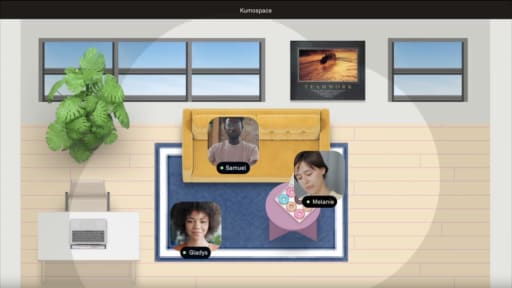
Kumospace helps event teams stay aligned by combining a Virtual Office with collaboration tools built for real-time coordination. Team members can quickly connect with colleagues, run planning huddles, share screens to review event schedules, and use the Online Whiteboard to map timelines, brainstorm event layouts, or organize responsibilities. Spatial audio also makes conversations feel more natural, allowing smaller discussions to happen simultaneously without disrupting the entire team.
Instead of waiting for the next scheduled meeting, planners can collaborate as questions arise, keeping projects moving and ensuring everyone stays connected throughout the event planning process.
Frequently Asked Questions
Cvent is the most established platform for large-scale conferences, offering venue sourcing, registration, attendee management, onsite check-in, and post-event analytics in one system. Bizzabo is a strong alternative for organizations that prioritize attendee engagement and marketing pipeline integration alongside comprehensive logistics management.
Project management platforms like monday.com, ClickUp, and Wrike work well for event planning, especially for cross-functional teams that need flexible task management, timeline visibility, and team coordination. They don't handle registration or ticketing natively, so teams typically pair them with a tool like Eventbrite for attendee management.
A collaborative event planning system should support multi-user task management with assigned owners and deadlines, real-time visibility into progress across workstreams, document and asset sharing, automated notifications when task statuses change, and either built-in messaging or tight integration with your team's existing communication tools.
Choose an all-in-one platform when your events involve complex logistics like venue management, multi-track agendas, sponsorship coordination, and post-event analytics that require a unified system. Choose a registration tool when ticketing and sign-ups are your primary need, and you already have project management and communication tools that handle the internal planning coordination.
Distributed event planning teams need a combination of a shared project management or event platform for tracking tasks and deadlines alongside a real-time collaboration environment for the fast, informal communication that event logistics demand. The project tool keeps everyone aligned on what needs to happen, while the collaboration environment ensures that quick decisions and clarifications happen without waiting for scheduled meetings.