Illustration of file folder with Employee Benefits text, representing outsourcing HR and compensation management.

Employee Benefits Outsourcing and What It Costs Per Employee

By Sammi Cox

Employee benefits outsourcing has become a strategic priority for organizations navigating growing complexity in workforce management. As regulations evolve, costs rise, and teams become more distributed, many companies are turning to specialized partners to handle benefits administration more efficiently and accurately. What was once seen as a back-office function is now a key driver of employee experience, compliance, and operational performance.

This article explores how employee benefits outsourcing works, what it includes, and why adoption is becoming more common. From comprehensive coverage across health, retirement, and compliance programs to advanced models like Total Benefits Outsourcing, organizations are rethinking how they deliver and manage benefits at scale.

Key Takeaways

  • Outsourcing benefits administration can cover health and welfare plans, retirement programs, HSAs and FSAs, voluntary benefits, COBRA, ACA reporting, and employee support services, while advanced models like Total Benefits Outsourcing unify these under a single platform.
  • Key advantages include reduced administrative burden, lower compliance risk, improved employee experience, and more predictable costs, allowing HR teams to focus on strategic priorities like engagement, development, and retention.
  • Access to advanced technology platforms improves efficiency, and pairing an outsourced partner with tools like Kumospace makes communication and education easier for distributed teams.

What Is Employee Benefits Outsourcing?

Employee benefits outsourcing means partnering with a specialized provider to manage all or part of your benefits administration. This includes medical and dental coverage, 401(k) retirement plans, life and disability insurance, wellness stipends, and leave programs. The outsourced provider essentially becomes an extension of your HR department, handling day-to-day operations so your internal resources can focus on strategic initiatives.

Outsourcing can be partial or comprehensive:

  • Partial outsourcing targets high-pain areas like COBRA administration, ACA reporting requirements, or enrollment management
  • Total benefits outsourcing (TBO) covers all benefit plans and vendors through one integrated contract

Outsourced providers typically integrate with HRIS and payroll systems like Workday, UKG, or ADP. They automate eligibility determinations, enrollment processes, data transfers between carriers, billing reconciliations, and compliance tracking.

How outsourcing differs from other models:

  • Benefits administrator: Handles daily processing without strategic design input
  • PEO (Professional Employer Organization): Co-employs workers and bundles benefits with payroll, ideal for small businesses under 100 employees seeking scaled rates
  • Broker: Focuses on plan selection and renewals rather than ongoing administration

The remote and hybrid work surge since 2020 has accelerated adoption. Distributed teams across multiple states introduce layered compliance challenges, making in-house management difficult for lean HR departments.

How the Total Benefits Outsourcing (TBO) Model Works

Total Benefits Outsourcing is a single-vendor model that administers health and welfare, retirement, savings accounts, and voluntary benefits through one integrated contract and platform. Instead of juggling multiple point solutions, one for your 401(k), another for medical, another for commuter benefits, your HR team works with one primary partner.

Core TBO components include:

  • One master services agreement with clear service level agreements for uptime, response times, and error rates
  • Unified HRIS/payroll integration with real-time eligibility updates
  • Centralized eligibility rules engine syncing with your systems for hires, terminations, and life events
  • Single employee portal and call center for all benefits information and customer support

The data advantages are significant. Consolidated data repositories can reduce duplicate feeds and file errors by up to 50% in some implementations. This creates a single source of truth for HRIS and payroll integrations.

Example scenario: A 2,000-employee mid-market firm consolidates three vendors, a health carrier, retirement provider, and FSA administrator, into one TBO platform over 9 to 12 months. Initial discovery maps legacy processes, followed by integration testing with parallel runs. Go-live during annual enrollment yields 25% admin time savings and zero compliance violations in the first year.

Benefits of Outsourcing Employee Benefits Administration

The value of outsourcing employee benefits extends beyond cost savings. Companies that outsource benefits administration gain access to experienced professionals, automation tools, and streamlined workflows, reducing the administrative burden on HR teams.

Reduced administrative burden: Outsourcing administrative tasks can free 20 to 30 hours per week for mid-sized companies during peak periods like open enrollment. When outsourcing benefits administration, much of the research and organizing work is off HR’s plate, allowing them to reallocate time to focus on other core activities.

Compliance and risk mitigation: Outsourcing administrative tasks can help manage compliance with complex regulations like ERISA and ACA. Third-party providers keep up with evolving laws like ACA, COBRA, and HIPAA to mitigate compliance risks. Employers can face costly penalties and legal issues if they fail to comply with benefits regulations, and ACA violations alone can reach $100 per employee per day.

Cost efficiency: Outsourcing employee benefits administration can lead to lower overhead costs by reducing the need for additional in-house staff, minimizing compliance errors, and leveraging technology to streamline processes. Providers can negotiate lower insurance premiums and administrative fees through economies of scale, potentially reducing premiums by 5 to 15%.

Improved employee experience: Outsourced providers often offer better service through dedicated support lines and faster query resolution, improving employee satisfaction. Using a single integrated benefits administration platform can improve engagement by providing personalized information and insights across all benefits in one place.

Access to technology: Integrating benefits administration software can streamline operations and reduce the administrative burden on HR teams, allowing them to focus on strategic initiatives rather than manual tasks. Many platforms include self-service portals, mobile access, and chat features that pair well with virtual collaboration spaces like Kumospace for live Q and A sessions.

Scalability: Companies can adjust benefits coverage easily to align with growth or downsizing when outsourcing administration.

Employee Experience and Integrated, Connected Benefits

Employee experience has become a major driver of outsourcing decisions, especially in competitive hiring markets where benefits directly impact talent attraction and retention.

A single, integrated portal lets employees manage medical, 401(k), HSA, and voluntary benefits with one login and consistent navigation. This reduces the frustration of switching between multiple systems with different passwords and interfaces.

Life-event automation transforms how employees interact with benefits:

  • A new parent can seamlessly update medical dependents, 401(k) beneficiaries, and FSA elections without multiple HR contacts
  • Marriage or divorce triggers automatic prompts across all relevant benefit plans
  • Job changes flow through the system without manual intervention

Personalized communications boost engagement. Targeted emails, in-app nudges, and decision-support tools help employees optimize coverage and savings, increasing utilization rates and supporting retention.

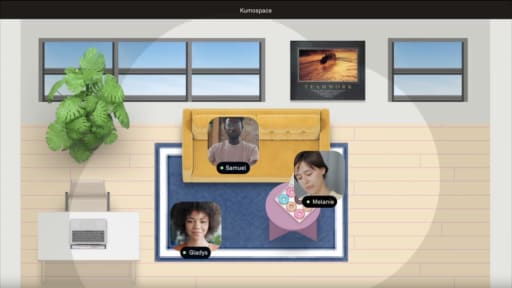
Distributed and hybrid teams can use Kumospace benefits rooms or virtual town halls to walk employees through their outsourced benefits portal during open enrollment and new hire onboarding, creating a more engaging experience than static email instructions.

Outsourcing vs. Co-Sourcing vs. In-House Management

These models differ in how responsibilities split between your internal HR team and external partners.

Full outsourcing means the vendor handles end-to-end daily administration, including eligibility updates, carrier file feeds, call center operations, open enrollment setup, and compliance reporting. This suits lean HR departments or multi-state employers where managing benefits complexity in-house becomes difficult.

Co-sourcing creates a shared responsibility model. The vendor manages processing and systems while internal HR retains control over plan design, exception handling, and approvals. This works well for organizations that want internal oversight while offloading routine administrative tasks.

In-house management relies on internal staff and benefits software to handle everything from plan setup to notices and reporting. This remains viable for very small, single-state teams with dedicated resources, but becomes riskier as regulations grow more complex.

When each approach fits:

  • A 50-employee startup might stick with in-house management using basic software to retain control
  • A 500-employee firm co-sources to blend external expertise with internal autonomy
  • A 5,000-employee multi-state enterprise fully outsources to slash risks, reduce labor costs, and streamline the benefits process

What to Look for in an Employee Benefits Outsourcing Partner

Provider selection is a multi-year strategic decision that should align with your company size, industry, and growth plans. When selecting a partner, evaluate providers based on experience, technology capabilities, and compliance expertise.

Key evaluation criteria:

  • Experience: Look for providers with track record serving your employee count and industry
  • Compliance and security: Choosing a vendor with strong data protection measures is essential to secure sensitive employee information. Request SOC 2 Type II reports, HIPAA audit documentation, and incident response procedures
  • Technology integration: Verify seamless integration with existing HRIS and payroll (Workday, UKG, ADP) and support for single sign-on (SSO)
  • Employee support quality: Evaluate dedicated support lines, resolution times, and multi-channel access
  • Implementation approach: Review phased timelines with clear milestones
  • Pricing transparency: Understand per-employee-per-month fees, implementation costs, and transaction charges

Key factors to consider when choosing a benefits outsourcing partner include their support model, security measures, and flexibility to ensure alignment with your organization’s needs.

Critical questions to ask vendors:

  • How do you handle ACA and COBRA compliance requirements?
  • What’s your average ticket resolution time?
  • How do you support remote workers across multiple U.S. states?

Companies working in virtual environments like Kumospace should confirm that providers support interactive webinars, office hours, and digital materials for remote rollouts.

Implementation Timeline and Change Management

Moving to an outsourced or TBO model typically spans 6-18 months, depending on scope and internal resources.

Major phases:

  1. Discovery and vendor selection (3-6 months): RFP development, vendor demonstrations, due diligence on references, and final selection
  2. Contracting and data migration: Legal framework review, master services agreement finalization, and initial data transfers
  3. System design and integration (3-6 months): Configuration, HRIS/payroll connections, eligibility rules setup
  4. Testing and parallel runs: Validate data accuracy, catch discrepancies before go-live
  5. Go-live and post-launch support: Hyper-care period with intensive monitoring

Ongoing management requires regular performance monitoring and compliance updates.

Change management is critical. Proactive communication, executive sponsorship, manager training, and clear timelines help prevent confusion and resistance. HR teams can use Kumospace to host benefits, office hours, live demos of the new platform, and Q and A sessions during the first open enrollment after the transition.

Is Employee Benefits Outsourcing Right for Your Organization?

This is ultimately a strategic decision balancing cost, complexity, culture, and control. Outsourcing benefits administration allows organizations to streamline operations and focus on their core business functions while ensuring employees receive the support they need.

Indicators that outsourcing deserves serious consideration:

  • Frequent compliance concerns or recent DOL audits
  • Small or overworked HR team where benefits administration consumes 40% or more of time
  • Multi-state or remote workforce creating layered local regulations
  • Rapid growth exceeding 20% year over year
  • Recent penalties or disorganized open enrollment cycles

Potential trade-offs to evaluate:

  • Reduced on-site tactical control over day-to-day decisions
  • Dependency on vendor performance (mitigated by tight SLAs with penalties)
  • Upfront migration costs and change management investment

Staying compliant with benefits regulations requires specialized knowledge that many companies lack, making outsourcing a practical option to reduce risk. It can also help organizations meet federal, state, and local requirements more consistently, which is a significant challenge for many employers.


Conclusion

Employee benefits outsourcing can streamline HR operations, reduce costs, and improve both the employer and employee experience when done thoughtfully. It allows organizations to focus on core business functions while ensuring employees receive the support they need. Moving toward integrated or total benefits outsourcing is a multi-year journey that benefits from careful partner selection, strong change management, and ongoing governance. Start by auditing your current benefits administration workload and error rates to quantify potential value.

Frequently Asked Questions

Transform the way your team works from anywhere.

A virtual office in Kumospace lets teams thrive together by doing their best work no matter where they are geographically.

Headshot for Sammi Cox
Sammi Cox

Sammi Cox is a content marketing manager with a background in SEO and a degree in Journalism from Cal State Long Beach. She’s passionate about creating content that connects and ranks. Based in San Diego, she loves hiking, beach days, and yoga.

Transform the way your team works.