The Forming stage represents the “honeymoon” period of team development. New team members are polite, cautious, and focused on making good first impressions while figuring out basic orientation questions. Energy centers on understanding the project timeline, meeting colleagues, and determining where they fit within the team structure. This stage feels exciting but also generates anxiety as people wonder whether they will fit in and what will be expected of them.
During Forming, predictable behaviors appear across the team. People ask about scope, deadlines, decision-makers, and which tools they will use. They avoid open conflict and look to the designated leader for direction, reassurance, and answers. Conversations stay on nonthreatening topics such as professional backgrounds, previous projects, and surface-level interests. Task accomplishment remains low because much energy goes toward social orientation rather than actual work. Team members learn each other’s names but have not yet developed the trust needed for candid feedback or creative risk-taking.
The emotional landscape during this stage includes excitement about new possibilities, anxiety about fitting in, uncertainty about team expectations, and curiosity about colleagues’ backgrounds and working styles. These emotions are normal and indicate that your team is exactly where it should be.
For example, a cross-functional marketing team formed in March 2026 to launch a new SaaS product spends its first two weeks firmly in the Forming stage. They hold a kickoff meeting to align on the product’s goals, clarify individual roles, and agree on key performance indicators. Team members share their professional backgrounds and discuss preferred communication methods. By the end of week two, everyone knows who is responsible for what, but the team has not yet faced the real disagreements that will surface once work begins in earnest.
The leader’s role during Forming is critical and directive. Set a clear team charter that defines the team’s mission, success metrics, and boundaries. Assign roles and responsibilities explicitly so there is no ambiguity about ownership. Agree on communication channels, specifying which platforms are for urgent issues and which are for general updates, and establish meeting cadence early. Most importantly, model psychological safety from day one by admitting what you do not know and encouraging questions.
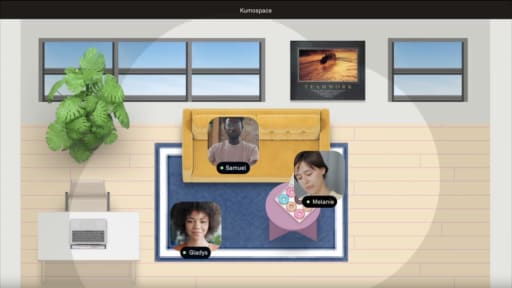
Kumospace supports this stage by hosting virtual kickoffs in shared “floor” spaces where people can move around and interact naturally. Run informal icebreakers in breakout rooms where small groups can connect on a personal level. Create themed spaces, such as “Project Room Alpha,” where team members can drop in to meet colleagues and get oriented to the virtual environment. These early interactions build the foundation for stronger team relationships that will develop in later stages.

The Storming stage begins when initial politeness wears off and real disagreements surface. Team performance often dips as individual members assert opinions, challenge decisions, and compete for influence. The honeymoon is over, and the work of becoming a real team begins.
Storming is visible through tense meetings, edged comments, increased side conversations on chat channels, and open challenges to the leader’s decisions. Disputes emerge between functions, such as engineering clashing with product over technical debt or marketing disagreeing with sales about messaging priorities. Subgroups form as people gravitate toward allies who share their perspective, with some members becoming passive-aggressive while others disengage entirely.
Common sources of friction include unclear decision rights, uneven workloads, conflicting departmental goals, and differences in work styles or communication norms. Strong personalities emerge as people who seemed agreeable during Forming reveal their true preferences and priorities.
For example, an agile software team in Q2 2024 clashes during sprints 3 and 4 over estimation practices and code review standards. The senior engineer wants extensive reviews that slow velocity, while the product manager pushes for faster shipping. Technical debates turn personal, team members take sides, deadlines are missed, and some members avoid certain meetings entirely.
The risks of mishandling Storming are significant. Conflict resolution fails, progress stalls, talented people disengage or leave, and the team fragments into competing factions. Research shows that teams stuck in this stage often underperform or disband without reaching their potential.
Effective leaders normalize conflict as a necessary step, facilitate structured discussions where all perspectives are heard, clarify decision-making frameworks such as RACI or DACI, and re-contract on expectations when initial agreements prove insufficient.
Kumospace can reduce friction during this stage by providing dedicated spaces for resolving conflict. Set up recurring “office hours” where team members can get real-time clarification from leaders without scheduling formal meetings. Use spatial audio for small group debates where proximity determines who can hear, creating natural boundaries for sensitive discussions. Hold conflict-resolution sessions in a neutral virtual space distinct from daily standups, signaling that this conversation focuses on problem solving rather than status updates.

The Norming stage emerges when teams successfully navigate Storming conflicts and stabilize around shared ways of working. The group develops norms, routines, and mutual expectations that are accepted because the team has learned through experience what works.
During Norming, team members volunteer to help without being asked, feedback becomes more constructive, meetings have clear purposes, and common vocabulary and tools are used consistently. People settle into roles that match their strengths, and a shared team identity begins to form, creating a sense of how the team works.
Explicit agreements also crystallize, covering how code is reviewed, how design decisions are documented, what “urgent” means, expected response times, and who must be consulted for major decisions. These community agreements reflect the team’s collective wisdom about effective collaboration.
For example, a distributed customer success team in late 2024 reaches Norming after months of early conflicts. They define a shared playbook for onboarding clients, document response-time SLAs, and agree on escalation procedures, enabling new members to reference these norms rather than learning through trial and error.
The leader’s role evolves to facilitation rather than direction. Leaders ask questions that help the team articulate standards, encourage peer accountability, document norms accessibly, and provide opportunities for regular review and updates.
Teams should codify practices including meeting structures, communication expectations, decision-making authority, feedback and conflict resolution processes, and documentation standards.
Kumospace reinforces Norming by creating dedicated virtual rooms for daily rituals. One room is for standups, another for retrospectives, and a third for focus time where interruptions are discouraged. Recurring spatial layouts signal types of work, teaching team members the meaning of each space. Monthly norm review sessions allow teams to revisit and update agreements, keeping norms active rather than letting them become stale documents.

The Performing stage represents the goal every team strives for, the point where the group operates with high trust, strong collaboration, and consistently high output. Teams in this stage require minimal supervision because they have internalized the norms, built relationships, and developed the skills to solve problems independently. This is where the investment in earlier stages pays dividends.
In a Performing team, you will notice predictable delivery, proactive problem-solving, and cross-functional collaboration that happens without drama. Team members mentor each other, share knowledge freely, and take initiative to improve processes without being asked. There is a rhythm to the work that feels sustainable rather than frantic.
High performance looks like this in practice: A product squad in mid-2026 has shipped three successful releases, uses data rather than opinions to refine their roadmap, and reliably hits sprint commitments without burning people out. When unexpected challenges arise, the team’s goals stay intact because members adapt quickly, redistribute work, and communicate proactively. New team members joining observe a well-oiled machine and absorb its culture through exposure rather than extensive training.
Conflict does not disappear during Performing; it simply gets handled differently. Disagreements are addressed quickly through healthy debate, experimentation, and data-driven decisions rather than personal attacks or political maneuvering. The team has learned that conflict can be productive when channeled appropriately, and they have developed the trust required for candid conversations.
The leader’s focus shifts dramatically during this stage. Instead of directing or even facilitating, you protect the team’s time from outside distractions, remove organizational blockers that slow progress, guard against over-commitment that could trigger burnout and regression to earlier stages, and invest in personal development opportunities like training, stretch assignments, and innovation time. The goal is maintaining high performance while continuing to grow.
Kumospace supports sustained high performance by providing a persistent virtual office where teams can maintain momentum without scheduling everything. Teams use always-on rooms for quick huddles when questions arise, do not disturb zones for deep work requiring concentration, and ad-hoc collaboration spaces where innovation sprints can emerge spontaneously. The ability to see who is available for help without the overhead of formal meeting requests enables the kind of fluid collaboration that characterizes the Performing stage.

The Adjourning stage represents the final stage in the team’s lifecycle, the point where the team disbands, hands over work, or experiences significant membership changes after completing its mission. This stage was added to Tuckman’s original model in 1977 to address the full lifecycle of team development, recognizing that endings matter as much as beginnings.
Common contexts for Adjourning include project-based teams concluding after a go-live date, hackathon groups dispersing after a weekend sprint, consulting engagements wrapping up, or cross-company task forces completing their mandates. In ongoing organizations, this stage sometimes morphs into renewal rather than complete dissolution, as the team’s mission evolves, membership shifts, and a new Forming cycle begins.
The emotional dynamics during Adjourning are complex and often underestimated. Team members experience pride in what they have accomplished together, relief that intense effort is concluding, potential grief or anxiety about what comes next, and nostalgia for team rituals and relationships that will not continue. Failing to acknowledge these emotions leaves people feeling like their contributions did not matter and can negatively impact their readiness for future teams.
Structured closure is essential. Without it, lessons learned disappear, knowledge stays locked in departing heads, and team members carry unresolved feelings into their next assignments. The team’s mission deserves proper recognition, and sharing lessons ensures that organizational learning persists beyond the team’s lifespan.
Consider this example: A cybersecurity incident-response team formed 90 days earlier to address a major breach reaches its Adjourning stage. They run a formal lessons-learned session documenting what worked, what did not, and what should change for future incidents. Response playbooks are archived in accessible locations, key relationships are transitioned to permanent security staff, and the team holds a recognition event celebrating their intense, successful collaboration under pressure.
Key closure activities include review, a retrospective on what worked and what did not; document, capturing knowledge, processes, and decisions for future reference; celebrate, recognizing contributions and achievements; and transition, ensuring continuity of relationships and responsibilities.
Kumospace facilitates meaningful closure by hosting virtual wrap-up ceremonies in custom-designed rooms that reflect the team’s journey. Display a timeline of milestones, share highlights from the project, and create space for informal goodbyes. The ability to gather one more time, even virtually, provides the ritual closure that helps people process endings and prepares them for their next team experience.

Regardless of which development stage your team occupies, members benefit from a consistent virtual environment where collaboration feels natural and human connection remains possible despite physical distance. Kumospace provides this persistent home throughout the team’s lifecycle.
During Forming, Kumospace hosts interactive introductions through virtual tours of the shared office space and social icebreakers that help people learn names, roles, and backgrounds quickly. The spatial nature of the platform, where you can see who is nearby and approach them naturally, accelerates the relationship-building that takes weeks longer in pure video-call environments. As teams enter Storming, leaders can host small-group problem-solving sessions and mediation conversations in separate rooms, using proximity audio to keep discussions focused and confidential while still maintaining visibility into overall team activity.
When Norming arrives, teams establish persistent rooms for daily rituals, such as standups in one space, planning sessions in another, and retrospectives in a third, with visible norms posted on virtual whiteboards that remind everyone of their agreements. During Performing, always-on team rooms enable the spontaneous huddles and quick questions that sustain peak efficiency, while designated focus zones protect deep work from interruption. When Adjourning finally comes, a themed celebration room displays the team’s journey, captures final reflections, and provides space for the informal goodbyes that proper closure requires.