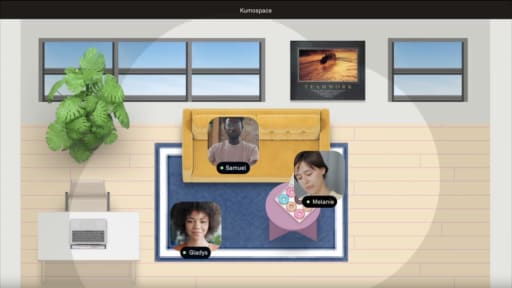
Self-management is the personal ability to regulate your thoughts, emotions, behaviors, and actions to achieve goals without constant external supervision. In practical terms, it means deliberately directing your time, attention, energy, and emotions toward desired outcomes, like meeting Q4 2026 targets or delivering a product launch on schedule.
For example, when a marketing lead manages distractions and emotions during a high-stakes November 2026 campaign, staying focused despite last-minute creative changes and pressure from leadership, that’s self-management in action. She prioritizes tasks, communicates effectively with other team members, and keeps the project moving without waiting for someone to tell her what to do next.
Since the shift to remote and hybrid work, self-management has moved from “nice to have” to essential. Dispersed teams collaborating across tools like Kumospace and Slack can’t rely on managers walking by desks to check progress. Instead, team productivity and team building depend on each person’s ability to self-direct and stay accountable.
Benefits of strong self-management:
- Better focus during deep work and virtual meetings
- Lower stress through proactive planning
- More trust and autonomy from managers
- Clearer communication across time zones

It’s not a single trait but a set of skills that can be developed over time through intentional practice, not fixed personality traits.
The seven core areas include time management, motivation, stress management, adaptability, decision-making, goal alignment, and accountability, with a focus on personal development. Each plays a key role in building effectiveness and consistency at work.
Let’s break down each skill with specific, actionable guidance.
Skill 1: Time management
Time management means intentionally planning and protecting your time to execute important tasks first. It’s the foundation of organizational skills and directly impacts whether you achieve goals or constantly feel behind.
Time management strategies: time blocking (dedicated slots for specific work types), batching similar tasks together, using calendars and task managers, and setting “no meeting” focus windows. Research suggests these approaches reduce context-switching costs by up to 40% in knowledge work.
Example: A manager structures Monday mornings with 9:00–11:00 a.m. for deep work, then 11:00 a.m.–12:00 p.m. for async updates in tools like Kumospace chat and email. This rhythm protects focus while maintaining communication.
Habits to adopt this week:
- Block 2-hour focus windows on your calendar
- Batch email and Slack responses to specific times
- Review tomorrow’s priorities at the end of each day
- Set one “no meeting” morning per week
Skill 2: Self-motivation
Self-motivation means initiating and sustaining effort without constant reminders, especially on long-term or ambiguous complex projects. It’s what keeps you moving when no one is watching.
Intrinsic motivation, driven by meaning, mastery, and impact, outperforms purely extrinsic motivation like deadlines and bonuses over time. When you connect tasks to personal values and professional development, you stay motivated longer.
Example: A customer success lead proactively learns about a new product feature before the April 2026 roll-out. She doesn’t wait for training; she sees mastering the feature as essential to helping clients succeed.
Tactics to build self-motivation:
- Connect daily tasks to your larger goals
- Set micro-deadlines for longer projects
- Make public commitments in team channels to create accountability
Skill 3: Stress management
Stress management is recognizing pressure early and responding with constructive habits rather than burnout-driving behaviors. Managing stress is an essential part of sustainable performance, especially during high-demand periods like end-of-quarter reporting in June and December.
The always-online nature of remote work amplifies stress if left unchecked. Without boundaries, work bleeds into evenings and weekends, eroding well-being and mental health.
Practical stress management actions:
- Take short breaks between back-to-back video calls
- Use “thinking walks” to process challenging problems
- Practice mindfulness or breathing exercises for 2-3 minutes
- Renegotiate unrealistic workloads with your manager early
- Exercise regularly to reduce stress and maintain energy
Skill 4: Adaptability
Adaptability means adjusting plans, tools, and behaviors quickly when priorities or conditions change. In a fast-moving workplace, the ability to navigate challenges without resistance makes you a valuable asset.
Example: A sales team planned in-person events for Q3 2026, but travel budgets were cut mid-year. Instead of complaining, they pivot to virtual events hosted in Kumospace, experimenting with new formats and reaching broader audiences.
Behaviors that demonstrate adaptability:
- Stay curious about changes rather than dismissing them
- Seek context before judging new workflows
- Experiment with new approaches before concluding they won’t work
- Treat disruptions as development opportunities
Skill 5: Decision-making
Decision-making in self-management means choosing a course of action under time and information constraints without freezing or endlessly escalating to others. Good problem-solving requires this skill.
A simple, repeatable process works for most decisions:
- Clarify the goal you’re trying to achieve
- List 2–3 realistic options
- Check key risks for each option
- Decide and commit
- Communicate clearly to stakeholders
- Review outcomes later and adjust
Scenario: A project manager faces a choice ahead of a September 2026 launch: delay the feature by two weeks or reduce scope. Using this framework, she clarifies the goal (launch quality), assesses options, decides on reduced scope, and communicates the rationale clearly.
Skill 6: Goal alignment
Goal alignment means connecting daily tasks to team and company objectives. When you understand how your work serves larger goals, you make better prioritization decisions.
SMART goals (Specific, Measurable, Achievable, Relevant, Time-bound) and OKR frameworks help translate big objectives into actionable work. Goal setting at the weekly level keeps efforts aligned.
Example: A support rep chooses to prioritize building a self-service help center article because it ties directly to reducing ticket volume by 15%, a team OKR. She deprioritizes other requests that don’t serve key goals.
Practices for goal alignment:
- Review team goals weekly before planning your tasks
- Use shared dashboards to track progress
- Ask “Which goal does this task serve?” in planning meetings
- Align daily work with measurable targets
Skill 7: Accountability and personal development
Accountability means owning outcomes and follow-through. Personal development means regularly upgrading your skills and habits through professional development efforts. Together, they create sustainable career growth.
Accountability examples:
- Post clear progress updates before team standups
- Acknowledge mistakes quickly without deflecting
- Document decisions so others can follow your reasoning
Personal development actions:
- Take a negotiation or communication skills course in May 2026
- Join internal mentoring programs
- Lead a pilot project to stretch your capabilities
- Request feedback on specific skill areas
This combination of personal responsibility and growth mindset positions you as someone others want to work with and promote.

These skills can be built over time with consistent practice. Start small, focus on one or two areas, and improve through a simple loop: observe your habits → test small changes → review results → adjust.
Step 1: Assess your current habits
Track a few workdays to understand where your time and energy go. Use simple tools like calendars or notes, and ask: when am I most focused, what distracts me, and how do I handle pressure?
Step 2: Focus on one priority
Choose the skill causing the most friction, like time or stress management, and turn it into a clear 30-day goal (e.g., block daily deep work time). Avoid trying to fix everything at once.
Step 3: Build simple systems
Rely on routines, not willpower. Use calendars, task lists, and recurring check-ins to stay consistent. Keep tools simple and aligned with how your team already works.
Step 4: Reflect and adjust
Do a quick weekly review: what worked, what didn’t, and what to change. Ask for feedback when possible to stay accountable and improve faster.
Step 5: Protect your energy
Your performance depends on rest and balance. Take breaks, set boundaries, and maintain habits like sleep and movement to stay effective over time.