Illustration of two professionals standing beside laptop with envelope and smiling emoji, symbolizing effective sales email subject lines.

Best Sales Email Subject Lines That Get Opened

By Sammi Cox

The subject line is the entire email for most recipients. They'll spend one to three seconds glancing at it before deciding whether to open, archive, or delete. That decision happens before they see your carefully crafted body copy, your compelling CTA, or the case study you attached. If the subject line doesn't earn the open, nothing else matters.

This reality makes good email subject lines for sales one of the highest-leverage skills a marketing or sales team can develop. A subject line that increases open rate by even a few percentage points translates directly into more replies, more meetings booked, and more pipeline generated from the same email volume. The marginal effort of testing and improving subject lines compounds across every campaign and every outreach sequence.

This guide provides sales email subject line examples across cold outreach, follow-ups, promotions, discount campaigns, and re-engagement sequences. It explains what makes certain subject lines work and others fall flat, and gives you frameworks you can apply to your own emails rather than just a list to copy.

Key Takeaways

  • The best email subjects for sales are specific, relevant to the recipient's situation, and create enough curiosity or a value signal to earn the open without resorting to clickbait.
  • Discount email subject lines perform best when the offer is specific and time-bound rather than generic, and when the subject line connects the discount to a relevant need rather than just announcing a price cut.
  • Personalization in subject lines goes beyond inserting the recipient's name. Referencing their company, role, a recent event, or a specific pain point performs significantly better than name-only personalization.
  • Subject lines should be tested continuously through A/B testing, and the learning from each test should feed into a growing playbook of what resonates with your specific audience.

What Makes a Sales Email Subject Line Work

Before diving into examples, understanding the principles behind effective subject lines prevents the common mistake of copying someone else's formula without understanding why it worked for their audience. The best email subjects for sales share a few consistent characteristics.

Specificity Over Vagueness

"Quick question" and "Touching base" are among the most overused subject lines in sales emails, and their open rates reflect it. They communicate nothing about the email's value, which means the recipient has no reason to prioritize opening it. Compare "Quick question" to "Question about your Q3 hiring plan for backend engineers." The second version tells the recipient exactly what the email is about and signals that the sender has done their research. Specificity builds credibility before the email is even opened.

This principle applies equally to promotional emails. "Big sale this week" is forgettable. "40% off project management templates through Friday" gives the reader a reason, a timeline, and a clear picture of what's inside.

Curiosity Without Deception

The best subject lines create a gap between what the reader knows and what they want to know. That gap is what compels the open. But there's a critical line between productive curiosity and misleading clickbait. A subject line that promises something the email doesn't deliver damages trust and teaches the recipient to ignore your future messages.

Effective curiosity looks like "The onboarding change that cut our ramp time in half" rather than "You won't believe this one weird trick." The first creates genuine interest in a specific result. The second triggers spam instincts that most professionals have developed after years of email marketing.

Appropriate Length

Subject lines that display fully on mobile devices, where the majority of email is now read, generally perform better than those that get cut off. For most mobile email clients, that means keeping subject lines under 40 to 50 characters. Shorter subject lines also force the writer to be concise, which usually makes them stronger.

That said, length is a guideline rather than a rule. A slightly longer subject line that's specific and compelling will outperform a short one that's vague. Prioritize clarity and relevance over hitting an exact character count.

Cold Outreach Subject Lines

Cold outreach is the hardest context for subject lines because the recipient has no existing relationship with you and no reason to trust that your email is worth their time. The subject line has to earn credibility and interest simultaneously.

Here are sales email subject line examples that work for initial cold outreach.

"Saw your talk at [conference name], had a question about [topic]" works because it references a specific, verifiable event and signals that the sender isn't mass-blasting a template. The recipient knows immediately that this email is addressed to them specifically.

"[Mutual connection] suggested I reach out about [topic]" leverages social proof from a shared relationship. If the mutual connection is credible, the recipient is significantly more likely to open.

"Idea for cutting [company name]'s [specific metric] by [percentage]" is direct and outcome-focused. It tells the recipient exactly what value the email promises without being vague.

"[Company name] and [recipient's company]: quick thought on [topic]" positions the email as a peer-level conversation between two companies rather than a sales pitch, which lowers the defensiveness that cold outreach typically triggers.

"Noticed [company] just [raised a round / launched a product / expanded to a new market]" ties the outreach to a recent, public event, which demonstrates research and gives the email a timely hook that generic outreach lacks.

The through-line across all of these is that they communicate something specific about the recipient or their company. Mass-applicable subject lines like "Can I get 15 minutes?" or "Partnership opportunity" signal that the sender didn't invest the time to personalize, which makes the recipient unlikely to invest the time to open.

Follow-Up Email Subject Lines

Follow-up emails live or die based on whether the subject line creates a reason to re-engage. The recipient saw your first email and chose not to respond. Your follow-up subject line needs to offer something new rather than simply reminding them that you exist.

"The data behind what I mentioned last week" adds substance to the previous conversation by promising concrete evidence rather than another ask.

"Forgot to mention this about [topic]" feels casual and human, like a genuine afterthought rather than a scheduled follow-up in a sales cadence. It creates curiosity about what was left unsaid.

"Still relevant? [One-sentence summary of your offer]" is respectful of the recipient's time and gives them an easy out if the timing isn't right, which paradoxically increases the likelihood they'll engage because it removes pressure.

"Quick update since my last note" signals that something has changed, which gives the recipient a reason to open that didn't exist when they ignored the first email.

"[First name], should I close the loop on this?" creates a gentle sense of finality that can prompt action from people who intended to respond but never got around to it.

Follow-up subject lines should never be passive-aggressive or guilt-inducing. "Just following up for the fifth time" and "Did you see my last email?" communicate frustration rather than value, which makes the recipient less likely to engage, not more.

Discount Email Subject Lines

Discount email subject lines occupy a specific niche in sales communication. They're typically used in B2C marketing, e-commerce, and SaaS promotional campaigns where a price incentive is the primary driver of action. The challenge is that inboxes are saturated with discount offers, so your subject line needs to stand out from the noise.

The most effective discount email subject lines are specific about the offer, clear about the timeline, and connected to something the recipient cares about beyond just saving money.

"Your plan just got 30% cheaper through Friday" works for SaaS companies because it speaks directly to something the recipient already uses and creates urgency with a clear deadline.

"The [product category] you browsed is now 25% off" combines behavioral targeting with a discount offer, making it relevant to the recipient's demonstrated interest rather than a blanket promotion.

"Last chance: annual plan discount expires at midnight" creates time pressure without being manipulative because the deadline is real and the offer was previously communicated.

"[First name], we saved you $120 on your renewal" frames the discount as something done for the recipient rather than a generic sale, which shifts the psychology from "another promo email" to "someone looked out for me."

"Free upgrade to Pro when you switch by [date]" reframes the discount as an upgrade rather than a price cut, which feels more valuable even when the economics are similar.

Discount subject lines that underperform tend to be vague ("Huge savings inside!"), lack urgency ("Check out our sale"), or feel indistinguishable from the dozens of other promotional emails in the recipient's inbox. Specificity about the offer amount, the product, and the deadline is what cuts through.

When to Use Discount Subject Lines Strategically

Discounts work best when they're targeted and timed. A discount sent to a segment of users whose trials are about to expire has a clear strategic purpose. A discount blasted to your entire list because the quarter is ending and you need to hit a number trains your audience to wait for promotions rather than paying full price.

For B2B companies, discounts are less common but effective when tied to specific events: annual renewal windows, expansion conversations, or competitive displacement situations. The subject line should make it clear that the offer is situational rather than standard pricing.

Re-Engagement Subject Lines

Re-engagement emails target contacts who have gone quiet, whether they're leads who stopped responding, customers who stopped logging in, or subscribers who stopped opening emails. The subject line needs to acknowledge the gap without being awkward about it.

"[First name], a lot has changed since we last spoke," invites curiosity about what's new without pressuring the recipient to explain why they went dark.

"We built the feature you asked about" is powerful for leads who previously cited a missing feature as their reason for not buying. It turns a past objection into a reason to re-engage.

"Your account: here's what you're missing" works for SaaS companies re-engaging dormant users by highlighting new functionality or content they haven't explored.

"Should we part ways?" is a bold subject line that works through the principle of loss aversion. The suggestion that the relationship might end can motivate recipients who have been passively ignoring emails to actively re-engage.

"Honest question: is [product category] still a priority?" gives the recipient permission to say no, which feels respectful and often prompts an honest update about their situation and timeline.

Subject Line Frameworks You Can Reuse

Rather than memorizing specific subject lines, building a set of frameworks lets your team generate relevant subject lines for any campaign or outreach situation.

The "specific result" framework structures subject lines around a concrete outcome: "How [company] reduced [metric] by [percentage]." This works for cold outreach, case study promotions, and content marketing emails because it leads with value.

The "timely trigger" framework ties the email to something that just happened: "[Company] just [event], thought this might help." This works for cold outreach and sales follow-ups because it demonstrates awareness and creates relevance.

The "direct question" framework asks something the recipient can't answer without opening the email: "Is [current approach] costing you [specific amount] per month?" This works for prospecting emails and nurture sequences because it prompts self-reflection.

The "social proof" framework references a peer, competitor, or mutual connection: "[Similar company] switched to [approach], here's what happened." This works for competitive displacement campaigns and mid-funnel nurture because it creates relevance through comparison.

The "scarcity and urgency" framework creates time pressure around a genuine constraint: "[X] spots left for [event/offer] closing [date]." This works for discount campaigns, webinar promotions, and limited-access offers because it gives the recipient a reason to act now rather than later.

Testing and Improving Subject Lines Over Time

Writing good email subject lines for sales is a skill that improves with data, not just intuition. Every email sent is an opportunity to test a hypothesis about what your audience responds to, and the teams that build a testing habit consistently outperform those that rely on gut feel.

A/B testing is the most straightforward approach. Send two versions of the same email with different subject lines to a small percentage of your list, measure open rates after a defined window, and send the winning version to the remainder. Most email platforms support this natively. The key discipline is testing one variable at a time so you can attribute the result to the subject line change rather than other factors.

Track your results in a shared document or dashboard that the whole team can reference. Over time, patterns emerge: your audience responds to questions more than statements, or specific numbers outperform vague claims, or personalized subject lines outperform generic ones by a consistent margin. These patterns become your team's subject line playbook.

For distributed marketing and sales teams, the debrief conversation after a campaign send is where the most valuable learning happens. Looking at the data together, discussing why one subject line outperformed another, and generating hypotheses for the next test compounds your team's collective knowledge faster than individual analysis. Teams working in Kumospace can run these quick post-campaign debriefs by pulling up the results, talking through what the data shows, and updating the playbook in a single conversation rather than spreading the discussion across a thread that half the team reads two days later.


Keeping Sales and Marketing Teams Aligned on Email Performance

Writing strong subject lines is only part of the equation. Improving them consistently requires collaboration between the people creating campaigns, analyzing results, and engaging directly with prospects. Sales teams often know which messages spark conversations, while marketing teams have visibility into open rates, click-through rates, and broader campaign performance. Bringing those insights together helps teams refine their approach faster.

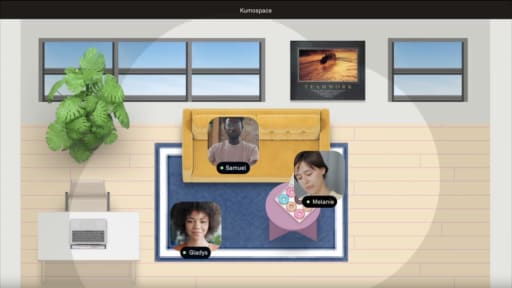
For distributed organizations, Kumospace provides a virtual office where sales and marketing teams can stay connected throughout the campaign lifecycle. Team members can quickly discuss test results, review outreach performance, and share ideas without waiting for a formal meeting. Spatial Audio makes spontaneous conversations feel natural, allowing colleagues to move between discussions and collaborate in real time.

Instead of limiting campaign reviews to scheduled reporting sessions, teams can continuously exchange feedback, identify trends, and refine their subject line playbook as results come in. That ongoing collaboration helps turn individual campaign insights into repeatable strategies that improve email performance across the entire funnel.

Summary

A great subject line determines whether your email gets opened or ignored. The most effective sales email subject lines are specific, relevant, and personalized, giving recipients a clear reason to engage without relying on clickbait. Whether you're sending cold outreach, follow-ups, promotions, discount offers, or re-engagement campaigns, strong subject lines connect directly to the recipient's needs, recent activities, or business goals.

The best-performing teams treat subject lines as an ongoing optimization opportunity rather than a one-time task. By using proven frameworks, personalizing beyond just a first name, and consistently A/B testing different approaches, sales and marketing teams can improve open rates, generate more conversations, and increase pipeline performance across every stage of the funnel.

Frequently Asked Questions

Transform the way your team works from anywhere.

A virtual office in Kumospace lets teams thrive together by doing their best work no matter where they are geographically.

Headshot for Sammi Cox
Sammi Cox

Sammi Cox is a content marketing manager with a background in SEO and a degree in Journalism from Cal State Long Beach. She’s passionate about creating content that connects and ranks. Based in San Diego, she loves hiking, beach days, and yoga.

Transform the way your team works.