Desk setup with monitor showing graphs, papers, and coffee, representing simple one‑page business plan templates.

One-Page Business Plan Templates You Can Use Today

By Sammi Cox

Most business proposals don't fail because the idea is bad. They fail because the document is too long for anyone to actually read. A 20-page proposal might look thorough, but if the decision-maker skims the executive summary, glances at pricing, and closes the file, all those extra pages worked against you. A one-page proposal fixes this by forcing you down to what matters: the problem, the solution, and the ask. When everything fits on one page, there's no back section to skip to. Readers actually read it.

This guide covers how to write a compelling one-page business plan, what sections to include, and gives you a one-page business plan template you can adapt for pitches, partnerships, internal initiatives, and client engagements.

Key Takeaways

  • A one-page business proposal succeeds by forcing clarity, making it easier for busy decision-makers to understand the opportunity and respond quickly.
  • The strongest single-page proposals follow a consistent structure: problem, solution, value proposition, deliverables or scope, timeline, investment, and a clear call to action.
  • Writing concisely is harder than writing at length, so expect the editing process to take longer than the first draft.
  • One-page proposals work for client pitches, internal project approvals, partnership opportunities, and investor conversations where a full business plan isn't yet warranted.

Why One-Page Proposals Win More Often Than You'd Expect

The case for brevity in business communication is well established, but it's worth spelling out why it matters specifically for proposals. The person reading your proposal is almost certainly evaluating multiple options, managing a full calendar, and making decisions under time pressure. A document that respects those constraints by being concise and scannable has a structural advantage over one that doesn't.

One-page proposals also force the writer to prioritize ruthlessly. When you have unlimited space, every feature, every use case, and every supporting data point feels worth including. When you have a single page, you're forced to answer the question that actually drives decisions: why should this person care, and what do you want them to do about it?

For project managers pitching internal initiatives, the one-page format is especially powerful. Leadership teams reviewing budget requests or project proposals don't need a comprehensive project plan at the approval stage. They need enough information to say yes, no, or "tell me more." A focused single-page proposal gives them exactly that and opens the door for a deeper conversation if the idea has legs.

What to Include in a One-Page Business Proposal

The structure of a one-page proposal needs to be tight enough to fit a single page while covering everything a reader needs to make an informed decision. Here are the sections that belong in every version.

Header and Contact Information

Start with your company name or personal name, the proposal title, the date, and the recipient's name or organization. This takes two to three lines and establishes context immediately. If this is a client-facing proposal, include your contact email and phone number so the next step is obvious.

Problem Statement

Define the problem you're solving in two to four sentences. Be specific about who experiences this problem, what it costs them, and why existing solutions fall short. The problem statement is where you demonstrate that you understand the reader's world, which builds credibility before you've said a word about your solution.

Avoid the temptation to describe the problem in general terms. "Companies struggle with remote collaboration" is forgettable. "Your engineering team loses an estimated 6 hours per week to coordination overhead because project context lives in scattered Slack threads and email chains" is specific enough to make someone nod.

Proposed Solution

Describe what you're proposing in concrete terms. This isn't the place for vision statements or aspirational language. State clearly what you will do, what the deliverable or outcome looks like, and how it directly addresses the problem you just defined.

If you're proposing a service engagement, name the specific activities and outputs. If you're proposing a product, describe the core functionality that solves the stated problem. If you're pitching an internal project, outline the approach and what success looks like when the project is complete.

Value Proposition

This is where you answer the "so what?" question. Connect your proposed solution to a measurable outcome that the reader cares about. Revenue impact, cost savings, time recovered, risk reduced, or competitive advantage gained. Quantify wherever possible. "This will save time" is weak. "This approach reduces onboarding time for new engineers from 3 weeks to 10 days based on results from comparable implementations," gives the reader something to evaluate.

Scope and Deliverables

List specifically what's included in the proposal. For service engagements, this might be a set of deliverables with brief descriptions. For product proposals, it might be the features or modules included at the proposed price point. For internal projects, it's the work that will be completed within the requested budget and timeline.

Being explicit about scope on a one-page proposal also implicitly communicates what's not included, which reduces the scope creep conversations that derail projects after approval.

Timeline

Provide a high-level timeline with key milestones. For a consulting engagement, this might be discovery, execution, and delivery phases with estimated dates. For a product implementation, it might be setup, rollout, and optimization phases. Keep it to three or four milestones at most. The goal is to show that you've thought through the sequencing without turning the timeline into a project plan.

Investment

State the cost clearly. If your pricing has tiers or options, present no more than two on a one-page proposal. Too many options on a single page create decision paralysis rather than clarity. If the pricing structure is complex, state the starting investment and note that a detailed breakdown is available upon request.

Call to Action

End with a single, specific next step. "Let's schedule a 30-minute call to discuss fit" is better than "Please don't hesitate to reach out." The call to action should make it easy for the reader to respond and should match the level of commitment appropriate for this stage of the relationship.

One Page Business Proposal Example

Here's an example of a business plan condensed to a single page for a hypothetical consulting engagement. Use this as a reference for structure and tone.

Proposal: Reducing Engineering Onboarding Time for Acme Software

Prepared for: Jordan Chen, VP of Engineering, Acme Software

Prepared by: Relay Consulting | maria@relayconsulting.com | April 2026

The Problem

Acme's engineering team has grown from 12 to 38 people in the past year, but the onboarding process hasn't scaled with it. New hires currently take an average of 18 business days before they submit their first meaningful pull request. During that ramp period, senior engineers spend approximately 8 hours per week on ad-hoc onboarding support, pulling them away from roadmap work. At the current hiring pace of 3 to 4 engineers per quarter, the cumulative productivity cost is significant.

The Solution

Relay Consulting will audit Acme's current onboarding workflow, identify the highest-friction steps, and deliver a restructured onboarding program that includes a self-serve knowledge base, a structured first-week checklist, a buddy system framework, and revised documentation standards. The goal is to reduce time-to-first-PR from 18 days to 10 days and cut senior engineer onboarding support time by 50%.

What's Included

A stakeholder interview phase covering 6 to 8 conversations with engineering leads, new hires, and HR. A written audit report with prioritized recommendations. A complete onboarding playbook with templates, checklists, and documentation guidelines. A 90-minute training session for team leads on implementing the new framework.

Timeline

Discovery and interviews during weeks 1 and 2. Audit report delivery in week 3. Playbook development and review through weeks 4 and 5. Final delivery and training session in week 6.

Investment

$18,500 for the complete engagement. 50% due at project kickoff, 50% due upon final delivery.

Next Step

I'd welcome a 30-minute call to discuss whether this scope matches what you're seeing on the ground. I have availability this Thursday or Friday afternoon. You can book directly at [scheduling link] or reply to this email.

How to Adapt This as a Business Plan 1 Page Template

The example above is structured as a client proposal, but the same framework can serve as a one-page business plan template for internal use, investor conversations, or partnership pitches. The sections shift slightly depending on the audience.

For an internal project approval, replace "Investment" with "Requested Budget" and replace the client-facing problem statement with an internal business case that connects the project to company OKRs or strategic priorities. The call to action becomes a request for budget approval or a meeting with the decision-maker.

For an investor-facing one-pager, replace "Proposed Solution" with your product description and market positioning. Add a brief section on traction or early results if you have them. Replace "Investment" with your funding ask and intended use of funds. The call to action is a meeting request.

For a partnership proposal, frame the problem as a shared challenge or market opportunity. Position the solution as a collaboration that benefits both parties. Replace "Investment" with the proposed terms or resource commitment from each side.

In every case, the underlying discipline is the same: one problem, one solution, one clear value statement, one defined scope, one timeline, one cost, and one next step. The format enforces the kind of clarity that makes decision-makers want to keep the conversation going.

Common Mistakes That Weaken One-Page Proposals

Writing short is harder than writing long, and the compression required for a single page creates specific pitfalls.

Trying to include everything is the most common failure. A one-page proposal is not a condensed version of a 20-page document. It's a different communication tool with a different purpose. Its job is to open a door, not to walk the reader through every room in the house. If you're struggling to fit on a single page, the problem is usually that you haven't decided what the proposal's primary argument is.

Using vague language to save space backfires consistently. Cutting a sentence from "We'll conduct 6 stakeholder interviews over two weeks" to "We'll do research" saves words but destroys credibility. Concise and vague are not the same thing. Every sentence on the page should be specific enough that the reader knows exactly what you mean without needing to ask a follow-up question.

Skipping the problem statement is a mistake that ambitious founders and consultants make when they're eager to talk about their solution. But the problem statement is what makes the reader feel understood. Without it, the rest of the proposal is a solution in search of context.

Burying the cost is another common misstep. Some proposal writers push pricing to the end or omit it entirely, hoping to "get them excited first." On a one-page proposal, the reader sees the price regardless of where you place it. Being upfront about investment signals confidence and filters out prospects who aren't a fit before either party invests more time.

Getting Your Team Aligned on the Proposal Before It Goes Out

A one-page proposal might be short, but the thinking behind it rarely is. The problem framing, the value quantification, the scope boundaries, and the pricing all benefit from input across your team. An engineering lead can gut-check whether the proposed timeline is realistic. A marketing colleague can sharpen the language. A project manager can flag scope risks.

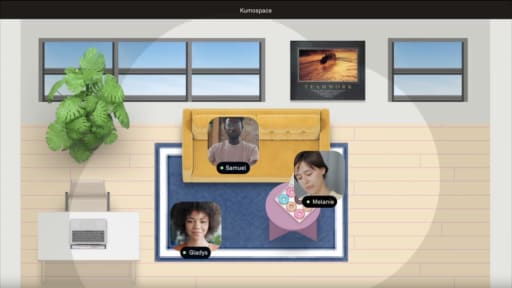
For distributed teams, gathering that input quickly is the difference between sending the proposal this afternoon and sending it next week. Teams collaborating in Kumospace can pull together a quick review by walking over to the right people's virtual desks, talking through the draft in real time, and iterating on the spot. That kind of rapid, informal collaboration is what keeps one-page proposals sharp and timely rather than polished but late.

The best proposals reflect a team's collective intelligence compressed into a single page. Make the collaboration process as lightweight as the final document, and you'll send better proposals more often.

How Kumospace Helps Teams Create Better Business Proposals

Strong proposals rarely come together in isolation. The best one-page proposals often require input from multiple people, whether that's validating pricing with finance, reviewing scope with project managers, refining messaging with marketing, or confirming timelines with delivery teams. When feedback is delayed, proposal creation slows down, and opportunities can lose momentum.

For remote and hybrid teams, Kumospace makes proposal collaboration faster and more natural. Instead of waiting for scheduled meetings or long email chains, team members can connect through a shared virtual office, jump into quick conversations, and resolve questions in real time.

Features like spatial audio, screen sharing, team rooms, virtual offices, and spontaneous drop-in conversations make it easy to review proposal drafts, discuss pricing, align on scope, and gather stakeholder feedback without adding more meetings to the calendar. Teams can collaborate on a proposal while keeping the flexibility of remote work.

This is especially valuable when deadlines are tight and decisions need to happen quickly. A proposal that gets reviewed, refined, and approved in a single collaborative session can reach a client days sooner than one that moves through multiple rounds of asynchronous feedback. By making communication more immediate, Kumospace helps teams create stronger proposals and respond to opportunities faster.


Summary

A one-page business proposal helps decision-makers quickly understand an opportunity by focusing only on the essentials: the problem, solution, value, scope, timeline, cost, and next step. Unlike lengthy proposals that often go unread, a single-page format forces clarity and makes it easier for clients, executives, investors, or partners to evaluate an idea and respond. The goal is not to provide every detail but to create enough confidence to move the conversation forward.

The strongest one-page proposals clearly define a specific problem, present a practical solution, quantify the expected value, outline key deliverables and timelines, state the investment upfront, and end with a clear call to action. While the format is simple, creating an effective proposal requires careful editing and prioritization. Whether used for client pitches, internal project approvals, partnership opportunities, or early-stage investor conversations, a concise proposal often outperforms longer documents because it respects the reader's time and highlights what matters most. For distributed teams, collaboration tools like Kumospace can help stakeholders quickly align on scope, pricing, and messaging, allowing proposals to move from draft to delivery faster.

Frequently Asked Questions

Transform the way your team works from anywhere.

A virtual office in Kumospace lets teams thrive together by doing their best work no matter where they are geographically.

Headshot for Sammi Cox
Sammi Cox

Sammi Cox is a content marketing manager with a background in SEO and a degree in Journalism from Cal State Long Beach. She’s passionate about creating content that connects and ranks. Based in San Diego, she loves hiking, beach days, and yoga.

Transform the way your team works.