Before looking at examples, it helps to understand the anatomy of a complete social media marketing plan. Every plan varies in format, but the strongest ones cover the same core components regardless of company size or industry.
Audience Definition
Define who you're trying to reach on each platform with enough specificity to inform content decisions. A B2B SaaS company might target engineering managers on LinkedIn, developer communities on X (Twitter), and startup founders on both. A consumer brand might target fitness enthusiasts aged 25 to 34 on Instagram and TikTok with different content formats optimized for each platform's algorithm and user behavior.
Audience definition in a social media plan goes beyond demographics. Include what topics your audience cares about, what problems they're trying to solve, where they spend time online, and what kind of content they engage with versus scroll past. This level of detail prevents the team from creating content that appeals to the internal team but misses the people it's supposed to reach.
Goals and Objectives
Start with what the social media effort is supposed to accomplish for the business. This is where SMART goals (Specific, Measurable, Achievable, Relevant, and Time-bound) become useful because they turn broad ambitions into clear targets. Vague goals like "increase brand awareness" are common but unhelpful because they don't give the team a target to aim for or a way to know whether they've succeeded. Strong objectives are specific and measurable: grow LinkedIn followers by 25% over the next quarter, generate 200 marketing-qualified leads through gated content promoted on social, or increase website traffic from Instagram by 40% within six months.
The goals should connect directly to something the broader business cares about. If the company's priority is pipeline generation, the social media plan should explain how organic and paid social media contribute to that pipeline. If the priority is employer branding and recruiting, the plan should focus on content that attracts talent. This alignment is what earns budget and buy-in from leadership.
Platform Strategy
Not every platform deserves equal investment. Your plan should specify which platforms you'll be active on, why each one was chosen, and what role it plays in the overall strategy. LinkedIn might be your primary channel for thought leadership and lead generation. Instagram might be your brand storytelling platform. X might be where your team engages in industry conversations and builds community. TikTok might be an experimental channel where you test short-form video content with a smaller resource commitment.
Spreading your team thin across every platform guarantees mediocre performance on all of them. The plan should make an explicit argument for where to focus and what to deprioritize.
Content Pillars and Themes
Content pillars are the recurring topics or themes that organize your posting activity. Instead of brainstorming individual posts from scratch each week, pillars give the team a framework that ensures variety and consistency. A project management software company might use pillars like productivity tips, customer success stories, product updates, and industry commentary. A recruiting firm might use career advice, market insights, hiring trends, and company culture.
Each pillar should connect back to both the audience's interests and the business objectives. A pillar that's fun to create but doesn't serve either of those purposes is a distraction that should be cut or reworked.
Content Mix and Format
Specify the types of content your team will produce for each platform. This includes the format (static images, carousels, short-form video, long-form text posts, stories, live sessions) and the ratio between promotional content and value-driven content. A common guideline is the 80/20 rule, where 80% of content provides value through education, entertainment, or community engagement, and 20% directly promotes your product or service. The exact ratio depends on your audience's tolerance for promotional content and how much trust you've already built.
Posting Cadence
Define how often you'll post on each platform. This should be realistic given your team's capacity, rather than aspirational in a way that leads to burnout or quality decline. Three high-quality LinkedIn posts per week will outperform seven mediocre ones. Two well-produced Instagram Reels per week will generate more engagement than daily posts that feel rushed.
The cadence should also account for the team's ability to engage with comments and messages. Posting without responding to the audience that engages is a missed opportunity that undermines the relationship-building that social media is supposed to facilitate.
Measurement and KPIs
Specify which metrics define success for each goal. If the goal is brand awareness, track impressions, reach, and follower growth. If the goal is engagement, track comments, shares, saves, and engagement rate. If the goal is lead generation, track link clicks, landing page conversions, and cost per lead for paid campaigns.
Identify which metrics are leading indicators and which are lagging. Follower growth is a leading indicator of reach. Website conversions are a lagging indicator of whether social content drives business results. Tracking both gives you the full picture.

Here's a complete social media marketing plan example for a fictional B2B SaaS company called Relay, which sells project management software to mid-market engineering and marketing teams.
Business Context
Relay is a Series B company with 85 employees. The marketing team has three people dedicated to content and social. Primary revenue goal for the year is to increase the marketing-sourced pipeline by 30%. The secondary goal is to strengthen the employer brand to support a hiring push for 15 engineering roles.
Goals
Generate 150 marketing-qualified leads per quarter through social-promoted gated content. Grow LinkedIn company page followers from 8,200 to 15,000 within six months. Increase share-of-voice in the project management category by publishing at least 12 thought leadership posts per month across team member profiles and the company page. Attract 500 applications through employer branding content on LinkedIn and Instagram.
Target Audience
Primary: Engineering managers and directors at SaaS companies with 50 to 500 employees who are evaluating or replacing their current project management tool. They value async-first workflows, developer-friendly integrations, and transparent pricing.
Secondary: Marketing team leads at the same company profile who need cross-functional visibility into project timelines and are frustrated by tools that were designed for engineering but don't accommodate marketing workflows.
Recruiting audience: Senior engineers who value remote-friendly culture, meaningful technical challenges, and collaborative team environments.
Platform Strategy
LinkedIn (primary): Thought leadership content from team member profiles, company page updates, gated content promotion through organic and paid. This is where the target audience spends professional time and where B2B buying decisions are influenced.
X/Twitter (secondary): Industry commentary, product launch announcements, and engagement with engineering and product management communities. Lower investment but valuable for staying visible in real-time industry conversations.
Instagram (supporting): Employer branding content, including team spotlights, office culture, engineering team events, and behind-the-scenes product development. Targets the recruiting audience specifically.
TikTok (experimental): Short-form video content testing product tips and engineering humor. Minimal resource commitment with monthly evaluation of whether engagement justifies continued investment.
Content Pillars
Pillar 1, Workflow Optimization: Tips, frameworks, and case studies about how teams ship faster with better processes. Directly supports product positioning without being overtly promotional.
Pillar 2, Engineering Leadership: Posts exploring management challenges in engineering teams, including async communication, technical debt prioritization, and team scaling. Resonates with the primary audience and positions Relay's team members as credible voices in the space.
Pillar 3, Product in Action: Feature highlights, customer stories, and use case walkthroughs that show how Relay solves specific problems. This is the promotional pillar, kept to roughly 20% of total output.
Pillar 4, Life at Relay: Team spotlights, engineering culture, remote work practices, and hiring updates. Serves the recruiting audience and humanizes the brand for prospects evaluating whether Relay is a company they'd want to partner with.
Posting Cadence
LinkedIn company page: four posts per week. Team member profiles (3 active posters): two posts each per week. X/Twitter: five posts per week, including replies and quote tweets. Instagram: three posts per week plus two to three stories. TikTok: two videos per week during the experimental phase.
Budget Allocation
$4,000 per month in paid LinkedIn promotion split between gated content campaigns (60%) and employer branding campaigns (40%). $500 per month for boosted Instagram posts targeting engineering talent in key hiring markets.
Measurement
Monthly reporting on MQLs generated, follower growth by platform, engagement rate by content pillar, website sessions from social, and cost per lead on paid campaigns. Quarterly review of pipeline attribution to determine which social-sourced leads converted to opportunities and revenue.

A social media campaign plan differs from an ongoing social media plan because it has a defined start date, end date, and a single objective. Here's an example social media plan for a four-week product launch campaign.
Campaign Objective
Drive 2,000 sign-ups for the waitlist of Relay's new AI-powered sprint planning feature within four weeks of announcement.
Timeline
Week 1, Teaser phase: Hints and behind-the-scenes content build curiosity without revealing the full feature. One teaser post per day across LinkedIn and X. Instagram story countdown.
Week 2, Announcement: Launch post with feature overview video on LinkedIn, X, and Instagram. Paid promotion begins on LinkedIn, targeting the primary audience segment. Email to existing customers with social sharing prompts.
Week 3, Social proof and education: Customer beta testimonials, short demo walkthroughs, and "how it works" carousel posts. Engineering team members share technical deep-dives on their personal profiles.
Week 4, Urgency and conversion: Final push with "limited early access" messaging. Retargeting ads on LinkedIn for people who engaged with earlier campaign content but haven't signed up. Community Q&A session on X Spaces.
Platform Roles
LinkedIn: Primary conversion channel. All gated waitlist content points here. Paid budget concentrated on this platform.
X/Twitter: Community engagement and real-time conversation. X Spaces event drives awareness and positions the feature in the context of broader industry trends.
Instagram: Visual storytelling and behind-the-scenes content that makes the launch feel human rather than corporate.
Budget
$6,000 total over four weeks. $4,500 on LinkedIn paid promotion. $1,500 on Instagram and X boosted posts.
Success Metrics
Primary: 2,000 waitlist sign-ups. Secondary: 50,000 impressions on launch announcement post, 500 link clicks from social to waitlist page, 150 social shares of launch content.

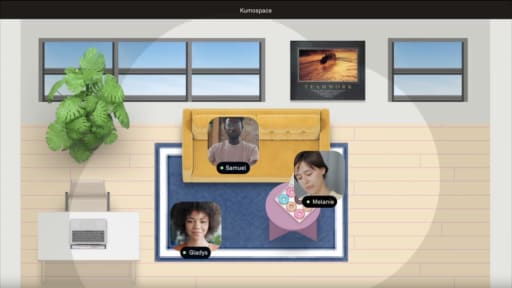
Creating a social media plan often requires input from marketers, designers, content creators, and leadership. Kumospace brings those conversations into a shared virtual office where teams can brainstorm campaigns, review content calendars, and align on priorities in real time instead of relying on long email threads and scattered meetings.
The platform's online whiteboard makes it easy to map audience segments, organize content pillars, brainstorm campaign ideas, and plan upcoming content together. Teams can collaborate visually during planning sessions and leave with a clearer strategy and next steps.
Features like spatial audio help conversations feel more natural by allowing small groups to break off for focused discussions while staying connected to the larger team. For remote and hybrid marketing teams, Kumospace helps turn social media planning into a faster, more collaborative process that keeps campaigns moving forward.