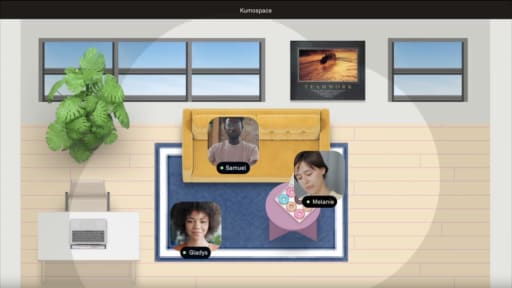
Ready to elevate remote work? Master productivity and professionalism with Kumospace’s ultimate guide to work-from-home etiquette. In this guide, we cover valuable insights into creating a productive remote work environment, effective communication, respecting time zones, and cultivating a positive virtual office culture. Say goodbye to remote work challenges and hello to a successful remote work experience! Remote work offers flexibility, providing greater flexibility, improved work-life balance, and the opportunity to create a work environment that suits individual needs.
Key takeaways
- Establish a productive remote work environment by creating an efficient workspace and following proper etiquette.
- Maintain professionalism in a remote setting through appropriate attire, communication, and self-care.
-
Build trust with your remote team while embracing cultural diversity to promote successful collaboration.
Establishing a productive remote work environment

Firstly, thriving in a remote work setting hinges on the establishment of a productive environment. The ability to achieve results and adhere to remote work etiquette is pivotal to your success. Creating effective remote work environments is essential for maintaining focus, professionalism, and productivity.
Good virtual office etiquette is maintained by organizing and demarcating the boundaries between work and personal life.
Designing a home office space
A well-designed home office space is a cornerstone of a productive remote work environment. The essentials for establishing a home office include:
- An ergonomic or standing desk
- An office chair
- A filing cabinet
- Computer system
- High-speed internet access
- Adequate lighting
Just like in a physical office, your home office should be set up to support professionalism, comfort, and effective work habits.
Creating a well-designed office improves productivity when working from home:
- Creating a dedicated office space
- Designing the layout to suit your needs
- Securing good lighting
- Incorporating ergonomic furniture
- Personalizing the space
A quiet space free from distractions will help you stay focused and maintain a healthy work-life balance.
Maintaining a consistent schedule
A consistent schedule is key to separating work from your personal life and maintaining a healthy work-life balance. Technology such as:
- Communication tools
- Time management tools
- Automation solutions
- Document management tools
- Learning and development platforms
can be utilized to provide a consistent schedule for remote employees.
Maintaining consistency and using scheduling tools helps establish a routine and helps you set boundaries with family and friends, ensuring minimal disruptions during your work hours. It's important to plan and communicate your work schedules with both colleagues and household members to minimize interruptions further and clarify expectations.
Setting boundaries with family and friends
Setting clear boundaries with family and friends is vital to minimizing distractions and maintaining a successful remote work environment. Establishing boundaries guarantees that work obligations are respected and distractions are kept to a minimum. Family members, in particular, are a common source of distraction when working from home, which can impact your focus and productivity. Be proactive in communicating your work-from-home schedule and expectations with your family and friends.
Set ground rules for interruptions, create a dedicated workspace, and use visual cues such as a ‘do not disturb’ sign to indicate when you’re occupied. Involving your family and friends in the conversation helps find compromises that work for everyone, fostering a positive remote work experience.
Effective communication for remote teams
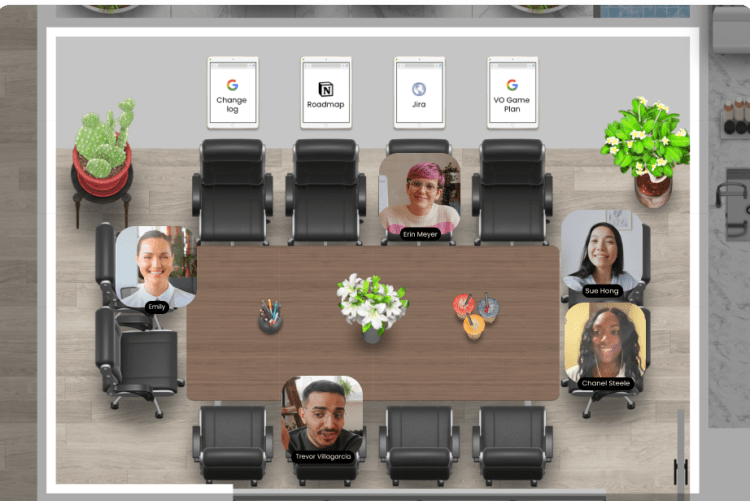
Successful remote work hinges on effective communication. Good virtual office etiquette requires mindful communication, guaranteeing tasks are accomplished on time, and preventing miscommunication. Remote workers should also avoid jargon to provide clarity in digital communication.
We will now delve into enhancing remote team communication by discussing the selection of appropriate channels, improving video chat conference etiquette, and the use of collaborative tools.
Choosing the right communication channels
Efficient and effective team collaboration heavily depends on the selection of appropriate communication channels. Kumospace is a highly popular virtual workplace platform among remote workers, offering features such as instant messaging, integration with other communication tools, and the ability to bolster collaboration and understanding. Using instant messaging to send a quick message is especially useful for brief updates or simple questions, helping teams communicate efficiently without lengthy conversations.
When selecting a communication channel for remote teams, consider factors such as accessibility, reliability, security, collaboration features, scalability, user-friendliness, and cost.
Enhancing video conference etiquette

Creating a professional video conferencing environment starts with having the best setup for video conferencing and following proper etiquette. Mute your microphone when not speaking to maintain clarity and reduce distractions. Dress professionally to show focus and respect for the meeting, and position your camera at eye level for a polished appearance. If your surroundings are distracting, use a background blur to keep the focus on you. Maintain eye contact by looking into the camera, and be aware of your body language, as non-verbal cues are essential for clear and effective communication during video meetings.
Collaborative tools for remote work
Streamline remote work processes by utilizing collaborative tools like project management software and file-sharing platforms. These tools facilitate collaboration in a remote work environment, ensuring productivity and efficiency.
Popular project management software for remote teams includes:
These tools provide features for remote collaboration, scheduling, task management, and team communication.
Respecting time zones and schedules

Remote work often involves collaboration across different time zones. It is therefore important to consider your colleagues’ time zones and schedules when planning meetings and setting deadlines. Respecting personal time by avoiding scheduling meetings outside of normal working hours helps maintain a healthy work-life balance. A good rule is to rotate meeting times to ensure fairness and accommodate everyone’s time zones.
We will now examine how flexibility and structure can be balanced to accommodate diverse work styles and schedules.
Scheduling meetings and deadlines
Schedule meetings and deadlines with consideration for team members’ time zones and availability. To guarantee a successful transition to remote work, it’s recommended to form a cross-functional team comprised of:
- Business-line leaders
- IT
- HR
- Communications
- Facilities
This team will plan and execute the necessary steps.
Establish clear communication channels, determine a suitable time frame, set attainable deadlines, and utilize scheduling tools to coordinate deadlines with remote workers in different time zones. As part of good work-from-home etiquette, avoid scheduling early morning calls to respect team members' personal time.
Balancing flexibility and structure
Encourage a balance between flexibility and structure to accommodate diverse work styles and schedules. In remote work, flexibility and wellness can promote productivity by allowing employees to work remotely during their most effective hours, reducing stress levels and burnout, and increasing job satisfaction.
Implement strategies such as setting core business hours, focusing on results and deadlines, and conducting regular one-on-one meetings to manage flexible work hours without adversely affecting team productivity. It's important to communicate that team members should not expect an immediate response outside of core business hours, as this respects colleagues' time and supports healthy work-life boundaries.
Cultivating a positive virtual office culture

Successful remote work heavily relies on fostering a positive virtual office culture. Building trust among team members and embracing cultural diversity are key aspects of creating a positive work atmosphere and boosting collaboration.
Building trust among team members
Trust is the foundation of strong working relationships. Establish trust among your remote colleagues by demonstrating reliability, openness, and providing support. Reliability plays an integral role in establishing trust, showcasing consistency, dependability, and the capacity to fulfil promises.
Trust is further reinforced when team members continually communicate and provide updates on their progress, ensuring transparency and accountability during team meetings.
Embracing cultural diversity
Promote cultural diversity in your virtual office by being sensitive to different backgrounds and perspectives, fostering inclusivity, and understanding. Cultural diversity is beneficial in remote work as it allows for the exchange of diverse perspectives and ideas, potentially resulting in more inventive solutions and improved collaboration.
Prioritize clear and articulate communication to bridge the virtual cultural gap and create an atmosphere of acceptance and understanding in your remote team.
Maintaining professionalism in a remote setting

Professionalism in a remote setting is a prerequisite for efficient and cordial remote work associations. Delivering quality work by meeting deadlines, following guidelines, and ensuring high standards demonstrates accountability and helps maintain trust among remote colleagues. Dress appropriately for video calls and communicate politely and respectfully to maintain professionalism in all interactions with remote colleagues.
Dressing for success
Convey a sense of commitment and focus by dressing professionally for video calls. A white or pale blue shirt or a neutral-colored dress with sleeves are suitable options for a professional look during a video call. For internal team meetings or less formal video calls, business casual attire is also appropriate and offers a versatile alternative to more formal dress codes.
Wearing professional attire can increase your confidence and help maintain a professional mindset during virtual meetings.
Polite and respectful communication
Build strong working relationships by practicing polite and respectful communication in all interactions with remote colleagues. Fostering a positive work atmosphere through courteous communication is essential for successful remote work.
It is important to maintain professionalism during phone calls as well as written communication, ensuring you are prepared and free from distractions to facilitate effective and respectful exchanges.
By practicing politeness, courtesy, and kindness in all interactions, you create a supportive environment where everyone feels valued and respected.
Prioritizing self-care and mental well-being

In a remote work environment, self-care and mental well-being take center stage. The topic of mental health in remote work is crucial, as supporting psychological well-being helps employees thrive in a virtual setting. Avoiding burnout, increasing engagement, and promoting a healthier work-life balance all hinge on taking care of oneself.
Managing stress and burnout
Recognize and address signs of stress and burnout to maintain a healthy work-life balance. Here are some ways to prioritize mental health and self-care:
- Stay connected and communicate effectively with colleagues
- Set boundaries to establish a clear separation between work and personal life
- Create a designated workspace to promote focus and productivity
By implementing these strategies, you can maintain a healthy work-life balance and prevent burnout.
Incorporating breaks and physical activity
Boost energy and productivity by incorporating regular breaks and physical activity into your daily routine. Engaging in physical activity can:
- Improve task performance
- Enhance creativity
- Promote overall health
- Increase employee well-being and productivity.
Summary
Mastering remote work etiquette is key to maintaining professionalism, productivity, and a healthy work-life balance in remote and hybrid settings. Clear communication, good time management, and effective collaboration help create a positive environment for both individual and team success.
Prioritizing well-being, respecting colleagues’ time, and using the right tools build trust and strong working relationships. By staying adaptable and embracing new technologies, remote workers can create a more efficient and enjoyable work environment and thrive in the evolving world of remote work.
Frequently asked questions
Avoid working in your bedroom, do not do household chores during work hours, and stay off social media to maximize productivity while working from home. Establish rules for other members of your household and make sure you have a comfortable office chair to facilitate your success.
Virtual workplace etiquette involves arriving on time, being aware of your audience, having a professional background and lighting set-up, and dressing professionally yet casually.
Best practices for working remotely include staying productive and organized, scheduling regular breaks, setting boundaries, having clear communication expectations, being mindful of one's mental health, utilizing reliable technology, maintaining a consistent workspace, setting realistic goals, being flexible with schedules, and building relationships virtually.
Maintain professionalism in remote work by dressing appropriately for video calls, speaking courteously and with respect, and keeping a professional tone.
To prevent burnout while working remotely, establish clear boundaries, create a designated workspace, prioritize self-care and social connections, and focus on important tasks. Scheduling time for activities outside of work is also key.